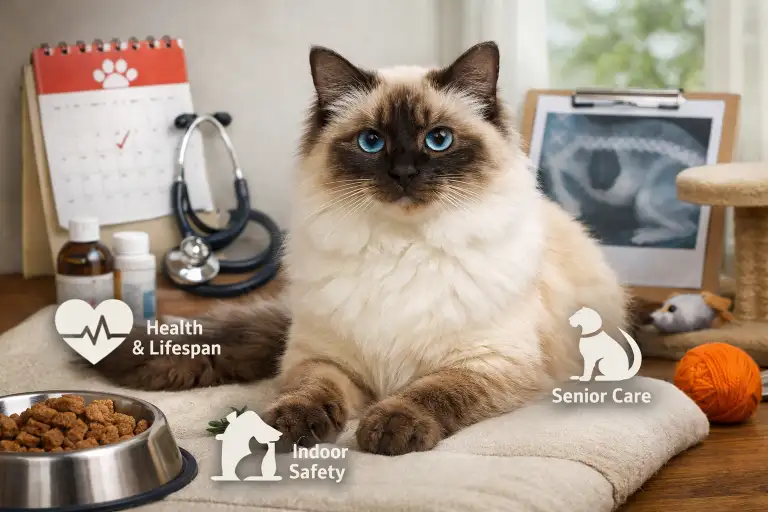
Birman Cat Health Issues and Average Lifespan Guide
Birman cats are widely known for their gentle temperament, affectionate nature, and close bonds with their families. For many owners, questions about Birman health issues and lifespan arise not from immediate concerns, but from a desire to provide the best possible care over the long term. This guide is designed to offer a clear, balanced overview of what is currently understood about Birman health and longevity, without drifting into diagnosis, treatment advice, or unnecessary alarm.
Recommended Dog Care Products
Based on your dog’s age, these products may help with comfort, health, grooming, and daily care.

Purina Pro Plan Veterinary Supplements
Daily probiotics for dogs to support digestive and gut health.
View on Amazon ↗
Earth Rated Poop Bags for Dogs
Leak-proof, extra thick waste bag refill rolls with lavender scent.
View on Amazon ↗
Greenies Pill Pockets for Dogs
Large dog treats for capsule medication, peanut butter flavor.
View on Amazon ↗
HONEY CARE All-Absorb Dog Wrap
Small male dog wraps, 50 count, useful for daily care support.
View on Amazon ↗
Seresto Flea & Tick Collar
Flea and tick treatment and prevention for dogs over 18 lbs.
View on Amazon ↗
Milk-Bone MaroSnacks
Small dog treats with real bone marrow in a 40 oz canister.
View on Amazon ↗
Vital Essentials Dog Treats
Freeze dried beef liver dog treats, grain free and single ingredient.
View on Amazon ↗
Stain & Odor Eliminator
Enzyme cleaner for pet stains, carpet messes, and strong odors.
View on Amazon ↗
Pur Luv Chicken Jerky Treats
Dog treats made with real chicken breast, high protein and chew-friendly.
View on Amazon ↗
Milk-Bone Flavor Snacks
Mini crunchy dog biscuits in a 36 oz canister for small rewards.
View on Amazon ↗As an Amazon Associate, we may earn from qualifying purchases.
In general, Birmans are considered a relatively healthy pedigree breed, especially when they come from responsible breeding lines and live in stable, indoor environments. Like all cats, however, they can experience health changes over time, influenced by genetics, lifestyle, preventive care, and age. No single article can predict the health outcome of an individual cat, and breed trends should always be viewed as patterns—not certainties.
This article focuses on high-level education: what owners commonly want to know about Birman lifespan, which health issues are most often discussed in general terms, how preventive care supports long-term wellbeing, and how aging may affect Birmans differently from younger adult cats. It does not replace veterinary guidance, symptom evaluation, or individualized medical advice.
By understanding realistic expectations and recognizing the importance of early monitoring and routine care, Birman owners can feel more confident and reassured in supporting their cat’s health at every stage of life—without constant worry or fear-driven assumptions.
Average Birman Cat Lifespan: What Owners Can Expect
Most Birman cats are known to live long, comfortable lives when they are well cared for. On average, a Birman cat lifespan often falls between 12 and 16 years, though many live longer. Some Birmans reach their late teens, especially when they live indoors and receive regular veterinary care.
It is important to remember that lifespan numbers are only averages. Every cat is different. Genetics, daily care, diet, activity level, stress, and early health monitoring all play a role in how long a Birman may live.
Indoor living is one of the biggest factors linked to longer lifespan in cats. Indoor Birmans are protected from traffic, predators, fights with other animals, and many infectious diseases. Outdoor or free-roaming cats may enjoy more stimulation, but they also face higher risks that can shorten lifespan.
The table below gives a simple overview of how lifestyle can influence lifespan expectations.
| Birman Lifestyle | Typical Lifespan Range | General Notes |
|---|---|---|
| Indoor-only Birman | 14–18 years | Lower risk of accidents and infections |
| Mostly indoor Birman | 13–16 years | Depends on supervision and environment |
| Outdoor-access Birman | 10–14 years | Higher exposure to injury and disease |
Male and female Birmans usually have similar life expectancy. Being neutered or spayed is commonly linked with longer, healthier lives, mainly because it reduces certain risks and stress-related behaviors.
A long lifespan does not only mean more years. Quality of life matters just as much. Comfort, routine, mental stimulation, and early attention to health changes all support healthy aging in Birman cats.
Recommended Dog Care Products
Based on your dog’s age, these products may help with comfort, health, grooming, and daily care.
Purina Pro Plan Veterinary Supplements
Daily probiotics for dogs to support digestive and gut health.
View on Amazon ↗
Earth Rated Poop Bags for Dogs
Leak-proof, extra thick waste bag refill rolls with lavender scent.
View on Amazon ↗
Greenies Pill Pockets for Dogs
Large dog treats for capsule medication, peanut butter flavor.
View on Amazon ↗
HONEY CARE All-Absorb Dog Wrap
Small male dog wraps, 50 count, useful for daily care support.
View on Amazon ↗
Seresto Flea & Tick Collar
Flea and tick treatment and prevention for dogs over 18 lbs.
View on Amazon ↗
Milk-Bone MaroSnacks
Small dog treats with real bone marrow in a 40 oz canister.
View on Amazon ↗
Vital Essentials Dog Treats
Freeze dried beef liver dog treats, grain free and single ingredient.
View on Amazon ↗
Stain & Odor Eliminator
Enzyme cleaner for pet stains, carpet messes, and strong odors.
View on Amazon ↗
Pur Luv Chicken Jerky Treats
Dog treats made with real chicken breast, high protein and chew-friendly.
View on Amazon ↗
Milk-Bone Flavor Snacks
Mini crunchy dog biscuits in a 36 oz canister for small rewards.
View on Amazon ↗As an Amazon Associate, we may earn from qualifying purchases.
Common Birman Health Issues (High-Level Overview)
Birman cats are often described as a generally healthy breed, but like all cats, they can experience certain health issues over time. These are not guarantees or diagnoses. They are patterns that owners and veterinarians have noticed more often when looking at many cats over many years.
Some health concerns are linked to aging, while others may be influenced by genetics or daily lifestyle. Knowing about these issues helps owners focus on prevention and early notice, not worry.
The table below shows common health areas discussed for Birman cats, explained in a simple and calm way.
| Health Area | Why It Matters | General Explanation |
|---|---|---|
| Dental health | Very common in all cats | Tartar and gum problems can build up slowly and affect eating |
| Kidney health | Often age-related | Kidneys may work less well as cats grow older |
| Urinary health | Seen in many adult cats | Changes in litter box habits can signal discomfort |
| Weight and metabolism | Lifestyle-related | Indoor cats may gain weight if activity is low |
| Heart health | Less common but monitored | Some cats may develop heart changes with age |
| Digestive sensitivity | Individual variation | Some Birmans have sensitive stomachs |
It is important to understand that “common” does not mean “expected.” Many Birmans never develop serious health problems at all. Regular checkups help vets notice small changes early, often before a cat feels unwell.
Owners should also remember that cats are very good at hiding discomfort. Small changes in behavior, appetite, grooming, or energy level can be more meaningful than obvious signs.
Learning about health risks is not about predicting problems. It is about staying informed, calm, and prepared so your Birman can enjoy a long and comfortable life.
Preventive Care & Early Health Monitoring for Birmans
Taking steps to prevent health problems is one of the most effective ways to help your Birman live a long, happy life. Preventive care focuses on regular checkups, monitoring small changes, and keeping your cat healthy before problems start.
Routine veterinary visits are very important. Even if your Birman seems healthy, a vet can detect small issues early, such as dental buildup, weight changes, or early kidney concerns. Early detection often leads to better long-term outcomes.
Daily observation at home is just as important. Watching how your cat eats, drinks, uses the litter box, and moves around can give clues about health changes. Even slight shifts in energy or grooming habits may signal the need for a checkup.
Nutrition and weight management play a big role in preventive care. Feeding your Birman a balanced diet, controlling portion sizes, and encouraging play helps maintain a healthy weight. Maintaining activity and mental stimulation is equally important for overall wellness.
Recommended Dog Care Products
Based on your dog’s age, these products may help with comfort, health, grooming, and daily care.
Purina Pro Plan Veterinary Supplements
Daily probiotics for dogs to support digestive and gut health.
View on Amazon ↗
Earth Rated Poop Bags for Dogs
Leak-proof, extra thick waste bag refill rolls with lavender scent.
View on Amazon ↗
Greenies Pill Pockets for Dogs
Large dog treats for capsule medication, peanut butter flavor.
View on Amazon ↗
HONEY CARE All-Absorb Dog Wrap
Small male dog wraps, 50 count, useful for daily care support.
View on Amazon ↗
Seresto Flea & Tick Collar
Flea and tick treatment and prevention for dogs over 18 lbs.
View on Amazon ↗
Milk-Bone MaroSnacks
Small dog treats with real bone marrow in a 40 oz canister.
View on Amazon ↗
Vital Essentials Dog Treats
Freeze dried beef liver dog treats, grain free and single ingredient.
View on Amazon ↗
Stain & Odor Eliminator
Enzyme cleaner for pet stains, carpet messes, and strong odors.
View on Amazon ↗
Pur Luv Chicken Jerky Treats
Dog treats made with real chicken breast, high protein and chew-friendly.
View on Amazon ↗
Milk-Bone Flavor Snacks
Mini crunchy dog biscuits in a 36 oz canister for small rewards.
View on Amazon ↗As an Amazon Associate, we may earn from qualifying purchases.
The table below outlines a simple preventive care routine for Birmans, making it easy to see what to focus on at different life stages.
| Age Stage | Focus Areas | Recommended Actions |
|---|---|---|
| Kitten (0–1 year) | Growth and vaccination | Regular vet visits, vaccinations, socialization, basic dental care |
| Young adult (1–6 years) | Weight and basic health | Annual checkups, dental cleaning as needed, healthy diet, play and exercise |
| Mature adult (7–10 years) | Organ monitoring | Twice-yearly vet visits, kidney and heart check, dental evaluation |
| Senior (11+ years) | Early detection of age-related issues | More frequent checkups, monitor activity and appetite, environmental adjustments for comfort |
Preventive care also includes parasite control, grooming, and maintaining a clean environment. Keeping your Birman’s living space safe and stress-free reduces risk of illness and injury.
Aging, Quality of Life & Senior Birman Care
As Birmans grow older, their needs slowly change. Understanding these changes helps owners keep their cats comfortable, active, and happy during their senior years. Aging does not always mean illness, but some natural adjustments are helpful.
Older Birmans may move more slowly, sleep more, or take longer to groom themselves. Their metabolism can slow down, which may require changes in diet or portion size. Joint stiffness or mild arthritis can develop, so soft bedding and easy access to favorite spots are important.
Monitoring daily habits becomes even more important for senior cats. Changes in appetite, water intake, litter box use, or energy level can be subtle but meaningful. Early attention can help maintain quality of life and comfort.
Mental stimulation also matters. Older Birmans still enjoy play, gentle interaction, and puzzle toys. Keeping their environment safe, predictable, and enriched supports emotional well-being.
The table below highlights the main considerations for senior Birman care compared with adult stages.
| Life Stage | Common Changes | Care Tips |
|---|---|---|
| Adult (7–10 years) | Slight metabolism changes, steady activity | Maintain balanced diet, monitor weight, continue regular vet visits |
| Early Senior (11–13 years) | Reduced mobility, occasional stiffness | Provide soft bedding, gentle exercise, routine vet monitoring |
| Senior (14+ years) | Slower grooming, increased sleep, possible organ changes | Adjust diet if needed, ensure safe environment, frequent vet checkups, mental enrichment |
Quality of life is about more than health checks. Comfort, companionship, routine, and attention to subtle behavioral changes all support a happy senior cat.
For additional expert guidance on Birman cat health, preventive care, and senior care tips, you can visit the American Association of Feline Practitioners’ cat care resources here.

Ata Ur Rehman is the founder of Pet Age in Human Years Calculator, an educational platform that provides age conversion charts and lifespan guides for dogs, cats, birds, and other companion animals. His work focuses on helping pet owners understand how animal ages translate into human years using commonly accepted age conversion formulas and published lifespan averages.
Recommended Dog Care Products
Based on your dog’s age, these products may help with comfort, health, grooming, and daily care.
Purina Pro Plan Veterinary Supplements
Daily probiotics for dogs to support digestive and gut health.
View on Amazon ↗
Earth Rated Poop Bags for Dogs
Leak-proof, extra thick waste bag refill rolls with lavender scent.
View on Amazon ↗
Greenies Pill Pockets for Dogs
Large dog treats for capsule medication, peanut butter flavor.
View on Amazon ↗
HONEY CARE All-Absorb Dog Wrap
Small male dog wraps, 50 count, useful for daily care support.
View on Amazon ↗
Seresto Flea & Tick Collar
Flea and tick treatment and prevention for dogs over 18 lbs.
View on Amazon ↗
Milk-Bone MaroSnacks
Small dog treats with real bone marrow in a 40 oz canister.
View on Amazon ↗
Vital Essentials Dog Treats
Freeze dried beef liver dog treats, grain free and single ingredient.
View on Amazon ↗
Stain & Odor Eliminator
Enzyme cleaner for pet stains, carpet messes, and strong odors.
View on Amazon ↗
Pur Luv Chicken Jerky Treats
Dog treats made with real chicken breast, high protein and chew-friendly.
View on Amazon ↗
Milk-Bone Flavor Snacks
Mini crunchy dog biscuits in a 36 oz canister for small rewards.
View on Amazon ↗As an Amazon Associate, we may earn from qualifying purchases.
The website compiles breed and species lifespan data from kennel clubs, breed organizations, and general animal lifespan studies to present simple and easy-to-understand guides for pet owners worldwide.
This website was created to centralize animal age conversion charts into one easy reference platform for pet owners.