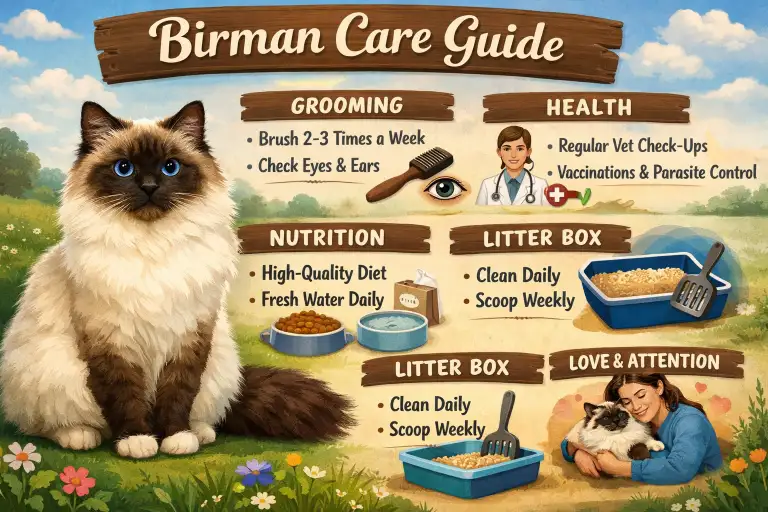
Birman Cat Care Guide for Daily Needs and Healthy Living
Caring for a Birman cat is less about managing a difficult breed and more about meeting the needs of a deeply people-oriented, emotionally sensitive companion. While Birmans are often described as calm and “easy,” that label can mislead new owners into underestimating how much daily interaction, routine, and gentle handling they actually require.
Recommended Dog Care Products
Based on your dog’s age, these products may help with comfort, health, grooming, and daily care.

Purina Pro Plan Veterinary Supplements
Daily probiotics for dogs to support digestive and gut health.
View on Amazon ↗
Earth Rated Poop Bags for Dogs
Leak-proof, extra thick waste bag refill rolls with lavender scent.
View on Amazon ↗
Greenies Pill Pockets for Dogs
Large dog treats for capsule medication, peanut butter flavor.
View on Amazon ↗
HONEY CARE All-Absorb Dog Wrap
Small male dog wraps, 50 count, useful for daily care support.
View on Amazon ↗
Seresto Flea & Tick Collar
Flea and tick treatment and prevention for dogs over 18 lbs.
View on Amazon ↗
Milk-Bone MaroSnacks
Small dog treats with real bone marrow in a 40 oz canister.
View on Amazon ↗
Vital Essentials Dog Treats
Freeze dried beef liver dog treats, grain free and single ingredient.
View on Amazon ↗
Stain & Odor Eliminator
Enzyme cleaner for pet stains, carpet messes, and strong odors.
View on Amazon ↗
Pur Luv Chicken Jerky Treats
Dog treats made with real chicken breast, high protein and chew-friendly.
View on Amazon ↗
Milk-Bone Flavor Snacks
Mini crunchy dog biscuits in a 36 oz canister for small rewards.
View on Amazon ↗As an Amazon Associate, we may earn from qualifying purchases.
Birmans thrive on human presence and predictability. They are not aloof cats that simply coexist in a home; most form strong attachments to one or two people and prefer to be involved in everyday life. Owners often notice that a Birman will quietly follow them from room to room, sit nearby rather than alone, and become noticeably unsettled if routines change abruptly. This means their care is as much emotional and behavioral as it is physical.
Their coat is another area where assumptions cause problems. Birman fur is long and silky but lacks the dense undercoat seen in many long-haired breeds. This makes them less prone to severe matting, but it does not make them low-shedding or maintenance-free. Seasonal shedding can be significant, and skipped brushing quickly leads to loose hair, minor tangles, and increased hair ingestion during self-grooming. Owners who brush “only when it looks messy” often realize too late that consistent light grooming works far better than occasional intensive sessions.
From a lifestyle perspective, Birmans are best suited to indoor living. Their trusting nature, moderate activity level, and limited street awareness put them at higher risk outdoors. Indoors, however, they do best in homes that offer vertical space, soft resting areas, and regular interactive play rather than constant high-energy activity. They are not destructive by nature, but boredom and loneliness can quietly lead to overeating, withdrawal, or subtle behavior changes that are easy to miss.
Understanding Birman care starts with recognizing one core truth: these cats do best when their physical care, emotional needs, and daily routines are treated as equally important. Owners who respect that balance tend to find Birmans exceptionally affectionate, steady companions across every life stage.
Daily and Weekly Birman Care Routine
Birman cats do best when their care follows a simple, regular routine. They are not demanding cats, but they do notice when things change. A steady schedule helps them feel safe, calm, and connected to their owner. This section breaks down what you should do every day and every week, without making care feel overwhelming.
Daily care basics
Every day, your Birman needs more than food and water. These cats are social and enjoy quiet company.
- Spend time talking, sitting, or playing with your Birman
- Offer short play sessions using wand toys or soft balls
- Check food and water bowls and refresh them
- Scoop the litter box to keep long fur clean
- Take a quick look at eyes, nose, and coat for changes
Even 15–20 minutes of calm attention can make a big difference for a Birman’s mood.
Weekly care tasks
Weekly care focuses on grooming and health checks. Doing these regularly prevents bigger problems later.
- Brush the coat to remove loose hair
- Check and clean around the eyes if needed
- Look inside the ears for redness or dirt
- Trim nails if they are sharp or catching on fabric
- Wipe food bowls and litter area
Birman daily vs weekly care checklist
Recommended Dog Care Products
Based on your dog’s age, these products may help with comfort, health, grooming, and daily care.
Purina Pro Plan Veterinary Supplements
Daily probiotics for dogs to support digestive and gut health.
View on Amazon ↗
Earth Rated Poop Bags for Dogs
Leak-proof, extra thick waste bag refill rolls with lavender scent.
View on Amazon ↗
Greenies Pill Pockets for Dogs
Large dog treats for capsule medication, peanut butter flavor.
View on Amazon ↗
HONEY CARE All-Absorb Dog Wrap
Small male dog wraps, 50 count, useful for daily care support.
View on Amazon ↗
Seresto Flea & Tick Collar
Flea and tick treatment and prevention for dogs over 18 lbs.
View on Amazon ↗
Milk-Bone MaroSnacks
Small dog treats with real bone marrow in a 40 oz canister.
View on Amazon ↗
Vital Essentials Dog Treats
Freeze dried beef liver dog treats, grain free and single ingredient.
View on Amazon ↗
Stain & Odor Eliminator
Enzyme cleaner for pet stains, carpet messes, and strong odors.
View on Amazon ↗
Pur Luv Chicken Jerky Treats
Dog treats made with real chicken breast, high protein and chew-friendly.
View on Amazon ↗
Milk-Bone Flavor Snacks
Mini crunchy dog biscuits in a 36 oz canister for small rewards.
View on Amazon ↗As an Amazon Associate, we may earn from qualifying purchases.
| Care task | Daily | Weekly |
|---|---|---|
| Feeding and fresh water | ✓ | |
| Social time and gentle play | ✓ | |
| Litter box cleaning | ✓ | |
| Coat brushing | ✓ | |
| Eye and ear check | ✓ | |
| Nail trimming | ✓ (as needed) |
Time and effort expectations
Birman care is not hard, but it does require consistency. Most owners spend:
- 10–20 minutes daily on interaction and basic care
- 20–30 minutes weekly on grooming and checks
Skipping small tasks may not cause problems right away, but over time it can lead to stress, shedding buildup, or health issues that are harder to fix.
Grooming and Coat Care for Birman Cats
Birman cats have long, soft fur that feels silky to the touch. Many owners hear that Birmans are “easy to groom,” which is partly true — but only if grooming is done often and gently. Their coat does not mat as fast as some long-haired cats, but it still sheds and needs regular care.
How often to groom a Birman
Light, regular brushing works better than brushing once in a while. Most Birmans enjoy grooming when it is calm and short.
- Brush 2–3 times a week during normal seasons
- Brush daily during heavy shedding (spring and fall)
- Use slow, gentle strokes and stop if your cat seems stressed
Brushing helps remove loose hair, reduces hairballs, and keeps the coat smooth.
Tools that work best for Birman coats
The wrong brush can pull the fur and make grooming unpleasant. Soft tools are better for Birman fur.
| Grooming tool | Why it helps |
|---|---|
| Soft slicker brush | Removes loose hair without pulling |
| Wide-tooth comb | Gently smooths longer areas like belly and legs |
| Rubber grooming brush | Helps during shedding seasons |
| Pet-safe wipes | Cleans paws and face without bathing |
Avoid sharp or heavy de-shedding tools unless advised by a groomer or vet.
Bathing and cleaning
Recommended Dog Care Products
Based on your dog’s age, these products may help with comfort, health, grooming, and daily care.
Purina Pro Plan Veterinary Supplements
Daily probiotics for dogs to support digestive and gut health.
View on Amazon ↗
Earth Rated Poop Bags for Dogs
Leak-proof, extra thick waste bag refill rolls with lavender scent.
View on Amazon ↗
Greenies Pill Pockets for Dogs
Large dog treats for capsule medication, peanut butter flavor.
View on Amazon ↗
HONEY CARE All-Absorb Dog Wrap
Small male dog wraps, 50 count, useful for daily care support.
View on Amazon ↗
Seresto Flea & Tick Collar
Flea and tick treatment and prevention for dogs over 18 lbs.
View on Amazon ↗
Milk-Bone MaroSnacks
Small dog treats with real bone marrow in a 40 oz canister.
View on Amazon ↗
Vital Essentials Dog Treats
Freeze dried beef liver dog treats, grain free and single ingredient.
View on Amazon ↗
Stain & Odor Eliminator
Enzyme cleaner for pet stains, carpet messes, and strong odors.
View on Amazon ↗
Pur Luv Chicken Jerky Treats
Dog treats made with real chicken breast, high protein and chew-friendly.
View on Amazon ↗
Milk-Bone Flavor Snacks
Mini crunchy dog biscuits in a 36 oz canister for small rewards.
View on Amazon ↗As an Amazon Associate, we may earn from qualifying purchases.
Birman cats usually do not need regular baths.
- Bathe only if your cat gets very dirty or greasy
- Use a cat-safe shampoo only
- Dry fully and keep warm after bathing
For most cats, gentle brushing and occasional wipes are enough.
Common grooming mistakes to avoid
- Skipping brushing because the coat “looks fine”
- Brushing too hard or too long in one session
- Waiting until knots form
- Forcing grooming when your cat is scared
Short, calm sessions build trust and make grooming easier over time.
Health, Behavior, and Common Birman Care Mistakes
Birman cats are calm and gentle, but they are also very good at hiding problems. Many owners miss early signs of stress or illness because the cat seems quiet and well-behaved. Learning what is normal — and what is not — is a key part of good Birman care.
Common health and behavior signs to watch for
Small changes often mean something is wrong. Do not wait for severe symptoms.
- Eating less or skipping meals
- Sleeping much more than usual
- Hiding or avoiding people
- Sudden weight gain or weight loss
- Changes in litter box habits
- Less interest in play
A Birman that becomes very quiet or distant may be stressed or unwell, even if there is no crying or aggression.
Stress and emotional health in Birmans
Birmans are sensitive cats. They can feel stressed by:
- Being left alone for long hours
- Loud homes or frequent visitors
- Changes in routine
- Tension with other pets
Stress may show up as overeating, excessive sleeping, or slow grooming rather than obvious bad behavior.
Health and behavior warning signs table
Recommended Dog Care Products
Based on your dog’s age, these products may help with comfort, health, grooming, and daily care.
Purina Pro Plan Veterinary Supplements
Daily probiotics for dogs to support digestive and gut health.
View on Amazon ↗
Earth Rated Poop Bags for Dogs
Leak-proof, extra thick waste bag refill rolls with lavender scent.
View on Amazon ↗
Greenies Pill Pockets for Dogs
Large dog treats for capsule medication, peanut butter flavor.
View on Amazon ↗
HONEY CARE All-Absorb Dog Wrap
Small male dog wraps, 50 count, useful for daily care support.
View on Amazon ↗
Seresto Flea & Tick Collar
Flea and tick treatment and prevention for dogs over 18 lbs.
View on Amazon ↗
Milk-Bone MaroSnacks
Small dog treats with real bone marrow in a 40 oz canister.
View on Amazon ↗
Vital Essentials Dog Treats
Freeze dried beef liver dog treats, grain free and single ingredient.
View on Amazon ↗
Stain & Odor Eliminator
Enzyme cleaner for pet stains, carpet messes, and strong odors.
View on Amazon ↗
Pur Luv Chicken Jerky Treats
Dog treats made with real chicken breast, high protein and chew-friendly.
View on Amazon ↗
Milk-Bone Flavor Snacks
Mini crunchy dog biscuits in a 36 oz canister for small rewards.
View on Amazon ↗As an Amazon Associate, we may earn from qualifying purchases.
| Sign you notice | What it may mean | What to do |
|---|---|---|
| Hiding more than usual | Stress, fear, or illness | Check routine and call a vet if it lasts |
| Poor coat condition | Grooming issues or health problem | Increase brushing, monitor closely |
| Weight changes | Overeating, low activity, illness | Review diet and ask your vet |
| Litter box changes | Stress or medical issue | Contact a veterinarian |
| Low energy | Pain, illness, or boredom | Schedule a vet visit |
Common Birman care mistakes
Many problems come from simple misunderstandings.
- Thinking Birmans are fully independent
- Skipping grooming because mats are rare
- Leaving them alone too often
- Ignoring small behavior changes
- Waiting too long to ask a vet for advice
Early care and quick action prevent most serious issues.
Birman Care by Life Stage and Living Situation
Birman cats need different care as they grow and as their home changes. A kitten, an adult, and a senior Birman will not have the same needs. Their living space also matters. Understanding these differences helps your cat stay healthy and relaxed at every stage of life.
Birman kitten care
Birman kittens are playful and very people-focused.
- Handle gently every day to build trust
- Start brushing early so grooming feels normal
- Provide short play sessions several times a day
- Feed on a regular schedule
- Keep the home calm and safe
Early routines help kittens grow into confident adult cats.
Adult Birman care
Adult Birmans enjoy routine and quiet company.
- Keep feeding and play times consistent
- Watch weight, as they are not very active cats
- Continue regular grooming
- Provide cozy resting spots and window views
Mental stimulation is just as important as physical care.
Senior Birman care
Older Birmans may slow down and need extra comfort.
- Brush more gently and more often
- Provide soft beds and easy access to food and litter
- Watch for changes in movement or appetite
- Schedule regular vet checkups
Senior cats often hide pain, so small changes matter.
Living situation considerations
Birmans adapt well when their needs are met.
- Indoor-only homes are safest
- Multi-cat homes need enough space and separate resources
- Quiet homes suit Birmans better than noisy ones
- Limited outdoor access should be supervised and safe
Birman care by life stage table
| Life stage | Main care focus | Owner tips |
|---|---|---|
| Kitten | Socialization and routine | Start grooming early |
| Adult | Stability and mental health | Keep daily schedules |
| Senior | Comfort and health checks | Watch subtle changes |
For more detailed, vet-reviewed information on Birman cats, their care, and health tips, visit the International Cat Care Birman profile here.

Ata Ur Rehman is the founder of Pet Age in Human Years Calculator, an educational platform that provides age conversion charts and lifespan guides for dogs, cats, birds, and other companion animals. His work focuses on helping pet owners understand how animal ages translate into human years using commonly accepted age conversion formulas and published lifespan averages.
The website compiles breed and species lifespan data from kennel clubs, breed organizations, and general animal lifespan studies to present simple and easy-to-understand guides for pet owners worldwide.
This website was created to centralize animal age conversion charts into one easy reference platform for pet owners.