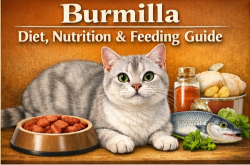
Burmilla cats are known for their playful nature, gentle personality, and lean body shape. Like all cats, Burmillas are obligate carnivores. This means their bodies are built to eat and use nutrients from animal-based foods. A proper diet helps them keep strong muscles, healthy organs, and a shiny coat.
Protein is the most important part of a Burmilla’s diet. Cats use protein as their main energy source, not carbohydrates. Good-quality animal protein supports muscle tone and keeps your Burmilla active and alert. Feeding enough protein matters more than chasing high numbers on the label.
Fats are also important for Burmilla cats. Fat gives energy, helps absorb vitamins, and supports skin and coat health. Because many Burmillas live indoors, their fat intake should be balanced so they do not gain weight over time.
Carbohydrates are not harmful in small amounts, but cats do not need a lot of them. Too many carbs can lead to weight gain, especially in indoor or neutered Burmillas. The focus should always be on balanced, complete cat food rather than trendy diets.
Here is a simple overview of the key nutrients Burmilla cats need:
| Nutrient | Why It Matters for Burmilla Cats |
|---|---|
| Animal Protein | Builds muscle and supports daily energy |
| Fat | Helps with energy, skin, and coat health |
| Taurine | Supports heart and eye health |
| Vitamins & Minerals | Keep bones, organs, and immune system healthy |
| Moisture | Supports hydration and urinary health |
Best Food Choices for Burmilla Cats (Wet, Dry, or Mixed?)
Choosing food for a Burmilla cat is not about finding one “perfect” type. Wet food, dry food, and mixed feeding can all work when done correctly. The best choice depends on your cat’s needs and your daily routine.
Wet food contains a lot of moisture, which helps cats stay hydrated. This is helpful because many cats do not drink enough water on their own. Wet food can also be easier to eat for picky cats and seniors.
Dry food is convenient and easy to store. It can work well for portion control when measured properly. However, dry food has less moisture, so water intake becomes more important when feeding dry meals.
Mixed feeding combines wet and dry food. Many Burmilla owners use this method to balance hydration, cost, and convenience. It can also add variety, which some cats enjoy.
Here is a clear comparison to help you decide:
| Feeding Type | Benefits | Things to Watch |
|---|---|---|
| Wet Food | High moisture, strong smell, easy to eat | Higher cost, shorter shelf life |
| Dry Food | Easy storage, convenient | Low moisture, easy to overfeed |
| Mixed Feeding | Balanced and flexible | Needs portion awareness |
How Much and How Often to Feed a Burmilla Cat
How much a Burmilla should eat depends on age, activity level, and whether the cat is spayed or neutered. Portion size matters more than filling the bowl. Many cats gain weight slowly, and owners may not notice right away.
Most Burmilla cats do better with scheduled meals instead of free feeding. Feeding meals helps you notice appetite changes and prevents overeating. Adult Burmillas usually do well with two meals a day, while kittens need more frequent meals.
Free feeding can work for some cats, but it often leads to weight gain, especially in indoor cats. Burmillas are affectionate and may ask for food even when they are not hungry.
Watch your cat’s body shape and energy level. A healthy Burmilla should have a visible waist and be active but not restless.
General feeding guidance:
| Cat Type | Meal Frequency | General Feeding Tip |
|---|---|---|
| Kitten | 3–4 meals daily | Support growth and energy |
| Adult | 2 meals daily | Maintain lean body |
| Senior | 2 smaller meals | Support digestion |
Feeding Burmilla Cats at Different Life Stages
Burmilla cats have different nutritional needs as they grow. Feeding for the correct life stage helps prevent future health issues and supports long-term wellness.
Kittens need food made for growth. These foods have more protein and energy to support development. Kittens should eat small meals several times a day to match their fast metabolism.
Adult Burmillas need balanced nutrition to maintain muscle without gaining excess weight. This is the stage where portion control becomes very important, especially for indoor cats.
Senior Burmillas may eat less and move less. Some seniors benefit from softer food and slightly smaller meals. Appetite changes should always be watched closely.
Life-stage overview:
| Life Stage | Main Feeding Focus |
|---|---|
| Kitten | Growth, energy, muscle development |
| Adult | Weight control and steady nutrition |
| Senior | Easy digestion and appetite support |
Treats, Human Food, and Common Burmilla Feeding Mistakes
Treats should only make up a small part of a Burmilla’s diet. Treats are best used for training or bonding, not daily meals. Too many treats can quickly lead to weight gain.
Many human foods are unsafe for cats. Foods like onions, garlic, chocolate, and seasoned table scraps should never be given. Even safe human foods should be offered rarely and in tiny amounts.
Common feeding mistakes include overfeeding, guessing portion sizes, and feeding too many snacks. Another mistake is changing food too quickly, which can upset a cat’s stomach.
Simple treat and mistake guide:
| Do | Don’t |
|---|---|
| Use treats in small amounts | Feed table scraps |
| Measure meals | Free-feed without limits |
| Watch weight changes | Ignore slow weight gain |
If your Burmilla shows sudden weight loss, refusal to eat, or ongoing stomach issues, it’s best to speak with a veterinarian.
If you want to learn more about how cat food is regulated and what “complete and balanced” means, you can visit the Association of American Feed Control Officials (AAFCO):
https://www.aafco.org

Ata Ur Rehman is the founder of Pet Age in Human Years Calculator, an educational platform that provides age conversion charts and lifespan guides for dogs, cats, birds, and other companion animals. His work focuses on helping pet owners understand how animal ages translate into human years using commonly accepted age conversion formulas and published lifespan averages.
The website compiles breed and species lifespan data from kennel clubs, breed organizations, and general animal lifespan studies to present simple and easy-to-understand guides for pet owners worldwide.
This website was created to centralize animal age conversion charts into one easy reference platform for pet owners.