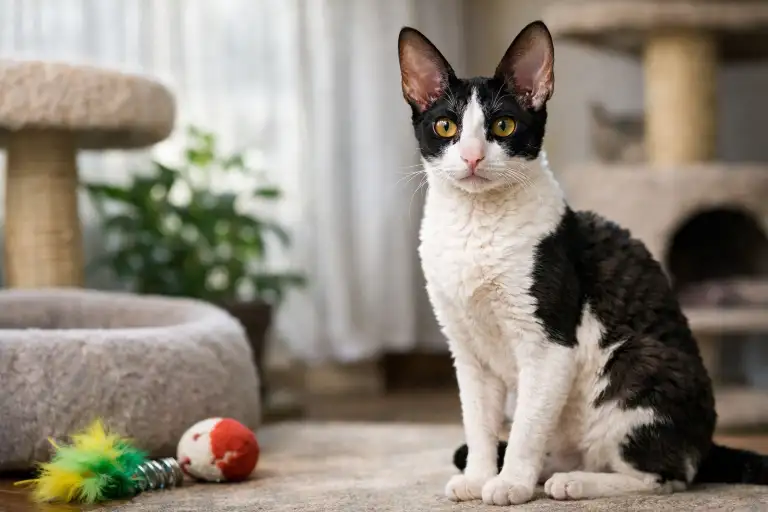
The Cornish Rex cat is one of the most unusual and instantly recognizable cat breeds in the world, both in appearance and personality. Unlike most breeds that were selectively developed over generations, the Cornish Rex began with a natural genetic mutation that appeared unexpectedly in a litter of barn cats in Cornwall, England, in the early 1950s. One kitten, later named Kallibunker, was born with an extremely short, curly coat, a slim body, and large ears that looked nothing like his littermates. This single kitten became the foundation of the Cornish Rex breed.
The unique coat of the Cornish Rex comes from a recessive genetic mutation known as the rex gene. This gene affects the structure of the hair shaft, leaving the cat without the stiff outer guard hairs found in most cats. As a result, Cornish Rex cats have only a soft undercoat that forms tight waves close to the body. This mutation does not just influence the coat. It also plays a role in how the breed feels to the touch, how it retains heat, and how sensitive it can be to cold environments.
Early breeders quickly realized that the gene responsible for the Cornish Rex’s coat was rare and fragile within a small gene pool. To preserve the breed, Cornish Rex cats were carefully outcrossed with other breeds, including Siamese, Burmese, and British Shorthairs. These early breeding decisions shaped much of what defines the Cornish Rex today: a long, fine-boned body, high energy levels, strong people attachment, and a curious, playful temperament that often lasts well into adulthood.
The Cornish Rex gained formal recognition from major cat organizations as breeders refined its type and temperament. Today, the breed is recognized by organizations such as the Cat Fanciers’ Association (CFA), The International Cat Association (TICA), and the Fédération Internationale Féline (FIFe). While standards may vary slightly between registries, all agree on the breed’s defining traits: a curly coat, athletic body, large ears, and a highly social personality.
Despite its elegant appearance, the Cornish Rex is not a delicate or passive cat. Owners often describe this breed as more dog-like than feline in behavior. Cornish Rex cats tend to form intense bonds with their humans, follow them from room to room, and actively seek interaction throughout the day. This combination of striking looks and emotionally engaged behavior is what truly sets the Cornish Rex apart from more independent or low-energy cat breeds.
Cornish Rex Appearance, Size, and Physical Traits
The Cornish Rex cat looks very different from most other cats. Many people notice this breed right away because of its curly coat, slim body, and large ears. Even people who know a lot about cats often say the Cornish Rex looks unusual, almost like it came from another world.
One of the first things people ask about is size. The Cornish Rex is a medium-sized cat, but it often looks smaller than it really is because of its fine bones and light frame. When you pick one up, it may feel lighter than expected, even though it is strong and muscular.
Below is a simple overview of the Cornish Rex’s physical traits to make this easy to scan:
| Feature | Cornish Rex Details |
|---|---|
| Average weight | 6–10 pounds (males usually heavier than females) |
| Body type | Slim, long, and athletic |
| Legs | Long and slender |
| Head shape | Egg-shaped with high cheekbones |
| Ears | Very large and set high on the head |
| Coat type | Very short, soft, and curly |
| Shedding level | Low, but not zero |
The body of a Cornish Rex is long and flexible, with a natural curve in the back. This gives the cat a graceful look when walking or jumping. Their legs are long, which helps them jump high and move quickly. Even though they look delicate, Cornish Rex cats are active and strong.
The coat is the most famous feature of this breed. Cornish Rex cats do not have the stiff outer hairs that most cats have. Instead, they only have a soft undercoat that forms waves close to the skin. The coat feels warm and smooth, often compared to velvet or suede. Because the fur is so short, the shape of the body is easy to see.
Cornish Rex cats come in many colors and patterns. Solid colors, tabby patterns, and color-point styles are all possible. The curl of the coat may be tighter in some cats and looser in others, and it can even change slightly as the cat grows.
Another special feature is the ears. Cornish Rex cats have very large ears that sit high on the head. Their whiskers and eyebrows are often curly or very short, which adds to their unique look.
Because of their thin coat, Cornish Rex cats can feel warm to the touch. They also lose body heat faster than most cats, which is why they often seek warm spots in the house, such as sunny windows, blankets, or laps.
Cornish Rex Personality, Behavior, and Energy Level
The Cornish Rex cat is not a quiet or distant breed. This cat is known for being very social, playful, and closely connected to its people. Many owners say their Cornish Rex acts more like a small dog than a typical cat.
One of the strongest traits of the Cornish Rex is affection. These cats love being near their humans. They often follow their owners from room to room, sit on laps, and sleep under blankets. Some Cornish Rex cats even try to climb onto shoulders or curl up against their owner’s chest for warmth and comfort.
Below is a quick look at the Cornish Rex personality to make this section easy to scan:
| Trait | What to Expect |
|---|---|
| Affection level | Very high |
| Energy level | High and playful |
| Independence | Low |
| Intelligence | High |
| Vocalization | Moderate |
| Social needs | Very strong |
Cornish Rex cats have a lot of energy. They enjoy running, jumping, climbing, and playing games throughout the day. Many like to play fetch, chase toys, or climb cat trees. They do not usually grow calm and lazy with age as quickly as other breeds. Even adult Cornish Rex cats often keep a kitten-like love for play.
Because they are so smart, Cornish Rex cats get bored easily. If they do not get enough attention or playtime, they may look for ways to entertain themselves. This can include climbing shelves, opening cabinets, or getting into places they should not. Mental play is just as important as physical play for this breed.
The Cornish Rex is also very people-focused. These cats do not like being alone for long hours every day. If left alone too often, they may become lonely or stressed. Many do best in homes where someone is around most of the day or where they have another friendly pet for company.
When it comes to talking, Cornish Rex cats are not usually loud, but they are expressive. They may use soft sounds, chirps, or short meows to get attention or say hello. They often communicate with body language and touch as much as with sound.
Cornish Rex cats usually do well with gentle children who know how to handle pets kindly. They also tend to get along with other cats and even dogs, especially if they are raised together. Their playful nature makes them enjoy company, but slow and careful introductions are still important.
Cornish Rex Care, Health, and Lifespan
Caring for a Cornish Rex cat is not hard, but it is different from caring for many other cats. This breed has special needs because of its short, curly coat and active nature. Understanding these needs helps keep the cat healthy and comfortable.
Cornish Rex cats have very little fur, so they do not shed much. However, less fur does not mean no grooming. Their skin produces natural oils that are not absorbed by thick fur, so some Cornish Rex cats may need an occasional bath to keep their skin clean. This is usually needed only when the coat feels greasy, not on a regular schedule.
Ear care is important for this breed. Their large ears can collect wax faster than other cats. Gently cleaning the ears when needed helps prevent irritation or infection. Nail trimming and basic dental care are also part of normal upkeep.
Because of their thin coat, Cornish Rex cats get cold easily. They often look for warm places in the house and enjoy soft beds, blankets, or heated areas. Many owners notice their Cornish Rex sleeps under covers or close to heaters. This is normal behavior for the breed.
Below is a simple care and health overview to make this section easy to read:
| Care Area | What to Know |
|---|---|
| Grooming | Low brushing, occasional bathing |
| Shedding | Low |
| Cold sensitivity | High |
| Ear care | Needs regular checking |
| Exercise needs | High |
| Indoor living | Strongly recommended |
Cornish Rex cats are generally healthy, but like all purebred cats, they can have some breed-linked health concerns. Responsible breeders screen for known issues and focus on healthy lines. Regular veterinary checkups help catch any problems early.
The average lifespan of a Cornish Rex cat is usually between 12 and 15 years, and many live longer with good care. Diet, indoor living, and proper medical care all play a role in how long a Cornish Rex lives.
Keeping this breed indoors is very important. Their thin coat offers little protection from cold, heat, and injuries. Indoor living also lowers the risk of accidents, fights, and illnesses.
Is the Cornish Rex Right for You? Cost, Pros, and Cons
The Cornish Rex is a wonderful cat for the right home, but it is not the best choice for everyone. Before choosing this breed, it is important to understand the costs, lifestyle needs, and both the good and challenging sides of owning a Cornish Rex.
Cornish Rex cats do best in homes where they get a lot of attention. They enjoy being around people and do not like being left alone for long hours every day. Homes where someone works from home, families with older children, or households with another friendly pet often suit this breed well.
Below is a simple table to help you quickly see the pros and cons of the Cornish Rex:
| Pros | Cons |
|---|---|
| Very affectionate and loving | Does not like being alone |
| Playful and fun at all ages | Needs daily play and attention |
| Low shedding coat | Gets cold easily |
| Intelligent and easy to train | Can get bored and mischievous |
| Usually good with kids and pets | Not ideal for very busy owners |
When it comes to cost, Cornish Rex kittens are usually more expensive than mixed-breed cats. The price can vary based on the breeder, location, and bloodline. On average, a Cornish Rex kitten may cost more because responsible breeders invest in health testing and proper care.
Daily costs for this breed are similar to other cats, but there may be a few extra expenses. Soft bedding, warm sleeping areas, and regular vet care are important. Some owners also choose pet insurance to help manage future medical costs.
The Cornish Rex can be a good choice for first-time cat owners if they are ready to give time and attention. This breed is very social and easy to bond with, but it needs mental and physical play every day. People who want a quiet, independent cat may find the Cornish Rex too demanding.
This breed does well in apartments as long as there is enough space to climb and play. Cat trees, shelves, and toys help keep a Cornish Rex happy indoors. Outdoor access is not recommended because of safety and temperature risks.
The Cornish Rex is ideal for people who want a close companion, enjoy interactive play, and can spend time with their cat every day. It may not be a good fit for homes where everyone is away all day or for owners who prefer a low-energy, hands-off pet.
For the official breed standard and trusted breed information, visit the Cornish Rex profile on the Cat Fanciers’ Association website: https://cfa.org/breed/cornish-rex/

Ata Ur Rehman is the founder of Pet Age in Human Years Calculator, an educational platform that provides age conversion charts and lifespan guides for dogs, cats, birds, and other companion animals. His work focuses on helping pet owners understand how animal ages translate into human years using commonly accepted age conversion formulas and published lifespan averages.
The website compiles breed and species lifespan data from kennel clubs, breed organizations, and general animal lifespan studies to present simple and easy-to-understand guides for pet owners worldwide.
This website was created to centralize animal age conversion charts into one easy reference platform for pet owners.