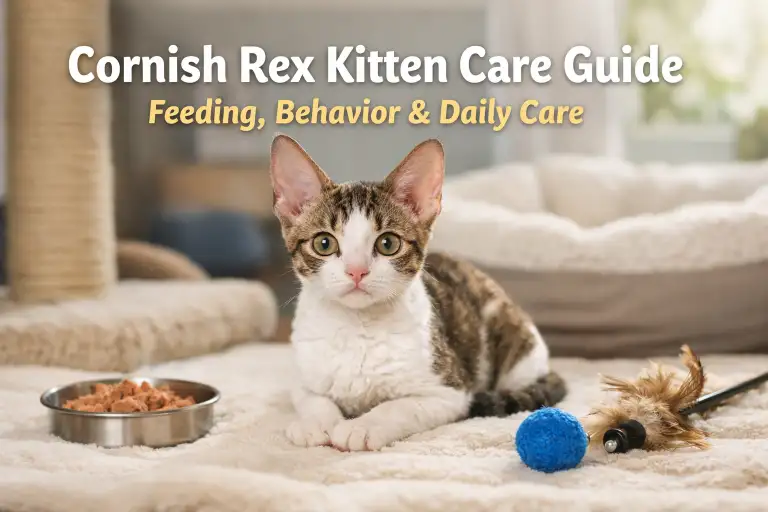
Bringing home a Cornish Rex kitten is exciting, joyful—and sometimes a little overwhelming, especially if this is your first kitten or your first experience with this breed. Cornish Rex kittens are not “difficult,” but they are different enough from typical kittens that new owners often worry they’re doing something wrong when, in reality, their kitten is behaving exactly as expected.
Cornish Rex kittens are known for their high energy, strong attachment to people, and constant need for warmth and interaction. Many new owners are surprised by how active they are, how often they want to play, and how closely they follow their humans from room to room. Others worry about their kitten’s appetite, sleep patterns, or warm-to-the-touch body. These traits are all normal for Cornish Rex kittens and do not mean your kitten is anxious, sick, or poorly adjusted.
This guide is designed to help you understand what normal Cornish Rex kitten care actually looks like in everyday life. Instead of focusing on perfection, strict rules, or overwhelming details, it focuses on realistic routines, gentle guidance, and reassurance. You’ll learn how to set up your home, feed your kitten appropriately, manage their energy and behavior, and care for their unique coat and body needs without turning daily care into a stressful checklist.
If your Cornish Rex kitten feels more energetic, more curious, and more people-focused than you expected, you’re not alone—and you’re likely doing much better than you think. The goal of this guide is to help you feel calm, confident, and prepared as your kitten grows, while making sure their needs are met in a way that fits real life, not an idealized version of it.
Preparing Your Home & Daily Routine for a Cornish Rex Kitten
Before your Cornish Rex kitten settles in, your home needs a few simple adjustments. This breed is very active, curious, and sensitive to cold, so a safe and comfortable setup helps prevent problems before they start.
Making your home safe and comfortable
Cornish Rex kittens love to climb, jump, and explore. Anything they can reach, they will try to investigate.
Focus on these basics first:
- Keep your kitten indoors only
- Close small gaps where a kitten could get stuck
- Secure windows, balconies, and stairs
- Hide loose wires and remove breakable items
- Place soft beds away from cold floors and drafts
Because Cornish Rex kittens have very short coats, they feel cold more easily than other kittens. Warm sleeping spots, blankets, and sunny areas are important for their comfort.
Setting up the main areas
You don’t need a big house, but you do need clear spaces:
- A quiet sleeping area where your kitten can rest undisturbed
- A feeding area away from the litter box
- At least one easily accessible litter box
- Open floor space for running and play
Cornish Rex kittens enjoy being near people, so placing their bed or perch in a room where you spend time helps them feel secure.
Understanding daily routine needs
Cornish Rex kittens do best with a loose routine. This does not mean strict timing, but a general flow to the day. Routines help kittens feel safe and reduce unwanted behavior like nighttime zoomies.
Below is a simple example of what a normal day may look like:
| Time of day | What usually happens |
|---|---|
| Morning | Feeding, short play session, then rest |
| Midday | Long naps, light movement, litter use |
| Afternoon | Playtime, exploration, quiet rest |
| Evening | Feeding, longer interactive play |
| Night | Sleep with short bursts of movement |
Your kitten may not follow this exactly, and that’s okay. Cornish Rex kittens often have bursts of energy followed by deep sleep.
Common routine mistakes to avoid
New owners often:
- Play too little, leading to restless behavior
- Play too late at night, causing sleep problems
- Expect the kitten to entertain itself all day
Short, frequent play sessions during the day help your kitten settle more easily at night.
Feeding & Nutrition Needs of Cornish Rex Kittens
Feeding a Cornish Rex kitten can feel confusing at first. Many owners worry their kitten is always hungry or eating too fast. This is very common for this breed and usually normal.
Cornish Rex kittens are active and burn energy quickly. Because of this, they often need food more often than calm or low-energy kittens.
How often to feed a Cornish Rex kitten
Young kittens need several small meals each day. Large meals are harder for them to handle and can upset their stomach.
Here is a simple feeding guide by age:
| Kitten age | Meals per day | What to expect |
|---|---|---|
| Under 3 months | 4 meals | Fast growth, strong appetite |
| 3–6 months | 3 meals | High energy, steady eating |
| Over 6 months | 2–3 meals | Slower growth, more routine |
Your kitten may ask for food often. This does not always mean they need more food. It often means they want attention or are bored.
Wet food and dry food basics
Most kittens do well with a mix of wet and dry food.
- Wet food helps with hydration
- Dry food is easy for grazing and helps keep teeth clean
Always choose food made for kittens. Kitten food has more energy and nutrients than adult cat food.
Treats and human food
Treats should be small and not given often. Too many treats can cause weight gain or tummy problems.
Avoid giving:
- Milk
- Spicy or salty foods
- Fatty table scraps
Fresh water should always be available.
Normal hunger vs overfeeding signs
It helps to know what is normal and what may mean you are feeding too much.
| Normal signs | Possible overfeeding signs |
|---|---|
| Eats eagerly | Leaves food uneaten |
| Active and playful | Low energy after meals |
| Healthy weight gain | Soft belly or loose stools |
If you are unsure, watching your kitten’s energy and body shape is more helpful than counting every bite.
Litter Training, Behavior & Socialization in Cornish Rex Kittens
Cornish Rex kittens are smart, curious, and very people-focused. Because of this, they usually learn fast, but they can also get into trouble if they are bored or confused. Understanding normal behavior helps you stay calm and respond the right way.
Litter training basics
Most Cornish Rex kittens learn to use the litter box quickly. If they were raised with their mother, they often already know what to do.
To help your kitten succeed:
- Place the litter box in a quiet, easy-to-reach area
- Keep the box clean and scoop daily
- Use a gentle, unscented litter
- Do not move the box often
Accidents can happen, especially in the first few days. This does not mean your kitten is being naughty or difficult.
Normal Cornish Rex kitten behavior by age
Many new owners worry when they see biting, climbing, or nonstop movement. These behaviors are usually normal.
| Age | Common behaviors |
|---|---|
| 8–12 weeks | Biting during play, short zoomies |
| 3–4 months | Climbing, jumping, high curiosity |
| 4–6 months | Strong play drive, testing limits |
Cornish Rex kittens often seem more active than other kittens. This is part of their breed, not a behavior problem.
Play biting and scratching
Play biting is common and does not mean your kitten is aggressive.
Helpful tips:
- Use toys, not hands, during play
- Stop play if biting becomes rough
- Redirect to scratching posts or toys
Never yell or punish your kitten. This can cause fear and slow learning.
Socialization and bonding
Cornish Rex kittens love attention and close contact. They often follow their owners from room to room.
To build a strong bond:
- Handle your kitten gently every day
- Speak calmly and move slowly
- Let your kitten come to you
If your kitten wants to be near you often, this is normal for this breed and a sign of trust.
Common beginner mistakes and better choices
| Common mistake | Better choice |
|---|---|
| Using hands as toys | Use wand or ball toys |
| Yelling for accidents | Clean quietly and reset |
| Ignoring play needs | Schedule daily play time |
Grooming, Health Awareness & Long-Term Care
Cornish Rex kittens may look like they do not need much care because of their short coat, but they still need gentle grooming and daily attention. Their skin and body are different from other kittens, so simple care habits help keep them comfortable and healthy.
Grooming needs for Cornish Rex kittens
Cornish Rex kittens have very short, soft fur. This means:
- They shed less than many other cats
- Their skin can get oily if not cared for gently
Light grooming is usually enough.
- Wipe the coat gently if it looks dirty
- Trim nails regularly, since they climb a lot
- Check ears often and keep them clean
Too much bathing can dry out their skin, so it should not be done often.
Keeping your kitten warm
Because of their thin coat, Cornish Rex kittens feel cold more easily.
- Provide warm beds and blankets
- Keep them away from drafts
- Let them enjoy sunny spots safely
If your kitten curls up tightly or seeks warmth often, this is normal behavior for the breed.
Health awareness for new owners
You do not need to watch your kitten all the time, but it helps to know what a healthy kitten looks like.
- Bright eyes
- Good appetite
- Playful energy
- Regular litter box use
Small changes for a day or two can be normal. Big or lasting changes are a good reason to call a vet.
First vet visits and ongoing care
Most kittens visit a vet soon after coming home. This helps check growth and general health.
Here is a simple care reminder list you can keep in mind:
| Care area | What to remember |
|---|---|
| Grooming | Gentle care, not too often |
| Warmth | Soft beds, no cold drafts |
| Play | Daily activity is needed |
| Vet care | Regular checkups as advised |
Looking ahead as your kitten grows
Cornish Rex kittens often stay playful and affectionate as adults. With steady care, routine play, and attention, they grow into confident and loving cats.
For more general, breed-neutral guidance on raising kittens, you can also read the kitten care resources from International Cat Care, which offer practical, welfare-focused advice trusted by vets and experienced cat owners worldwide.https://icatcare.org/advice/kitten-care/

Ata Ur Rehman is the founder of Pet Age in Human Years Calculator, an educational platform that provides age conversion charts and lifespan guides for dogs, cats, birds, and other companion animals. His work focuses on helping pet owners understand how animal ages translate into human years using commonly accepted age conversion formulas and published lifespan averages.
The website compiles breed and species lifespan data from kennel clubs, breed organizations, and general animal lifespan studies to present simple and easy-to-understand guides for pet owners worldwide.
This website was created to centralize animal age conversion charts into one easy reference platform for pet owners.