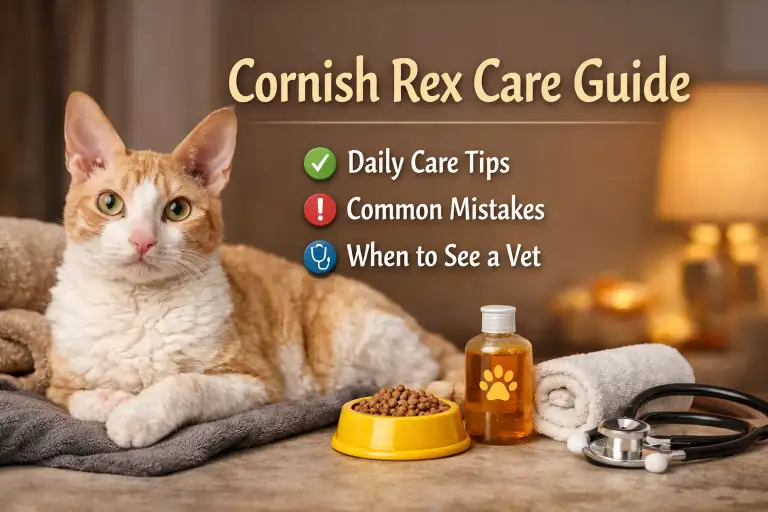
Cornish Rex care is different from caring for most short-haired cats, and this guide is written for owners who want clear, practical help rather than vague breed descriptions. Whether you already live with a Cornish Rex or are preparing to bring one home, understanding their unique needs early can prevent many common problems related to skin health, temperature sensitivity, and behavior.
Cornish Rex cats have a very fine, curly coat, a fast metabolism, and a highly social, energetic personality. These traits affect how they stay warm, how often they need skin care, how much interaction they require, and how quickly boredom can turn into stress or destructive behavior. Many new owners struggle because standard “low-maintenance short-hair cat” advice does not fully apply to this breed.
This care guide focuses on what owners actually need to know day to day. It explains how to meet a Cornish Rex’s physical, emotional, and environmental needs in a realistic way, even if you work full-time or live in a small home. You’ll learn how to build a simple care routine, what mistakes to avoid, and when home care is enough versus when a veterinarian should be involved.
The goal of this article is to help you keep your Cornish Rex comfortable, healthy, and mentally satisfied throughout every life stage, from playful kittenhood to senior years.
Understanding Cornish Rex Care Needs
Cornish Rex cats look delicate, but their care needs go deeper than their appearance. They are not just “short-haired cats with curls.” Their body, skin, and behavior all affect how they should be cared for every day.
Their coat is very thin and fine. It does not protect them from cold the way normal fur does. Because of this, Cornish Rex cats lose body heat faster and often seek warm places. Drafty rooms, cold floors, and sudden weather changes can make them uncomfortable.
Their skin produces more oil than many other cats. This is normal for the breed, but it means dirt and oil can build up faster. If skin care is ignored, some cats may feel greasy or develop irritation. At the same time, too much bathing can damage their skin, so balance is important.
Cornish Rex cats also have a fast metabolism and a high energy level. They burn calories quickly and usually need regular meals and daily playtime. If their energy needs are not met, they may become restless, vocal, or destructive.
Their personality matters too. Most Cornish Rex cats are very social and people-focused. They often follow their owners around, want attention, and dislike being left alone for long periods. This means mental care is just as important as physical care.
The table below shows how Cornish Rex cats differ from typical short-haired cats and why it affects daily care:
| Trait | Cornish Rex | Why It Matters for Care |
|---|---|---|
| Coat type | Very short, thin, curly | Less warmth, less protection |
| Skin oil | Higher than average | Needs gentle skin monitoring |
| Body temperature | Loses heat quickly | Needs warm sleeping areas |
| Energy level | Very high | Needs daily play and activity |
| Social needs | Very people-oriented | Needs interaction and attention |
Understanding these differences helps explain why some common cat advice does not work well for Cornish Rex cats. Once owners know what is normal for the breed, daily care becomes much easier and less stressful.
Daily and Weekly Cornish Rex Care Routine
Cornish Rex cats do best when their care is simple but consistent. You do not need to do something complicated every day, but you do need to meet their basic needs regularly. A steady routine helps keep their skin healthy, their body warm, and their behavior calm.
Daily care is mostly about comfort, food, and interaction. Cornish Rex cats like warmth, so they should always have soft bedding, blankets, or warm spots to rest. They enjoy being near people and usually want daily play and attention. Short play sessions, even 10 to 15 minutes, help burn energy and prevent boredom.
Feeding should be regular. Many Cornish Rex cats have a strong appetite because they burn calories fast. Watch their body shape, not just how hungry they act. Fresh water should always be available, and food bowls should be kept clean.
Weekly or occasional care focuses more on skin, ears, and basic grooming. Their coat does not need brushing like long-haired cats, but their skin does need gentle monitoring. Some cats may need light wiping with a soft, damp cloth. Bathing is not always needed and should only be done when the skin feels very oily or dirty.
The table below shows how often common care tasks are usually needed:
| Care Task | How Often | What to Watch For |
|---|---|---|
| Warm resting areas | Daily | Cat seeking heat or shivering |
| Play and activity | Daily | Restlessness or boredom |
| Feeding and water | Daily | Weight gain or loss |
| Skin check | Weekly | Greasy feel or redness |
| Ear check | Weekly | Dark wax or odor |
| Bathing | Occasionally | Only if skin is very oily |
| Nail trimming | Every 2–3 weeks | Overgrown or sharp nails |
Skin and grooming care should always be gentle. Cornish Rex skin can be sensitive, and rough handling can cause irritation. The goal is to keep the skin clean without stripping natural oils.
| Care Area | What to Do | What to Avoid |
|---|---|---|
| Skin | Gentle wiping if needed | Frequent bathing |
| Coat | Let natural curls be | Brushing or combing |
| Ears | Check and clean gently | Deep or harsh cleaning |
| Nails | Trim carefully | Letting nails overgrow |
A calm routine makes care easier for both you and your cat. When Cornish Rex cats know what to expect, they are usually happier and easier to manage.
Common Cornish Rex Care Mistakes, Risks, and Safety Warnings
Many Cornish Rex care problems happen because owners treat them like regular short-haired cats. These mistakes are common and usually come from good intentions, but they can cause skin issues, stress, or health problems over time.
One common mistake is bathing too often. Because Cornish Rex skin can feel oily, some owners think frequent baths are needed. In reality, too much bathing can dry out the skin and cause irritation. Baths should only be done when truly needed.
Another mistake is ignoring cold sensitivity. Cornish Rex cats get cold easily, even indoors. Cold floors, open windows, or strong air conditioning can make them uncomfortable. If a cat is always seeking warmth or curling tightly, the environment may be too cold.
Many owners also underestimate how much play and attention these cats need. Cornish Rex cats are very active and social. If they do not get enough play or interaction, they may become noisy, clingy, or destructive.
Overfeeding is another risk. Cornish Rex cats often act hungry because of their fast metabolism, but giving too much food can still lead to weight gain. It is better to watch body shape and energy level rather than food-seeking behavior alone.
The table below shows clear “do” and “avoid” actions to help prevent common problems:
| Do This | Avoid This | Why It Matters |
|---|---|---|
| Provide warm sleeping areas | Leaving cat in cold rooms | Prevents discomfort and stress |
| Play daily | Ignoring energy needs | Reduces boredom behaviors |
| Bathe only when needed | Frequent bathing | Protects skin health |
| Monitor body condition | Feeding on demand | Prevents weight issues |
| Handle skin gently | Rough cleaning | Avoids irritation |
Safety warnings should never be ignored. Red, sore skin, strong ear odor, sudden weight loss, or big behavior changes are signs that something is wrong. If home care changes do not help, a veterinarian should be consulted.
Special Situations, Vet Guidance, and Owner FAQs
Cornish Rex care can change based on age, living situation, and health. Knowing when to adjust home care and when to get help makes caring for your cat much easier and safer.
Kittens, adults, and seniors do not have the same needs. Younger cats need more food, warmth, and play. Older cats may slow down and need extra comfort and closer health checks.
The table below shows how care usually changes by life stage:
| Life Stage | Key Care Focus | Extra Monitoring Needed |
|---|---|---|
| Kitten (under 1 year) | Warmth, frequent meals, safe play | Growth, weight gain, energy |
| Adult (1–6 years) | Daily play, steady routines | Skin condition, weight |
| Mature (7–10 years) | Comfort, calmer activity | Appetite and energy changes |
| Senior (11+ years) | Warmth, gentle care | Mobility, weight, behavior |
Living indoors is safest for Cornish Rex cats. Their thin coat and friendly nature make outdoor life risky. If they go outside at all, it should be supervised, such as leash walks in safe areas.
Multi-cat homes can work well, but energy levels may not match. Cornish Rex cats are very active and may annoy calmer cats. Extra play and separate resting spots help reduce stress.
Some care issues can be handled at home, while others need a veterinarian. The table below helps explain the difference:
| Situation | Try at Home | See a Vet If |
|---|---|---|
| Mild oily skin | Gentle wiping | Redness or sores appear |
| Slight behavior change | More play and routine | Behavior worsens or continues |
| Small appetite change | Monitor for a few days | Weight loss or refusal to eat |
| Ear wax | Gentle cleaning | Strong odor or pain |
| Low energy | Improve warmth and rest | Lasts more than a few days |
Owners often ask if Cornish Rex cats are good for beginners. They can be, as long as the owner understands their need for warmth, daily play, and attention.
Another common question is whether they need special food. Most do well on normal high-quality cat food, but portions should be watched closely.
Many people also ask how long Cornish Rex cats live. With good care and regular vet visits, many live long, healthy lives.
The most important advice is to watch your cat closely. Small changes often mean something needs adjusting.
For more detailed, veterinarian-approved guidance on feline health and care standards, you can also refer to the American Association of Feline Practitioners (AAFP), which provides evidence-based resources for cat owners and professionals alike: https://catvets.com

Ata Ur Rehman is the founder of Pet Age in Human Years Calculator, an educational platform that provides age conversion charts and lifespan guides for dogs, cats, birds, and other companion animals. His work focuses on helping pet owners understand how animal ages translate into human years using commonly accepted age conversion formulas and published lifespan averages.
The website compiles breed and species lifespan data from kennel clubs, breed organizations, and general animal lifespan studies to present simple and easy-to-understand guides for pet owners worldwide.
This website was created to centralize animal age conversion charts into one easy reference platform for pet owners.