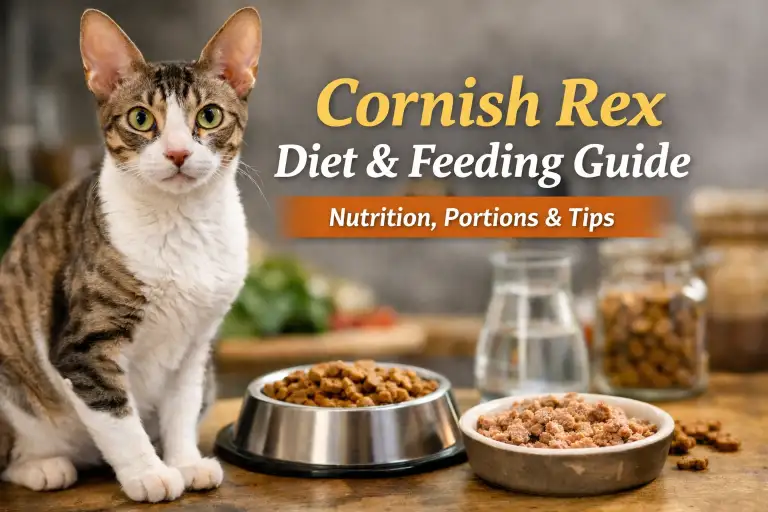
Cornish Rex cats have a very different body structure and energy use compared to many other cats, and this directly affects how they should be fed. They are lean, muscular, and highly active, with a fast metabolism that burns energy quickly. Because of this, diet quality matters more than simply offering larger amounts of food.
Like all cats, the Cornish Rex is an obligate carnivore. This means their bodies are designed to get nutrients primarily from animal-based foods, not plants. Protein is essential for maintaining muscle, supporting normal organ function, and keeping energy levels stable. Fat is also important, as it provides a concentrated source of energy that helps active cats maintain body condition.
Many Cornish Rex owners notice that their cat seems hungry all the time. This behavior is often linked to high activity levels rather than poor feeding. A healthy Cornish Rex can feel slim to the touch, and this does not automatically mean the cat is underfed. The goal is to support lean muscle and steady energy, not to make the cat feel heavy or overly full.
Because Cornish Rex cats have a very short coat and little body fat, they may burn more calories to stay warm, especially in cooler indoor environments. This makes consistent, balanced nutrition more important than frequent treats or constant grazing. Feeding should focus on nutrient density and regular meals rather than unlimited access to food.
This guide is intended to help owners understand basic Cornish Rex nutrition and feeding principles. It does not replace veterinary advice, and any concerns about weight changes, appetite loss, or health conditions should be discussed with a qualified veterinarian.
Best Food for Cornish Rex Cats: Nutrition, Ingredients, and Formats
The best food for a Cornish Rex cat is one that gives strong nutrition, steady energy, and complete balance. Because this breed is very active and slim, food quality matters more than just how much your cat eats.
Protein should come first in a Cornish Rex diet. Cats use protein to build muscle, support the immune system, and stay active. Animal-based protein is the most useful for cats because their bodies are made to digest it easily. Foods with poor-quality protein may leave a Cornish Rex feeling hungry even after eating.
Fat is also important. Fat gives energy and helps cats keep a healthy body condition. For Cornish Rex cats, fat helps support their fast metabolism and active lifestyle. This does not mean the food should be greasy, but it should not be extremely low in fat either.
Carbohydrates play a smaller role in a cat’s diet. Cats do not need carbs the way humans do, but small amounts can be used as energy. The key is that carbs should not replace animal protein. A food that is very high in carbs may not keep a Cornish Rex satisfied for long.
Taurine is an essential nutrient for all cats. Cats cannot make enough taurine on their own, so it must come from their food. A balanced, complete cat food will include taurine to support heart health, vision, and overall body function.
When choosing between wet food and dry food, each has pros and cons. Wet food has more moisture, which helps with hydration and urinary health. Dry food is easy to store and can be convenient for measured meals. Many owners use a mixed feeding approach, offering both wet and dry food to balance moisture intake and routine.
Always look for cat food labeled as complete and balanced for the cat’s life stage. This shows the food meets basic nutrition standards and helps reduce the risk of missing important nutrients.
How Much and How Often to Feed a Cornish Rex
Cornish Rex cats often seem hungry, but this does not always mean they need more food. Their active nature and fast metabolism can make them ask for food often. The goal is to feed the right amount on a steady schedule, not to feed every time they beg.
Most Cornish Rex cats do well with set meal times instead of free feeding. Scheduled meals help you control portions and notice changes in appetite early. Many owners feed two to three meals a day, depending on the cat’s age, activity level, and daily routine.
Portion size is more important than how full the bowl looks. Some foods are high in calories, so a small amount may meet your cat’s needs. Other foods are less calorie dense and may require slightly larger portions. This is why watching your cat’s body condition is more useful than comparing bowl sizes.
A healthy Cornish Rex should feel lean but not bony. You should be able to feel the ribs easily with a light touch, but they should not stick out sharply. If your cat is gaining weight, losing muscle, or acting tired, the feeding amount may need adjustment.
Avoid leaving food out all day unless advised by a veterinarian. Constant access to food can lead to overeating, especially in a breed that enjoys eating. Treats should be counted as part of the daily food intake, not added on top of meals.
If you are unsure whether your Cornish Rex is getting enough food, small changes made slowly are safer than sudden increases or decreases. Any ongoing concerns about weight or appetite should be discussed with a veterinarian.
Feeding Cornish Rex Cats at Different Life Stages and Lifestyles
Cornish Rex cats need different feeding support as they grow and age. Their food should match their life stage, daily activity, and living situation.
Kittens need more energy and nutrients than adult cats. Cornish Rex kittens grow fast and play hard, so they usually eat more often than adults. Food made for kittens helps support healthy growth, strong bones, and muscle development.
Adult Cornish Rex cats need balanced meals to maintain energy without gaining excess weight. Even though they stay active, adults can still gain weight if portions are too large or treats are given too often. Regular meal times help keep their energy steady throughout the day.
Senior Cornish Rex cats may become less active as they age. Some older cats need fewer calories, while others may need more support to keep muscle. Watching body condition, appetite, and energy level is important during this stage.
Indoor Cornish Rex cats usually burn fewer calories than cats with outdoor access. Because they stay inside, portion sizes often need small adjustments to prevent weight gain. Playtime and enrichment help support healthy appetite and muscle tone.
Spayed or neutered Cornish Rex cats may experience changes in appetite and metabolism. Some cats feel hungrier after surgery, even though they may need fewer calories. Careful portion control and regular monitoring help keep weight stable.
In homes with more than one cat, feeding can be more challenging. One Cornish Rex may eat faster or steal food from others. Separate feeding areas can help ensure each cat gets the right amount.
Treats, Hydration, and Common Feeding Mistakes to Avoid
Treats can be part of a Cornish Rex’s routine, but they should be given in small amounts. Treats are meant to reward or add enjoyment, not replace regular meals. Giving too many treats can lead to poor nutrition balance and unwanted weight gain, even in an active breed like the Cornish Rex.
Human food should be offered with care. Many foods people eat are not made for cats and can upset digestion or create long-term feeding problems. Even safe foods should only be given rarely and in very small portions. A Cornish Rex that begs often is usually looking for attention or routine, not extra food.
Water intake is very important for all cats. Cornish Rex cats may not always drink enough on their own, especially if they eat mostly dry food. Wet food helps increase moisture intake, but fresh water should always be available. Clean bowls and quiet drinking areas can encourage better hydration.
Some feeding mistakes are common with this breed. Overfeeding because the cat feels thin is one of the biggest ones. Cornish Rex cats are naturally lean, and a slim body does not always mean poor health. Free feeding all day, giving too many treats, or changing foods too often can also cause problems.
If your Cornish Rex shows sudden changes in appetite, weight, energy level, or drinking habits, it is best to speak with a veterinarian. Small feeding issues can sometimes point to larger health concerns.
or more information on how to read cat food labels and understand what makes a diet complete and balanced for cats, you can visit the Association of American Feed Control Officials (AAFCO) consumer guidance page on selecting pet food:
🔗 https://www.aafco.org/consumers/understanding-pet-food/selecting-the-right-pet-food/?utm_source=chatgpt.com

Ata Ur Rehman is the founder of Pet Age in Human Years Calculator, an educational platform that provides age conversion charts and lifespan guides for dogs, cats, birds, and other companion animals. His work focuses on helping pet owners understand how animal ages translate into human years using commonly accepted age conversion formulas and published lifespan averages.
The website compiles breed and species lifespan data from kennel clubs, breed organizations, and general animal lifespan studies to present simple and easy-to-understand guides for pet owners worldwide.
This website was created to centralize animal age conversion charts into one easy reference platform for pet owners.