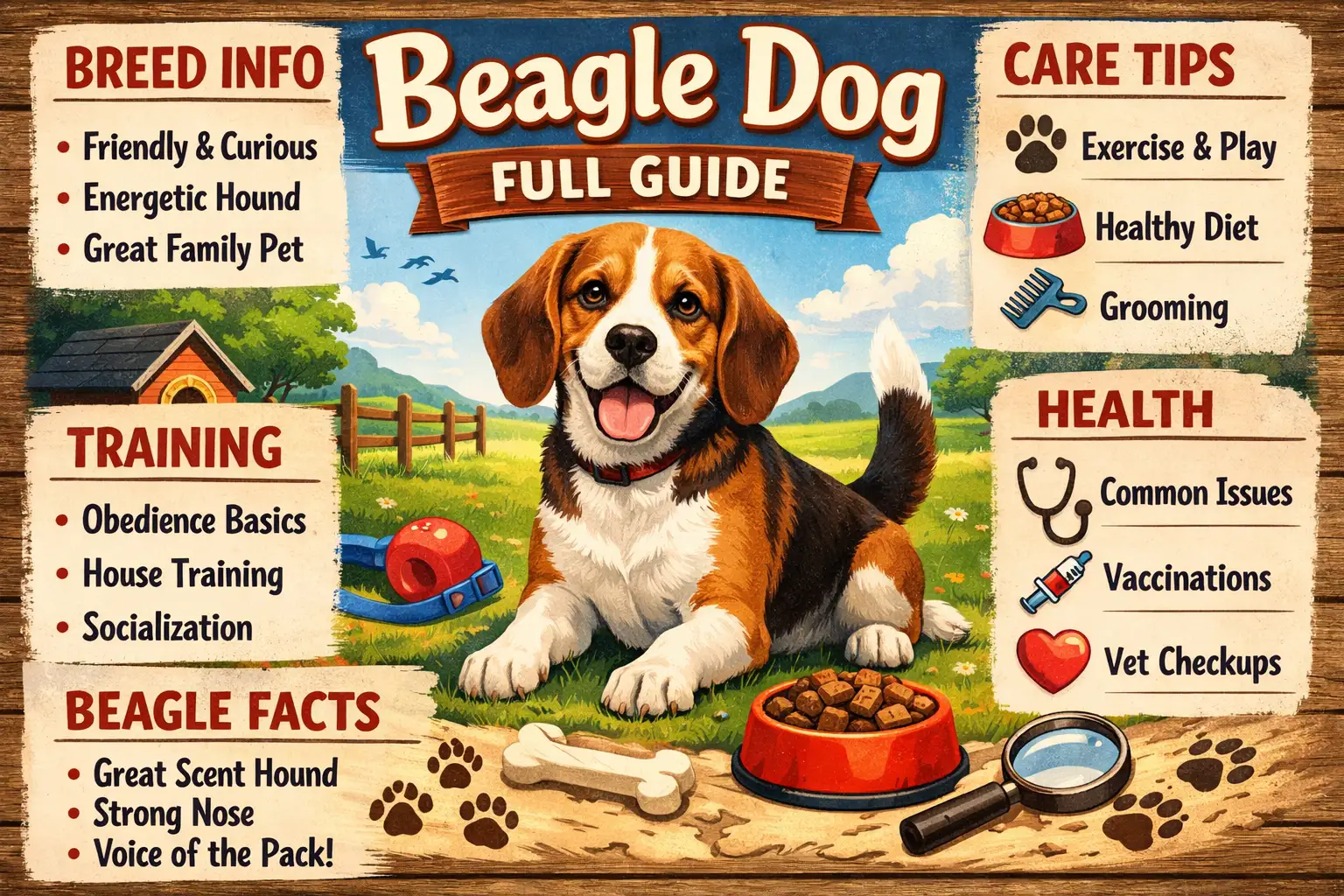
The Beagle dog breed is a small-to-medium scent hound known for its powerful nose, friendly personality, floppy ears, and compact athletic body. Beagles are playful, curious, and affectionate dogs, but they are also independent thinkers with strong scent-tracking instincts. This guide explains the Beagle’s temperament, full-grown size, lifespan, care needs, training challenges, costs, and whether this breed is the right fit for your home.
Historically, Beagles trace their roots to England, where they were developed for tracking rabbits and other small game. Their compact size allowed hunters to follow on foot, while their powerful sense of smell and endurance made them reliable pack hunters. This background explains many modern Beagle characteristics, including a strong prey drive, a love of sniffing, independence when following scents, and a deep need for daily activity and mental engagement.
Physically, the Beagle is sturdy and athletic rather than delicate. A full-grown Beagle dog is built for stamina, not short bursts of speed, and its short, dense coat helps protect it in different weather conditions. The breed’s long ears are not just cosmetic—they help move scent particles toward the nose, supporting the Beagle’s tracking ability. The white-tipped tail, historically useful for visibility in tall grass, remains one of the breed’s most recognizable features today.
Below is a quick-reference snapshot for readers who want instant clarity before diving deeper into Beagle size, temperament, lifespan, care, and ownership needs.
Beagle Dog Breed Snapshot
| Trait | Beagle Dog Breed |
|---|---|
| Breed Group | Scent Hound |
| Adult Height | 13–15 inches |
| Adult Weight | 20–30 lbs |
| Average Lifespan | 12–15 years |
| Energy Level | High |
| Temperament | Friendly, curious, playful, vocal |
| Coat Type | Short, dense, weather-resistant |
| Shedding Level | Moderate |
| Barking/Howling | High |
| Trainability | Moderate |
| Best For | Active families, homes with secure yards, owners who enjoy daily walks |
If you want to understand your Beagle’s age in human years, you can use the Beagle Age Calculator to get a quick age estimate based on your dog’s current age.
While Beagles may look similar at a glance, subtle differences in build, weight, coat color, and expression matter when choosing the right dog for your lifestyle. A Beagle may be small enough for many homes, but it is not a lazy lap dog. This breed needs movement, structure, and plenty of sniffing time to stay happy.
Full-Grown Beagle Dog Size and Appearance
| Feature | Description |
|---|---|
| Build | Compact, muscular, balanced, and athletic |
| Typical Height | 13–15 inches at the shoulder |
| Typical Weight | 20–30 lbs, depending on body type and diet |
| Coat Colors | Tricolor, lemon, red and white, tan and white, or other hound colors |
| Ears | Long, floppy, low-set ears that support scent work |
| Tail | Medium-length tail, often with a white tip |
| Eyes | Large, expressive, brown or hazel |
| Overall Look | Classic hound appearance with a strong, practical body |
In short, the Beagle dog breed combines classic hound looks with a durable, active body. Its appearance is cute and approachable, but its instincts are serious: this is a scent-driven dog that was built to follow smells, explore, and stay active for long periods.
Beagle Dog Temperament and Personality
The Beagle dog temperament is usually happy, friendly, curious, and social. Most Beagles love people and enjoy being part of daily family life. They are not usually shy dogs and often greet visitors with excitement instead of fear. Because of this, Beagles are loved as family pets, but they are not the best choice if you want a serious guard dog.
Beagles were bred to hunt in packs, and that history still shows in their personality today. They like company and do not enjoy being alone for long hours. When bored, lonely, or under-exercised, a Beagle may bark, howl, dig, chew furniture, steal food, or search for ways to escape. This behavior is not simply “bad attitude”; it usually means the dog needs more activity, structure, training, or attention.
Another important Beagle characteristic is that this breed often follows its nose more than commands. When a Beagle smells something interesting, it may ignore its owner completely. This can surprise new owners who expect quick obedience, but it is normal scent-hound behavior. Training is still possible, but it needs patience, consistency, food rewards, and safe boundaries.
Beagle Temperament Traits at a Glance
| Trait | Level | What This Means |
|---|---|---|
| Friendliness | Very High | Usually loves people, visitors, and family attention |
| Affection | High | Enjoys being close to family and joining daily routines |
| Independence | High | May make its own decisions, especially when following scents |
| Prey Drive | High | Strong urge to chase or track small animals and interesting smells |
| Barking/Howling | High | Uses its voice often, especially when excited, bored, or alert |
| Energy Level | High | Needs daily walks, sniffing time, games, and mental stimulation |
| Trainability | Moderate | Can learn well, but may be distracted by food and scent trails |
Is the Beagle a Hunting Dog?
Yes, the Beagle is a hunting dog by origin. It was developed as a scent hound for tracking rabbits and other small game. Even if a modern Beagle lives as a family pet, those hunting instincts are still part of its behavior. This is why many Beagles love sniffing, roaming, following trails, barking, howling, and chasing small animals.
This hunting background does not make the Beagle aggressive, but it does mean owners need to be careful with off-leash freedom. A Beagle that catches an interesting scent may run without thinking about roads, distance, or commands. For most owners, a secure yard, leash walks, and recall training are very important.
Beagles usually do very well with children. They are playful, cheerful, and strong enough to handle active family life. Still, young children should always be taught how to treat a dog kindly, avoid pulling ears or tails, and respect the dog’s space during food or rest time.
When it comes to other pets, Beagles are generally friendly with dogs. Cats and small animals can be more challenging. Some Beagles learn to live calmly with cats, while others may chase because of their hunting instinct. Early training, careful introductions, and supervision matter a lot.
Beagle Behavior With People and Other Pets
| Situation | Typical Beagle Behavior |
|---|---|
| With family | Loving, social, and eager to be included |
| With children | Usually playful and patient with proper supervision |
| With strangers | Usually friendly rather than suspicious |
| With other dogs | Often gets along well because of pack-hound history |
| With cats | Mixed; depends on training, age, and individual prey drive |
| With small pets | Needs caution because chasing instincts may appear |
| Being alone | May bark, howl, chew, or become anxious if left too long |
In simple words, Beagles are great-hearted dogs with big personalities. They are fun, loving, and full of life, but they need owners who understand scent-hound behavior. If you want a quiet dog that always listens instantly, a Beagle may feel challenging. If you want a cheerful, active, people-loving companion, the Beagle dog breed can be a wonderful choice.
Beagle Exercise, Training, and Daily Care Needs
Beagles are active, scent-driven dogs. Even though the Beagle dog breed is small to medium in size, it has a lot of energy and curiosity. A Beagle that does not get enough exercise can become noisy, bored, destructive, or difficult to manage indoors. This breed needs both physical exercise and mental stimulation every day.
Most adult Beagles need around 60 to 90 minutes of daily activity. This can include leash walks, sniffing walks, playtime, scent games, puzzle toys, and short training sessions. A simple walk around the block may not be enough if the dog does not get time to sniff, explore, and use its nose.
Training a Beagle can be challenging for some owners because this breed is independent and easily distracted by smells. A proper Beagle Dog General Training Guide can help owners understand recall, leash walking, food motivation, barking, and basic obedience in a more structured way.
Daily Care Needs at a Glance
| Care Area | Beagle Needs | Owner Priority |
|---|---|---|
| Daily Exercise | High | Plan walks, play, and sniffing time every day |
| Mental Stimulation | Very Important | Use scent games, puzzle toys, and training rewards |
| Training Difficulty | Moderate | Use patience, consistency, and food-based rewards |
| Recall | Challenging | Use secure areas and avoid risky off-leash freedom |
| Grooming Effort | Low to Moderate | Brush weekly and manage shedding |
| Ear Care | Very Important | Check ears regularly because moisture can get trapped |
| Food Control | Very Important | Measure meals because Beagles can gain weight easily |
Beagles are known for poor recall, which means they may not come back quickly when called, especially if they catch an interesting scent. This is why many Beagles should stay on a leash or inside a secure fenced area. Off-leash freedom can be risky for this breed unless the area is safe and the dog has strong recall training.
Common Beagle Training Challenges
| Challenge | Why It Happens | What Helps |
|---|---|---|
| Ignores commands | Follows scents instead of owner cues | Train in low-distraction areas first |
| Pulls on leash | Wants to sniff and track smells | Use structured leash training and reward check-ins |
| Steals food | Very food-motivated breed | Keep food away and teach impulse control |
| Chews or digs | Bored, anxious, or under-exercised | Add exercise, enrichment, and chew-safe toys |
| Barks or howls | Excitement, boredom, alerting, or loneliness | Reduce triggers and avoid long isolation |
Daily grooming is easier than many long-coated breeds, but Beagles are not maintenance-free. Their short coat usually needs brushing once a week, and they may shed more during seasonal changes. Their ears need special attention because long, floppy ears can trap moisture, dirt, and wax. Regular checks can help reduce the risk of odor, irritation, and ear infections. For a deeper routine, see the Beagle Dog Grooming Basics guide.
Food control is another important part of Beagle care. Beagles often love eating and may gain weight if meals, treats, and table scraps are not managed carefully. A balanced diet and proper portion control can support a healthy weight, better energy, and a longer life. You can learn more in the Beagle Dog Nutrition & Feeding guide.
In simple terms, Beagles are easy to groom but not low-effort dogs. They need movement, training, attention, food control, and safe boundaries every day to stay happy, healthy, and easier to live with.
Beagle Dog Lifespan, Health, and Age in Human Years
The Beagle dog lifespan is usually around 12 to 15 years, depending on genetics, weight, diet, exercise, preventive care, and overall health. Many Beagles live active senior lives when they stay at a healthy weight and receive regular veterinary care.
If you want to estimate your Beagle’s age in human years, use the Beagle Age Calculator. This is useful for understanding whether your Beagle is still young, adult, mature, or entering the senior stage.
You can also review the full Beagle Dog Age Chart if you want a clearer year-by-year comparison of Beagle age and human age. This helps owners understand how care needs may change as their dog gets older.
Beagles are usually healthy dogs, but like all breeds, they can face some common health risks. The biggest day-to-day concern for many Beagles is weight gain. Because Beagles are food-motivated and active sniffers, they may beg, steal food, or overeat if portions are not controlled.
Ear infections are another common concern. Beagle ears hang down and do not get as much airflow as upright ears. This makes it easier for dirt, wax, and moisture to build up. Regular ear checks and proper grooming can help reduce discomfort and infection risk.
Common Beagle Health Problems
| Health Issue | Risk Level | What Owners Should Know |
|---|---|---|
| Obesity | High | Beagles love food and need measured meals, exercise, and limited treats |
| Ear Infections | High | Long ears can trap moisture, so regular ear checks are important |
| Dental Problems | Medium | Regular brushing and dental care can help protect long-term health |
| Epilepsy | Medium | Some Beagles may develop seizures that need veterinary attention |
| Hip Dysplasia | Medium | Less common than in large breeds, but still possible |
| Thyroid Issues | Medium | Can affect weight, coat quality, and energy level |
As a Beagle gets older, owners should pay closer attention to weight, joints, teeth, energy changes, hearing, eyesight, and overall comfort. Senior Beagles may still enjoy walks and sniffing games, but they may need shorter sessions, softer bedding, and more regular health checks.
Beagle Dog Cost of Ownership
Beagles are usually moderate-cost dogs, but the total cost depends on where you live, whether you adopt or buy from a breeder, the dog’s health, food quality, insurance, grooming needs, and training support. The biggest ongoing costs usually include food, vet care, preventive medication, supplies, and occasional training help.
A Beagle puppy from a breeder usually costs around $500 to $1,500, while adoption from a shelter or rescue is often cheaper. Monthly costs can vary, especially if your Beagle needs extra vet care, ear treatment, weight management, or professional training.
For a deeper breakdown of first-year costs, monthly expenses, vet costs, food, grooming, insurance, and long-term ownership planning, see the Beagle Dog Cost of Ownership guide.
Estimated Cost of Owning a Beagle
| Expense Type | Typical Cost | Notes |
|---|---|---|
| Puppy Price | $500–$1,500 | Adoption is often cheaper than buying from a breeder |
| Food Per Year | $400–$700 | Depends on food quality, portion size, and weight control |
| Vet Care Per Year | $300–$600+ | Can increase with ear infections, dental care, or health issues |
| Training | $150–$500 | Helpful for leash walking, recall, barking, and behavior control |
| Grooming Supplies | $50–$150 per year | Brushes, shampoo, nail tools, and ear-cleaning supplies |
| Pet Insurance | $25–$50 per month | Optional, but may help with unexpected medical costs |
Beagles may need extra vet visits if they gain too much weight, develop ear infections often, or need dental treatment. Planning ahead makes ownership easier and helps avoid surprise expenses.
Overall, the Beagle dog breed is not the cheapest breed to own, but it is also not usually among the most expensive. Beagles do best with owners who can budget for food, health care, training, exercise, and long-term senior care.
Is a Beagle the Right Dog for You? Pros, Cons, and Similar Breeds
Before choosing the Beagle dog breed, it is important to be honest about your lifestyle. Beagles are loving, playful, and social dogs, but they are not easy dogs for everyone. They need daily exercise, training, attention, food control, and safe boundaries. A Beagle can be a wonderful family dog, but only when its energy, barking, and scent-driven behavior are understood.
Beagles are best for people who enjoy being active and spending time with their dog. They love attention and usually want to be involved in daily family life. If ignored, bored, or left alone for too long, a Beagle may bark, howl, dig, chew, steal food, or try to escape. This breed does best with owners who can provide structure, patience, and consistent routines.
Beagle Dog Pros and Cons
| Pros | Cons |
|---|---|
| Very friendly and social with people | Barks and howls more than many breeds |
| Usually great with children and families | Poor off-leash recall because of scent instincts |
| Often gets along well with other dogs | May follow its nose instead of commands |
| Low to moderate grooming needs | Can be stubborn, independent, or easily distracted |
| Fun, playful, and affectionate personality | Needs daily exercise and mental stimulation |
| Compact size works for many homes | May gain weight easily without portion control |
Beagles are a great choice for active families, especially homes where someone has time for walks, play, training, and companionship. They often do well with children and other dogs because of their friendly and pack-oriented nature. However, they may not be the best choice for people who want a very quiet dog, a low-energy companion, or a breed that can safely roam off-leash without strong training.
Best For / Not Best For
| Best For | Not Best For |
|---|---|
| Active families who can provide daily walks and play | People who want a very calm or low-energy dog |
| Owners who enjoy training with food rewards and patience | Owners who expect instant obedience or perfect recall |
| Homes with secure yards or safe walking routines | Homes where the dog may be left alone for long hours |
| Families who can handle barking, howling, and excitement | Quiet apartments with noise-sensitive neighbors |
| People who want a friendly, curious, people-loving dog | Owners who dislike strong sniffing, roaming, or prey-drive behavior |
If you are still unsure, think about your daily routine first. A Beagle may fit well if you can provide exercise, attention, secure outdoor time, and consistent training. If your lifestyle is very busy, quiet, or low-activity, another breed may be easier to manage.
Some people also compare Beagles with similar breeds before making a final decision. This is helpful if you like the Beagle’s size and friendly nature but are unsure about its barking, energy level, or training difficulty.
Beagle Compared With Similar Breeds
| Breed | Energy Level | Barking | Trainability | Best For |
|---|---|---|---|---|
| Beagle | High | High | Moderate | Active families who want a friendly scent hound |
| Basset Hound | Low to Medium | Medium | Moderate | Calmer households that want a slower hound |
| Dachshund | Medium | High | Moderate | Small homes that want a bold, compact dog |
| Harrier | Very High | Medium to High | Moderate | Very active owners with space and time |
| Cocker Spaniel | Medium | Medium | Moderate to High | Families wanting a softer companion with more grooming needs |
If you want a dog that is friendly, playful, curious, and full of life, a Beagle can be a wonderful choice. But if you want a quiet dog that listens quickly, stays calm indoors, and rarely follows distractions, another breed may suit you better.
If you already have a Beagle or are planning to adopt one, you can also check your dog’s life stage using the Beagle Age Calculator. It can help you understand whether your Beagle is in the puppy, adult, mature, or senior stage in human years.
Beagle Dog Breed FAQs
Is a Beagle a good family dog?
Yes, the Beagle dog breed is usually a good family dog because Beagles are friendly, playful, social, and affectionate. They often do well with children and other dogs, but they need daily exercise, training, supervision, and attention to prevent barking, chewing, or boredom-related behavior.
How big does a full-grown Beagle dog get?
A full-grown Beagle dog usually stands around 13 to 15 inches tall and weighs about 20 to 30 lbs. Some Beagles may be slightly smaller or heavier depending on body type, diet, exercise, and overall health.
What is the Beagle dog temperament like?
The Beagle dog temperament is usually friendly, curious, playful, and social. Beagles love people and enjoy being part of family life, but they can also be stubborn, vocal, and easily distracted by smells because they are scent hounds.
How long does a Beagle dog live?
The average Beagle dog lifespan is usually around 12 to 15 years. A healthy weight, regular exercise, good nutrition, dental care, ear care, and routine vet visits can help support a Beagle’s long-term health.
Are Beagles easy to train?
Beagles are moderately trainable, but they are not always easy for first-time owners. They are intelligent and food-motivated, but they may ignore commands when they catch an interesting scent. Short training sessions, patience, consistency, and rewards usually work best.
Do Beagle dogs bark a lot?
Yes, Beagles can bark and howl more than many other breeds. They may use their voice when excited, bored, lonely, alert, or following a scent. Training, exercise, enrichment, and avoiding long periods of isolation can help reduce excessive barking.
Is the Beagle a hunting dog?
Yes, the Beagle is a hunting dog by origin. Beagles were developed as scent hounds for tracking rabbits and other small game. Even as family pets, many Beagles still have strong sniffing, tracking, roaming, and prey-drive instincts.
How much does a Beagle dog cost?
A Beagle puppy from a breeder often costs around $500 to $1,500, while adoption is usually cheaper. The total cost of owning a Beagle also includes food, vet care, grooming supplies, training, preventive medication, and possible pet insurance.
Are Beagles good for apartments?
Beagles can live in apartments, but they are not the easiest apartment dogs. They need enough daily exercise, mental stimulation, and barking control. Their howling and high energy may be difficult in quiet apartments or buildings with noise-sensitive neighbors.
When is a Beagle considered a senior dog?
Many Beagles start entering the senior stage around 8 to 10 years old, although this can vary by health, weight, and lifestyle. You can use the Beagle Age Calculator to estimate your Beagle’s age in human years and better understand its life stage.

Ata Ur Rehman is the founder of Pet Age in Human Years Calculator, an educational platform that provides age conversion charts and lifespan guides for dogs, cats, birds, and other companion animals. His work focuses on helping pet owners understand how animal ages translate into human years using commonly accepted age conversion formulas and published lifespan averages.
The website compiles breed and species lifespan data from kennel clubs, breed organizations, and general animal lifespan studies to present simple and easy-to-understand guides for pet owners worldwide.
This website was created to centralize animal age conversion charts into one easy reference platform for pet owners.