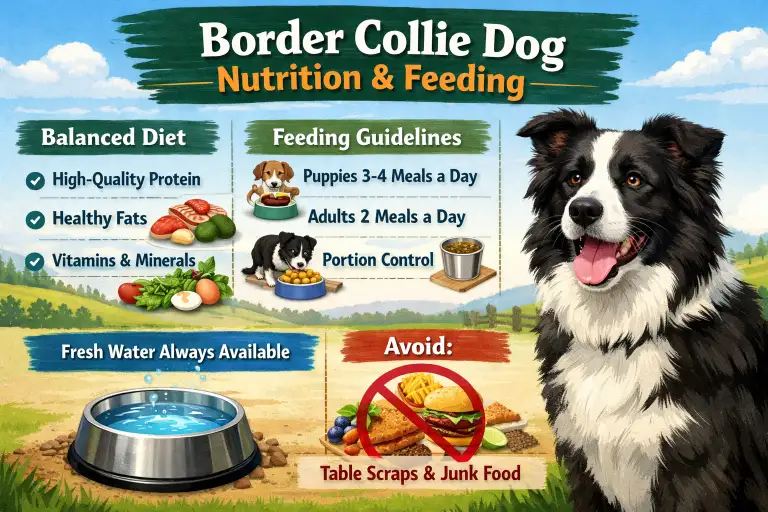
Border Collies are high-drive, active dogs that burn energy quickly and rely on strong muscle conditioning to stay healthy. Their diet should support steady stamina, lean muscle maintenance, and recovery after activity. Protein helps maintain muscle mass, while healthy fats provide long-lasting energy and help support skin and coat health. Balanced vitamins and minerals support immunity, focus, and overall wellness.
When nutrition is poor or mismatched to activity level, you may see changes such as reduced endurance, poor coat quality, inconsistent stools, and even behavior changes linked to energy crashes or hunger.
Key Nutrients for Border Collies (What They Do)
| Nutrient | Why It Matters for Border Collies | What Owners Often Notice When It’s Lacking |
|---|---|---|
| Protein | Supports lean muscle and recovery | Loss of muscle tone, slow recovery |
| Healthy fats | Provides sustained energy | Low stamina, dry coat |
| Carbohydrates (quality sources) | Fuels activity and training | Quick fatigue, inconsistent energy |
| Fiber | Supports digestion and stool quality | Loose stool or irregular bowel habits |
| Vitamins & minerals | Supports body systems and immunity | Dull coat, low vitality |
Feeding Puppies, Adults, and Senior Border Collies
Border Collie feeding needs change significantly across life stages. Puppies need higher calories for growth, plus more frequent meals to prevent energy dips. Adults need balanced portions that match activity level, helping maintain a lean body condition. Seniors often need fewer calories but may benefit from diets that support joints, digestion, and healthy weight.
Adjusting food as your dog ages is one of the simplest ways to prevent weight gain and support long-term health.
Feeding by Life Stage (Quick Guide)
| Life Stage | Main Goal | Practical Feeding Focus |
|---|---|---|
| Puppy | Growth + development | Higher calories, consistent meal timing |
| Adult | Maintenance + performance | Portion control based on activity |
| Senior | Comfort + prevention | Fewer calories, joint and digestion support |
Meal Frequency by Age
| Age Group | Suggested Meal Pattern |
|---|---|
| Puppy | 3 meals per day |
| Adult | 2 meals per day |
| Senior | 2 smaller meals per day (often easier to digest) |
Portion Sizes, Calories, and Meal Frequency
Portion size depends on body weight, activity level, metabolism, and whether your Border Collie is intact or neutered. Highly active dogs (daily running, sports, working routines) often need more calories than pets with moderate exercise. On the other hand, overfeeding is common and can lead to gradual weight gain, which places extra strain on joints and reduces endurance.
The best indicator that portions are correct is body condition. You should be able to feel ribs with light pressure and see a waist from above.
Portion Control Signals (What to Watch For)
| Sign | What It Might Mean | What to Adjust |
|---|---|---|
| Weight creeping up | Too many calories for activity level | Reduce portions slightly, track weekly |
| Ribs hard to feel | Excess body fat | Cut calories and limit extras |
| Low energy during activity | Calories may be too low or timing off | Adjust meal timing and diet quality |
| Constant hunger + scavenging | Portions too small or diet not satisfying | Check fiber/protein balance, reduce empty treats |
Best Food Types and Ingredients to Look For
The best food is one that fits your Border Collie’s life stage, activity level, and digestion—not simply the most popular brand. High-quality foods typically list a real animal protein as the first ingredient and avoid heavy reliance on low-value fillers or excessive artificial additives.
Some Border Collies thrive on dry kibble, while others do well with a mixed approach (kibble plus wet food or fresh toppers). Quality and consistency matter more than the feeding style. Any diet changes should be gradual to prevent digestive upset.
What to Look For on a Dog Food Label
| Ingredient/Feature | Why It’s Helpful |
|---|---|
| Named animal protein first | Better amino acid support for muscle |
| Clearly listed fat source | Helps energy and coat health |
| Digestible carbs | Supports performance without stomach upset |
| Minimal artificial additives | Often gentler for sensitive dogs |
| Life-stage appropriate formula | Matches growth, maintenance, or senior needs |
Food Component Purpose (Expanded)
| Food Component | Purpose |
|---|---|
| Protein | Muscle support and recovery |
| Healthy fats | Energy and coat support |
| Vitamins | Immune and overall health |
| Minerals | Body function and balance |
| Fiber | Digestive stability and stool quality |
Common Feeding Problems and Diet Adjustments
Some Border Collies eat too fast, which can cause gas, vomiting, or uncomfortable gulping. Slow feeders, puzzle bowls, and splitting meals can help. Others may have sensitive stomachs, which often improves when food changes are done gradually and diets are kept consistent.
Monitoring weight, stool quality, energy, and coat condition gives you clear signals about whether the current diet is working. Diet adjustments should be made based on what your dog shows you—not only what the bag recommends.
Common Feeding Issues and Fixes
| Problem | Common Cause | What Helps |
|---|---|---|
| Eating too fast | High food drive or competition habits | Slow feeder bowl, puzzle feeder |
| Soft stool | Sudden diet changes or poor tolerance | Slow transition, simpler formula |
| Picky eating | Too many toppers or inconsistent routine | Set meal schedule, limit add-ons |
| Weight gain | Overfeeding or too many treats | Measure meals, reduce treats |
| Low stamina | Diet mismatch or poor meal timing | Improve diet quality, adjust timing |
Safe Food Transition Schedule
| Day Range | Mix Old Food + New Food |
|---|---|
| Days 1–2 | Mostly old, small amount new |
| Days 3–4 | Half old, half new |
| Days 5–6 | Mostly new, small amount old |
| Day 7+ | Fully new food |
For official breed history, temperament details, and care information, you can also visit the American Kennel Club’s Border Collie breed profile. https://www.akc.org/dog-breeds/border-collie/

Ata Ur Rehman is the founder of Pet Age in Human Years Calculator, an educational platform that provides age conversion charts and lifespan guides for dogs, cats, birds, and other companion animals. His work focuses on helping pet owners understand how animal ages translate into human years using commonly accepted age conversion formulas and published lifespan averages.
The website compiles breed and species lifespan data from kennel clubs, breed organizations, and general animal lifespan studies to present simple and easy-to-understand guides for pet owners worldwide.
This website was created to centralize animal age conversion charts into one easy reference platform for pet owners.