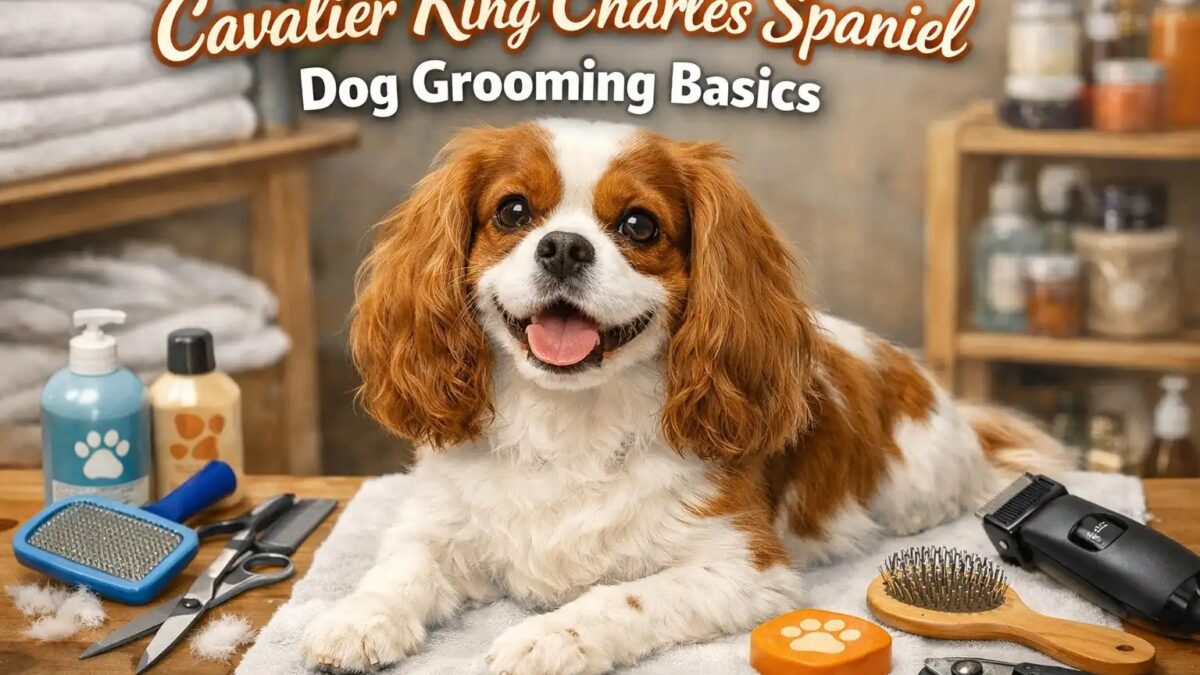
Cavalier King Charles Spaniel Grooming Basics: Easy Care Guide
Cavalier King Charles Spaniels are gentle, loving dogs with soft, silky coats. Grooming is not just about looks for this breed. It helps keep them healthy, comfortable, and happy.
Here’s why regular grooming really matters:
- Their long, silky hair can tangle easily if not brushed
- Mats can pull the skin and cause pain
- Dirty coats can lead to skin problems and bad smell
- Regular grooming helps you notice lumps, ticks, or skin issues early
- Clean ears and trimmed nails prevent infections and walking problems
Cavaliers also shed more than many people expect. Grooming helps control loose hair around your home and keeps their coat smooth.
Good grooming builds trust too. When you brush and handle your dog often, they feel calm and safe with you. This is very helpful for puppies and shy dogs.
Understanding the Cavalier King Charles Spaniel Coat
The Cavalier King Charles Spaniel has a long, soft, and silky coat. It feels smooth to touch and lies flat on the body. This coat needs gentle care to stay healthy.
Key coat features to know:
- Medium to long hair length
- Soft and silky texture
- Feathering on ears, chest, legs, and tail
- Sheds lightly all year, heavier in some seasons
Because the hair is fine, it can tangle easily. Mats often form behind the ears, under the legs, and around the collar area. Regular brushing helps stop this before it becomes painful.
Cavaliers do not have a thick double coat, but they still need weekly brushing. This keeps the coat clean and shiny and reduces hair fall in the house.
Common coat colors you may see:
- Blenheim (chestnut and white)
- Tricolor (black, white, and tan)
- Ruby (solid red)
- Black and tan
Each color needs the same grooming care.
How Often to Groom a Cavalier King Charles Spaniel
Regular grooming keeps your Cavalier clean, happy, and healthy. A simple routine is enough if done on time.
Brushing schedule:
- Brush 3 to 4 times a week
- Brush daily if the coat is long or tangles easily
- Focus on ears, legs, chest, and tail
Brushing removes loose hair and stops knots from forming.
Bathing schedule:
- Bathe once every 4 to 6 weeks
- Use a mild dog shampoo only
- Do not bathe too often, as it can dry the skin
Always dry the coat fully after a bath, especially the ears and legs.
Other grooming tasks and timing:
- Check ears once a week
- Trim nails every 3 to 4 weeks
- Wipe eyes gently when needed
- Brush teeth 2 to 3 times a week
Keeping a routine makes grooming easy and stress-free for both you and your dog
Step-by-Step Grooming Routine at Home
Grooming your Cavalier at home is simple if you follow the steps in order. Try to stay calm and gentle so your dog feels safe.
Step 1: Brushing
- Brush your dog 3 to 4 times a week
- Start from the head and move down slowly
- Be extra gentle behind the ears and under the legs
- Use a comb to remove small knots
Regular brushing keeps the coat soft and shiny.
Step 2: Bathing
- Bathe your dog every 4 to 6 weeks
- Use lukewarm water, not hot
- Apply dog shampoo and rinse well
- Do not get water inside the ears
Too many baths can dry the skin.
Step 3: Drying
- Gently towel-dry the coat
- Use a low-heat dryer if needed
- Brush while drying to avoid tangles
Never use high heat. It can burn the skin.
Step 4: Finishing touch
- Check paws and trim long hair if needed
- Give a treat after grooming
This helps your dog enjoy grooming time.
Extra Care: Nails, Ears, Teeth, and Skin Health
Taking care of your Cavalier’s nails, ears, teeth, and skin keeps them healthy and happy. These are small steps that prevent bigger problems later.
Nail Care
- Trim nails every 3–4 weeks
- Use a dog nail clipper or grinder
- Avoid cutting too close to the quick (the pink part inside)
- If nails are long, trim little by little
Ear Cleaning
- Check ears once a week
- Use a vet-approved ear cleaner
- Wipe gently with a cotton ball
- Never insert anything deep inside the ear
Teeth Care
- Brush teeth 2–3 times a week
- Use dog toothpaste and a soft toothbrush
- Check for bad breath or red gums
Skin Health
- Look for dry spots, redness, or bumps
- Make sure the coat is clean and tangle-free
- If you notice itching or irritation, contact your vet
Special Situations and Safety
Some grooming tasks need extra care depending on your dog’s age, the season, or if you choose to groom at home or professionally.
Puppies vs Adults vs Seniors
- Puppies: Use very gentle brushes and short bath sessions. Reward them often.
- Adults: Can handle regular grooming tools and full bathing routines.
- Seniors: Take extra care with joints, skin sensitivity, and slower drying.
Seasonal Grooming
- Winter: Coat may get dry, brush more to avoid mats.
- Summer: Check for overheating, thin mats carefully, trim paw hair for comfort.
- Shedding seasons: Brush daily to manage loose hair.
Home Grooming vs Professional Groomer
- Home grooming is fine for brushing, bathing, and nail care.
- Professional groomers can handle trimming, mats, or special skin issues.
Safety Tips
- Always use the right tools
- Never force a dog during grooming
- Keep grooming sessions short and positive
- Watch for signs of stress, cuts, or irritation
Quick Reference, FAQs, and Final Routine Summary
Quick Grooming Routine
- Brushing: 3–5 times a week for long coats, 1–2 times for short coats
- Bathing: Every 4–6 weeks, or as needed
- Nails: Check every 2–3 weeks, trim carefully
- Ears: Clean once a week, watch for redness or smell
- Teeth: Brush 2–3 times a week
Common Questions
How do I stop mats?
Brush daily and check behind ears, under arms, and around collars.
Can I shave my Cavalier?
Avoid shaving long or double coats; it can damage the coat.
How do I groom a nervous dog?
Keep sessions short, use treats, and stay calm.
How do I pick the right brush?
Use a slicker for long coats, bristle brush for short, and undercoat rake if needed.
For expert advice on dog grooming tools and techniques, you can visit the American Kennel Club’s grooming guide here: https://www.akc.org/expert-advice/home-care/grooming.
Related Article