Do Dutch Shepherds Shed? Complete Shedding & Grooming Guide
Dutch Shepherds are intelligent, athletic working dogs known for their versatility, loyalty, and distinctive brindle coats. While they are highly valued for their trainability and strong work ethic, many prospective owners want to know one thing before bringing one home: do Dutch Shepherds shed?
Recommended Dog Care Products
Based on your dog’s age, these products may help with comfort, health, grooming, and daily care.

Purina Pro Plan Veterinary Supplements
Daily probiotics for dogs to support digestive and gut health.
View on Amazon ↗
Earth Rated Poop Bags for Dogs
Leak-proof, extra thick waste bag refill rolls with lavender scent.
View on Amazon ↗
Greenies Pill Pockets for Dogs
Large dog treats for capsule medication, peanut butter flavor.
View on Amazon ↗
HONEY CARE All-Absorb Dog Wrap
Small male dog wraps, 50 count, useful for daily care support.
View on Amazon ↗
Seresto Flea & Tick Collar
Flea and tick treatment and prevention for dogs over 18 lbs.
View on Amazon ↗
Milk-Bone MaroSnacks
Small dog treats with real bone marrow in a 40 oz canister.
View on Amazon ↗
Vital Essentials Dog Treats
Freeze dried beef liver dog treats, grain free and single ingredient.
View on Amazon ↗
Stain & Odor Eliminator
Enzyme cleaner for pet stains, carpet messes, and strong odors.
View on Amazon ↗
Pur Luv Chicken Jerky Treats
Dog treats made with real chicken breast, high protein and chew-friendly.
View on Amazon ↗
Milk-Bone Flavor Snacks
Mini crunchy dog biscuits in a 36 oz canister for small rewards.
View on Amazon ↗As an Amazon Associate, we may earn from qualifying purchases.
The short answer is yes. Dutch Shepherds shed throughout the year and experience heavier seasonal shedding during spring and fall. Because they have a double coat designed to protect them in different weather conditions, shedding is a completely natural process. However, the amount of shedding varies depending on coat type, grooming routine, nutrition, and seasonal changes.
Understanding Dutch Shepherd shedding is important because proper grooming not only reduces loose hair around the home but also helps maintain healthy skin, prevents matting, and keeps the coat functioning as intended. Whether you own a short-haired, long-haired, or rough-haired Dutch Shepherd, following the right grooming routine can make coat management significantly easier.
Do Dutch Shepherds Shed?
Yes, Dutch Shepherds shed year-round. They are considered moderate to heavy shedders because all three coat varieties have a dense undercoat beneath a protective outer coat.
During most of the year, shedding is manageable with regular brushing. However, during spring and fall, Dutch Shepherds experience seasonal coat blows where large amounts of undercoat are released as the dog adjusts to changing temperatures.
Quick Answer
| Question | Answer |
|---|---|
| Do Dutch Shepherds shed? | Yes |
| Shedding level | Moderate to heavy |
| Year-round shedding | Yes |
| Seasonal shedding | Heavy in spring and fall |
| Hypoallergenic | No |
| Grooming difficulty | Moderate |
While Dutch Shepherds are not among the highest-shedding breeds in the world, they do require consistent coat maintenance to control loose hair and keep the coat healthy.
Dutch Shepherd Shedding Level Explained
Dutch Shepherds were originally developed as farm and herding dogs in the Netherlands. Their double coat helped protect them from rain, wind, cold temperatures, and rough outdoor conditions.
The double coat consists of:
- A dense insulating undercoat
- A protective outer coat of guard hairs
The undercoat sheds naturally throughout the year and more heavily during seasonal transitions. This shedding process helps regulate body temperature and maintain coat health.
Factors That Affect Dutch Shepherd Shedding
| Factor | Effect on Shedding |
|---|---|
| Coat type | Long-haired dogs shed more visibly |
| Season | Spring and fall increase shedding |
| Nutrition | Poor diets may increase coat loss |
| Health | Skin conditions can worsen shedding |
| Grooming routine | Regular brushing reduces loose hair |
| Stress | Excessive stress may contribute to hair loss |
Normal shedding should not leave bald patches or exposed skin. If your Dutch Shepherd develops thin areas, redness, excessive itching, or sudden coat loss, a veterinary examination is recommended.
Recommended Dog Care Products
Based on your dog’s age, these products may help with comfort, health, grooming, and daily care.
Purina Pro Plan Veterinary Supplements
Daily probiotics for dogs to support digestive and gut health.
View on Amazon ↗
Earth Rated Poop Bags for Dogs
Leak-proof, extra thick waste bag refill rolls with lavender scent.
View on Amazon ↗
Greenies Pill Pockets for Dogs
Large dog treats for capsule medication, peanut butter flavor.
View on Amazon ↗
HONEY CARE All-Absorb Dog Wrap
Small male dog wraps, 50 count, useful for daily care support.
View on Amazon ↗
Seresto Flea & Tick Collar
Flea and tick treatment and prevention for dogs over 18 lbs.
View on Amazon ↗
Milk-Bone MaroSnacks
Small dog treats with real bone marrow in a 40 oz canister.
View on Amazon ↗
Vital Essentials Dog Treats
Freeze dried beef liver dog treats, grain free and single ingredient.
View on Amazon ↗
Stain & Odor Eliminator
Enzyme cleaner for pet stains, carpet messes, and strong odors.
View on Amazon ↗
Pur Luv Chicken Jerky Treats
Dog treats made with real chicken breast, high protein and chew-friendly.
View on Amazon ↗
Milk-Bone Flavor Snacks
Mini crunchy dog biscuits in a 36 oz canister for small rewards.
View on Amazon ↗As an Amazon Associate, we may earn from qualifying purchases.
Dutch Shepherd Coat Types and How They Affect Shedding
Dutch Shepherds come in three recognized coat varieties. Each coat type has slightly different grooming and shedding requirements.
Short-Haired Dutch Shepherd
The short-haired Dutch Shepherd has a dense undercoat covered by a close-fitting outer coat.
Characteristics:
- Most common coat type
- Moderate to heavy shedding
- Easy maintenance
- Minimal matting risk
The short coat makes loose hair easier to remove with weekly brushing.
Long-Haired Dutch Shepherd
Long-haired Dutch Shepherds have longer guard hairs around the neck, tail, legs, and body.
Characteristics:
- Highest visible shedding
- Greater risk of tangles
- Requires frequent brushing
- More noticeable hair accumulation indoors
Long coats trap loose hair before it falls out, making brushing especially important.
Rough-Haired Dutch Shepherd
The rough-haired variety has a coarse, wiry outer coat.
Characteristics:
- Moderate shedding
- Less visible hair loss
- Requires specialized coat maintenance
- Dead hair can remain trapped in coat
Many owners find rough-coated Dutch Shepherds easier to manage indoors because shedding is less obvious.
Recommended Dog Care Products
Based on your dog’s age, these products may help with comfort, health, grooming, and daily care.
Purina Pro Plan Veterinary Supplements
Daily probiotics for dogs to support digestive and gut health.
View on Amazon ↗
Earth Rated Poop Bags for Dogs
Leak-proof, extra thick waste bag refill rolls with lavender scent.
View on Amazon ↗
Greenies Pill Pockets for Dogs
Large dog treats for capsule medication, peanut butter flavor.
View on Amazon ↗
HONEY CARE All-Absorb Dog Wrap
Small male dog wraps, 50 count, useful for daily care support.
View on Amazon ↗
Seresto Flea & Tick Collar
Flea and tick treatment and prevention for dogs over 18 lbs.
View on Amazon ↗
Milk-Bone MaroSnacks
Small dog treats with real bone marrow in a 40 oz canister.
View on Amazon ↗
Vital Essentials Dog Treats
Freeze dried beef liver dog treats, grain free and single ingredient.
View on Amazon ↗
Stain & Odor Eliminator
Enzyme cleaner for pet stains, carpet messes, and strong odors.
View on Amazon ↗
Pur Luv Chicken Jerky Treats
Dog treats made with real chicken breast, high protein and chew-friendly.
View on Amazon ↗
Milk-Bone Flavor Snacks
Mini crunchy dog biscuits in a 36 oz canister for small rewards.
View on Amazon ↗As an Amazon Associate, we may earn from qualifying purchases.
Dutch Shepherd Coat Comparison
| Coat Type | Shedding Level | Brushing Frequency | Matting Risk | Grooming Difficulty |
|---|---|---|---|---|
| Short-haired | Moderate to high | 1–2 times weekly | Low | Easy |
| Long-haired | High | 3–4 times weekly | Medium to high | Moderate |
| Rough-haired | Moderate | 2–3 times weekly | Medium | Moderate |
When Do Dutch Shepherds Shed the Most?
Dutch Shepherds shed the most during spring and fall.
These periods are often called coat blow seasons because the dog releases large amounts of undercoat in preparation for changing temperatures.
Spring Shedding
During spring:
- Winter undercoat is shed
- Shedding volume increases significantly
- Daily brushing may be required
- Undercoat removal becomes important
Fall Shedding
During fall:
- Summer coat is replaced
- New insulating undercoat develops
- Shedding increases again
- Grooming frequency should be increased
Seasonal Shedding Calendar
| Season | Shedding Level |
|---|---|
| Spring | Very High |
| Summer | Moderate |
| Fall | Very High |
| Winter | Moderate |
Most owners notice significantly more hair around the home during seasonal transitions.
How Much Do Dutch Shepherds Shed Compared to Other Breeds?
Many people compare Dutch Shepherd shedding to other popular working breeds.
Shedding Comparison
| Breed | Shedding Level |
|---|---|
| Dutch Shepherd | Moderate to Heavy |
| German Shepherd | Heavy |
| Belgian Malinois | Moderate |
| Labrador Retriever | Heavy |
| Border Collie | Moderate to Heavy |
| Siberian Husky | Very Heavy |
Dutch Shepherds generally shed less than German Shepherds and Huskies but more than many short-coated companion breeds.
Dutch Shepherd Grooming Requirements
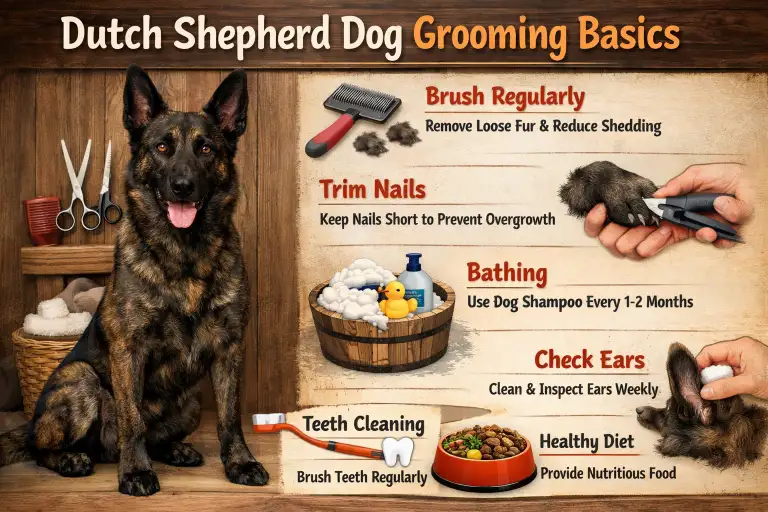
Regular grooming is the most effective way to manage Dutch Shepherd shedding.
A consistent grooming routine helps:
- Remove dead hair
- Reduce loose fur indoors
- Improve skin health
- Distribute natural oils
- Prevent tangles and mats
Weekly Grooming Schedule
| Task | Frequency |
|---|---|
| Brushing | 1–4 times weekly |
| Ear inspection | Weekly |
| Teeth brushing | 2–3 times weekly |
| Nail trimming | Every 3–4 weeks |
| Bathing | Every 6–8 weeks |
Following a routine prevents small grooming issues from becoming larger health concerns.
Recommended Dog Care Products
Based on your dog’s age, these products may help with comfort, health, grooming, and daily care.
Purina Pro Plan Veterinary Supplements
Daily probiotics for dogs to support digestive and gut health.
View on Amazon ↗
Earth Rated Poop Bags for Dogs
Leak-proof, extra thick waste bag refill rolls with lavender scent.
View on Amazon ↗
Greenies Pill Pockets for Dogs
Large dog treats for capsule medication, peanut butter flavor.
View on Amazon ↗
HONEY CARE All-Absorb Dog Wrap
Small male dog wraps, 50 count, useful for daily care support.
View on Amazon ↗
Seresto Flea & Tick Collar
Flea and tick treatment and prevention for dogs over 18 lbs.
View on Amazon ↗
Milk-Bone MaroSnacks
Small dog treats with real bone marrow in a 40 oz canister.
View on Amazon ↗
Vital Essentials Dog Treats
Freeze dried beef liver dog treats, grain free and single ingredient.
View on Amazon ↗
Stain & Odor Eliminator
Enzyme cleaner for pet stains, carpet messes, and strong odors.
View on Amazon ↗
Pur Luv Chicken Jerky Treats
Dog treats made with real chicken breast, high protein and chew-friendly.
View on Amazon ↗
Milk-Bone Flavor Snacks
Mini crunchy dog biscuits in a 36 oz canister for small rewards.
View on Amazon ↗As an Amazon Associate, we may earn from qualifying purchases.
Best Brushes and Grooming Tools for Dutch Shepherds
Using proper grooming tools improves efficiency and reduces coat damage.
Recommended Grooming Tools
| Tool | Purpose |
|---|---|
| Slicker brush | Removes loose hair |
| Undercoat rake | Controls seasonal shedding |
| Pin brush | Long-coat maintenance |
| Deshedding tool | Heavy shedding periods |
| Nail clippers | Nail care |
| Dog shampoo | Coat cleaning |
Avoid using human grooming products because they can disrupt the natural pH balance of your dog’s skin.
Bathing a Dutch Shepherd
Dutch Shepherds do not require frequent baths.
Over-bathing can remove natural oils and cause dry skin.
Recommended Bathing Frequency
| Situation | Frequency |
|---|---|
| Normal conditions | Every 6–8 weeks |
| Dirty or muddy | As needed |
| Skin condition | Follow veterinarian guidance |
| Shedding season | Every 6–8 weeks |
Always dry the undercoat thoroughly after bathing to prevent moisture-related skin problems.
Nail, Ear, Dental, and Skin Care
A complete grooming routine extends beyond coat maintenance.
Nail Care
Long nails can:
- Affect movement
- Increase joint strain
- Cause discomfort
Trim nails every 3–4 weeks or whenever clicking sounds are heard on hard floors.
Ear Care
Check ears weekly for:
- Wax buildup
- Redness
- Odor
- Debris
Clean only with veterinarian-approved ear cleaners.
Dental Care
Dental health affects overall wellness.
Brush teeth several times weekly and provide dental chews when appropriate.
Skin Monitoring
Watch for:
- Redness
- Flaking
- Excessive scratching
- Hot spots
- Strong odor
Early detection helps prevent more serious skin conditions.
Common Grooming Mistakes
Many owners accidentally create coat problems through improper grooming practices.
Shaving the Coat
Never shave a Dutch Shepherd unless medically necessary.
Shaving can:
- Damage coat regrowth
- Increase sun exposure
- Reduce temperature regulation
- Increase long-term shedding issues
Over-Bathing
Too many baths can:
- Remove natural oils
- Dry the skin
- Increase irritation
Skipping Seasonal Grooming
Ignoring seasonal coat changes often leads to:
- Excessive shedding indoors
- Undercoat buildup
- Skin irritation
Professional Grooming
Most Dutch Shepherds can be groomed successfully at home.
Professional grooming may be beneficial when:
- Shedding becomes overwhelming
- The coat is neglected
- Nails are difficult to trim
- Specialized rough-coat maintenance is needed
Professional groomers can also assist during heavy seasonal shedding periods.
Dutch Shepherd Grooming and Shedding Summary
| Grooming Task | Frequency |
|---|---|
| Brushing | 1–4 times weekly |
| Bathing | Every 6–8 weeks |
| Nail Trimming | Every 3–4 weeks |
| Ear Check | Weekly |
| Teeth Brushing | 2–3 times weekly |
| Professional Grooming | As needed |
Frequently Asked Questions
Do Dutch Shepherds shed a lot?
Yes. Dutch Shepherds are considered moderate to heavy shedders. They shed throughout the year and experience heavier shedding during spring and fall coat changes.
Are Dutch Shepherds hypoallergenic?
No. Dutch Shepherds are not hypoallergenic because they shed hair and produce dander.
Which Dutch Shepherd coat sheds the most?
Long-haired Dutch Shepherds typically have the most noticeable shedding because loose hair becomes trapped in the longer coat before falling out.
Can you reduce Dutch Shepherd shedding?
You cannot stop shedding completely, but regular brushing, proper nutrition, and consistent grooming can significantly reduce loose hair.
How often should I brush my Dutch Shepherd?
Short-haired dogs generally need brushing one to two times per week, while long-haired and rough-haired varieties often benefit from brushing several times weekly.
Should a Dutch Shepherd be shaved in summer?
No. Shaving a double-coated breed can interfere with natural temperature regulation and damage future coat growth.
Final Thoughts
Dutch Shepherds do shed, and anyone considering this breed should be prepared for regular coat maintenance. Fortunately, their grooming requirements are manageable with a consistent routine and the proper tools. Understanding your dog’s coat type, increasing grooming during seasonal shedding periods, and maintaining overall skin health will keep shedding under control while helping your Dutch Shepherd stay comfortable and healthy throughout the year. For most owners, a few brushing sessions each week are enough to manage shedding and maintain the beautiful brindle coat that makes the Dutch Shepherd such a distinctive and admired working breed.

Ata Ur Rehman is the founder of Pet Age in Human Years Calculator, an educational platform that provides age conversion charts and lifespan guides for dogs, cats, birds, and other companion animals. His work focuses on helping pet owners understand how animal ages translate into human years using commonly accepted age conversion formulas and published lifespan averages.
The website compiles breed and species lifespan data from kennel clubs, breed organizations, and general animal lifespan studies to present simple and easy-to-understand guides for pet owners worldwide.
This website was created to centralize animal age conversion charts into one easy reference platform for pet owners.