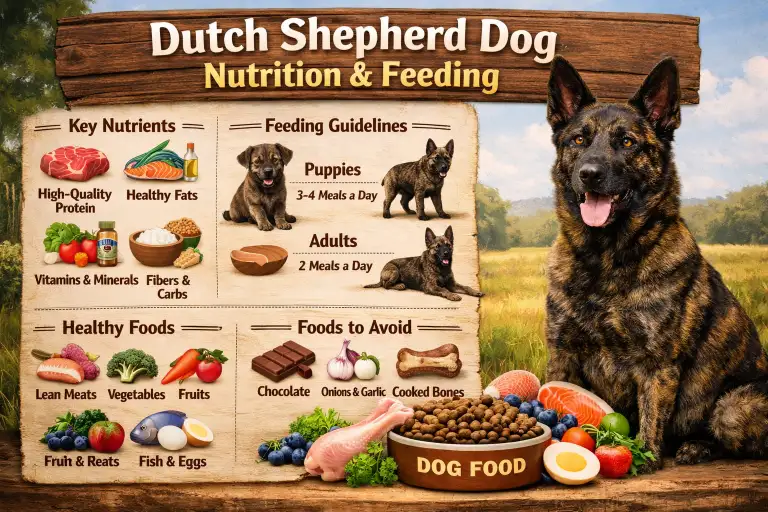
Dutch Shepherd Nutrition & Feeding Guide: Best Food, Feeding Chart and Diet Tips
Dutch Shepherds are highly intelligent, athletic, and energetic working dogs that require a carefully balanced diet to maintain their health, stamina, muscle condition, and overall well-being. Whether you own a family companion, sport dog, protection dog, or active working Dutch Shepherd, proper nutrition directly affects performance, recovery, weight management, and longevity.
Recommended Dog Care Products
Based on your dog’s age, these products may help with comfort, health, grooming, and daily care.

Purina Pro Plan Veterinary Supplements
Daily probiotics for dogs to support digestive and gut health.
View on Amazon ↗
Earth Rated Poop Bags for Dogs
Leak-proof, extra thick waste bag refill rolls with lavender scent.
View on Amazon ↗
Greenies Pill Pockets for Dogs
Large dog treats for capsule medication, peanut butter flavor.
View on Amazon ↗
HONEY CARE All-Absorb Dog Wrap
Small male dog wraps, 50 count, useful for daily care support.
View on Amazon ↗
Seresto Flea & Tick Collar
Flea and tick treatment and prevention for dogs over 18 lbs.
View on Amazon ↗
Milk-Bone MaroSnacks
Small dog treats with real bone marrow in a 40 oz canister.
View on Amazon ↗
Vital Essentials Dog Treats
Freeze dried beef liver dog treats, grain free and single ingredient.
View on Amazon ↗
Stain & Odor Eliminator
Enzyme cleaner for pet stains, carpet messes, and strong odors.
View on Amazon ↗
Pur Luv Chicken Jerky Treats
Dog treats made with real chicken breast, high protein and chew-friendly.
View on Amazon ↗
Milk-Bone Flavor Snacks
Mini crunchy dog biscuits in a 36 oz canister for small rewards.
View on Amazon ↗As an Amazon Associate, we may earn from qualifying purchases.
Unlike many breeds, Dutch Shepherds have a naturally lean build and high energy requirements. Many owners mistakenly assume their dog is underweight because ribs are slightly visible, while others unintentionally overfeed due to the breed’s strong food drive. The key is understanding your dog’s body condition, activity level, and nutritional needs rather than relying solely on feeding guidelines printed on dog food bags.
This Dutch Shepherd feeding guide covers everything you need to know, including the best food for Dutch Shepherds, daily calorie requirements, feeding schedules, puppy nutrition, senior diets, working dog nutrition, and practical feeding tips to help your dog thrive.
What Is the Best Food for a Dutch Shepherd?
The best food for a Dutch Shepherd is a complete and balanced diet containing high-quality animal protein, moderate healthy fats, digestible carbohydrates, and essential vitamins and minerals.
Because Dutch Shepherds are muscular, active dogs, protein should be the foundation of their diet.
Ideal Nutritional Profile for Dutch Shepherds
| Nutrient | Recommended Range | Why It Matters |
|---|---|---|
| Protein | 24%–32% | Supports muscle development and maintenance |
| Fat | 12%–20% | Provides energy and supports skin and coat health |
| Fiber | 3%–6% | Supports digestion and stool quality |
| Omega-3 Fatty Acids | Included regularly | Supports joints, skin, brain, and immune function |
| Calcium & Phosphorus | Balanced ratio | Essential for healthy bones and teeth |
Best Protein Sources
Look for dog foods that list one of these ingredients first:
- Chicken
- Turkey
- Beef
- Lamb
- Salmon
- Whitefish
- Duck
Named meat ingredients are generally preferred over vague terms such as “meat meal” or “animal by-products.”
Ingredients to Look For
| Beneficial Ingredients | Benefits |
|---|---|
| Salmon Oil | Omega-3 fatty acids |
| Sweet Potatoes | Digestible carbohydrates |
| Brown Rice | Steady energy source |
| Pumpkin | Digestive support |
| Blueberries | Antioxidants |
| Glucosamine | Joint support |
| Chondroitin | Cartilage support |
Ingredients to Limit
| Ingredient | Reason |
|---|---|
| Excessive artificial colors | No nutritional benefit |
| Low-quality fillers | Reduced nutrient density |
| Excessive sugar | Unnecessary calories |
| Unspecified meat sources | Lower ingredient transparency |
Dutch Shepherd Feeding Chart
Daily food requirements vary depending on age, weight, metabolism, and activity level.
Estimated Daily Calorie Requirements
| Weight | Low Activity | Moderate Activity | High Activity / Working Dog |
|---|---|---|---|
| 50 lbs (23 kg) | 1,100 kcal | 1,350 kcal | 1,700 kcal |
| 60 lbs (27 kg) | 1,300 kcal | 1,600 kcal | 2,000 kcal |
| 70 lbs (32 kg) | 1,500 kcal | 1,850 kcal | 2,300 kcal |
These values should be used as starting points and adjusted according to your dog’s body condition.
How Much Should a Dutch Shepherd Eat?
Most adult Dutch Shepherds consume between 2.5 and 4.5 cups of high-quality dry food daily, depending on calorie density and activity level.
Recommended Dog Care Products
Based on your dog’s age, these products may help with comfort, health, grooming, and daily care.
Purina Pro Plan Veterinary Supplements
Daily probiotics for dogs to support digestive and gut health.
View on Amazon ↗
Earth Rated Poop Bags for Dogs
Leak-proof, extra thick waste bag refill rolls with lavender scent.
View on Amazon ↗
Greenies Pill Pockets for Dogs
Large dog treats for capsule medication, peanut butter flavor.
View on Amazon ↗
HONEY CARE All-Absorb Dog Wrap
Small male dog wraps, 50 count, useful for daily care support.
View on Amazon ↗
Seresto Flea & Tick Collar
Flea and tick treatment and prevention for dogs over 18 lbs.
View on Amazon ↗
Milk-Bone MaroSnacks
Small dog treats with real bone marrow in a 40 oz canister.
View on Amazon ↗
Vital Essentials Dog Treats
Freeze dried beef liver dog treats, grain free and single ingredient.
View on Amazon ↗
Stain & Odor Eliminator
Enzyme cleaner for pet stains, carpet messes, and strong odors.
View on Amazon ↗
Pur Luv Chicken Jerky Treats
Dog treats made with real chicken breast, high protein and chew-friendly.
View on Amazon ↗
Milk-Bone Flavor Snacks
Mini crunchy dog biscuits in a 36 oz canister for small rewards.
View on Amazon ↗As an Amazon Associate, we may earn from qualifying purchases.
Feeding Frequency by Age
| Life Stage | Meals Per Day |
|---|---|
| 8–12 Weeks | 4 Meals |
| 3–6 Months | 3 Meals |
| 6–12 Months | 2–3 Meals |
| Adult | 2 Meals |
| Senior | 2 Smaller Meals |
Dividing food into multiple meals helps support digestion and may reduce the risk of stomach discomfort after exercise.
Dutch Shepherd Puppy Feeding Guide
Dutch Shepherd puppies grow rapidly during their first year and require carefully balanced nutrition to support healthy development.
Puppy Nutrition Priorities
- High-quality puppy food formulated for medium-to-large breeds
- Controlled calcium and phosphorus levels
- DHA for brain development
- High-quality animal protein
- Appropriate calorie intake to avoid excessive growth
Dutch Shepherd Puppy Feeding Chart
| Age | Meals Per Day | Nutrition Focus |
|---|---|---|
| 8–12 Weeks | 4 | Growth and development |
| 3–6 Months | 3 | Muscle and skeletal growth |
| 6–12 Months | 2–3 | Lean body development |
| 12+ Months | Transition to adult food | Maintenance |
Overfeeding puppies can contribute to developmental orthopedic issues, so growth should be steady rather than rapid.
Best Diet for Working Dutch Shepherds
Working Dutch Shepherds often have significantly higher energy requirements than pet dogs.
Dogs involved in:
- Protection work
- Police work
- Search and rescue
- Agility
- Schutzhund/IGP
- Herding
- Detection work
may require substantially higher calorie intake, particularly from fat and animal protein.
Nutrition Priorities for Working Dogs
| Nutrient | Importance |
|---|---|
| Protein | Muscle repair and recovery |
| Fat | Primary energy source |
| Electrolytes | Hydration support |
| Omega-3s | Recovery and inflammation control |
| Antioxidants | Immune support |
Many working Dutch Shepherds perform best on foods containing 28%–32% protein and 16%–22% fat.
Frequently Asked Questions
What is the best food for a Dutch Shepherd?
The best food for a Dutch Shepherd is a complete and balanced diet that contains high-quality animal protein, moderate healthy fats, digestible carbohydrates, and essential vitamins and minerals. Active Dutch Shepherds typically perform best on diets with 24–32% protein and 12–20% fat.
How much food should a Dutch Shepherd eat per day?
Most adult Dutch Shepherds eat between 2.5 and 4.5 cups of high-quality dry food daily. The exact amount depends on body weight, age, metabolism, activity level, and the calorie density of the food.
How many times a day should a Dutch Shepherd be fed?
Adult Dutch Shepherds are usually fed twice per day. Puppies under six months of age should receive three to four meals daily, while senior dogs may benefit from two smaller meals spread throughout the day.
Recommended Dog Care Products
Based on your dog’s age, these products may help with comfort, health, grooming, and daily care.
Purina Pro Plan Veterinary Supplements
Daily probiotics for dogs to support digestive and gut health.
View on Amazon ↗
Earth Rated Poop Bags for Dogs
Leak-proof, extra thick waste bag refill rolls with lavender scent.
View on Amazon ↗
Greenies Pill Pockets for Dogs
Large dog treats for capsule medication, peanut butter flavor.
View on Amazon ↗
HONEY CARE All-Absorb Dog Wrap
Small male dog wraps, 50 count, useful for daily care support.
View on Amazon ↗
Seresto Flea & Tick Collar
Flea and tick treatment and prevention for dogs over 18 lbs.
View on Amazon ↗
Milk-Bone MaroSnacks
Small dog treats with real bone marrow in a 40 oz canister.
View on Amazon ↗
Vital Essentials Dog Treats
Freeze dried beef liver dog treats, grain free and single ingredient.
View on Amazon ↗
Stain & Odor Eliminator
Enzyme cleaner for pet stains, carpet messes, and strong odors.
View on Amazon ↗
Pur Luv Chicken Jerky Treats
Dog treats made with real chicken breast, high protein and chew-friendly.
View on Amazon ↗
Milk-Bone Flavor Snacks
Mini crunchy dog biscuits in a 36 oz canister for small rewards.
View on Amazon ↗As an Amazon Associate, we may earn from qualifying purchases.
What should a Dutch Shepherd puppy eat?
Dutch Shepherd puppies should eat a high-quality puppy food formulated for medium to large breeds. The diet should provide balanced calcium and phosphorus levels, DHA for brain development, and adequate protein to support healthy growth.
Are Dutch Shepherds prone to food allergies?
Dutch Shepherds are not considered highly prone to food allergies, but some individuals may develop sensitivities to common ingredients such as chicken, beef, dairy, wheat, or soy. Signs may include itching, ear infections, digestive upset, or chronic skin problems.
Is grain-free food good for Dutch Shepherds?
Most Dutch Shepherds do not require grain-free food. Unless your dog has a diagnosed grain sensitivity, grain-inclusive diets are often recommended because they are well researched and provide valuable nutrients and fiber.
Can Dutch Shepherds eat raw food?
Dutch Shepherds can eat properly formulated raw diets, but raw feeding requires careful planning to ensure nutritional balance and food safety. Owners should consult a veterinarian or veterinary nutritionist before starting a raw feeding program.
What human foods can Dutch Shepherds safely eat?
Safe foods that can be offered in moderation include plain cooked chicken, turkey, lean beef, cooked eggs, carrots, green beans, pumpkin, blueberries, apples without seeds, and plain rice. Treats and extras should not exceed 10% of daily calorie intake.
What foods are toxic to Dutch Shepherds?
Dutch Shepherds should never eat chocolate, grapes, raisins, onions, garlic, macadamia nuts, alcohol, caffeine, xylitol-containing products, or large amounts of fatty foods. These foods can cause serious illness or even be life-threatening.
How can I tell if my Dutch Shepherd is overweight?
A healthy Dutch Shepherd should have a visible waist when viewed from above and an abdominal tuck when viewed from the side. You should be able to feel the ribs easily without pressing hard. If the ribs are difficult to feel and the waist has disappeared, your dog may be overweight.
Do working Dutch Shepherds need more food?
Yes. Working Dutch Shepherds involved in protection sports, police work, search and rescue, agility, herding, or other physically demanding activities often require significantly more calories, protein, and fat than companion dogs.
What supplements are beneficial for Dutch Shepherds?
Many healthy Dutch Shepherds do not need supplements if they eat a complete and balanced diet. However, omega-3 fatty acids, glucosamine, chondroitin, and joint-support supplements may benefit active or senior dogs when recommended by a veterinarian.
How often should I change my Dutch Shepherd’s food?
Food changes should only be made when necessary. If a new diet is introduced, transition gradually over 7–10 days by mixing increasing amounts of the new food with the old food to help prevent digestive upset.
Recommended Dog Care Products
Based on your dog’s age, these products may help with comfort, health, grooming, and daily care.
Purina Pro Plan Veterinary Supplements
Daily probiotics for dogs to support digestive and gut health.
View on Amazon ↗
Earth Rated Poop Bags for Dogs
Leak-proof, extra thick waste bag refill rolls with lavender scent.
View on Amazon ↗
Greenies Pill Pockets for Dogs
Large dog treats for capsule medication, peanut butter flavor.
View on Amazon ↗
HONEY CARE All-Absorb Dog Wrap
Small male dog wraps, 50 count, useful for daily care support.
View on Amazon ↗
Seresto Flea & Tick Collar
Flea and tick treatment and prevention for dogs over 18 lbs.
View on Amazon ↗
Milk-Bone MaroSnacks
Small dog treats with real bone marrow in a 40 oz canister.
View on Amazon ↗
Vital Essentials Dog Treats
Freeze dried beef liver dog treats, grain free and single ingredient.
View on Amazon ↗
Stain & Odor Eliminator
Enzyme cleaner for pet stains, carpet messes, and strong odors.
View on Amazon ↗
Pur Luv Chicken Jerky Treats
Dog treats made with real chicken breast, high protein and chew-friendly.
View on Amazon ↗
Milk-Bone Flavor Snacks
Mini crunchy dog biscuits in a 36 oz canister for small rewards.
View on Amazon ↗As an Amazon Associate, we may earn from qualifying purchases.
Why is my Dutch Shepherd always hungry?
Dutch Shepherds are naturally food-motivated dogs. Constant hunger may result from high activity levels, insufficient calorie intake, boredom, or underlying medical conditions. If hunger seems excessive despite appropriate feeding, consult your veterinarian.
What is the ideal weight for a Dutch Shepherd?
Most adult male Dutch Shepherds weigh between 55 and 75 pounds (25–34 kg), while females typically weigh between 45 and 65 pounds (20–29 kg). Individual variation occurs depending on genetics, sex, and activity level. Body condition is usually more important than the number on the scale.

Ata Ur Rehman is the founder of Pet Age in Human Years Calculator, an educational platform that provides age conversion charts and lifespan guides for dogs, cats, birds, and other companion animals. His work focuses on helping pet owners understand how animal ages translate into human years using commonly accepted age conversion formulas and published lifespan averages.
The website compiles breed and species lifespan data from kennel clubs, breed organizations, and general animal lifespan studies to present simple and easy-to-understand guides for pet owners worldwide.
This website was created to centralize animal age conversion charts into one easy reference platform for pet owners.