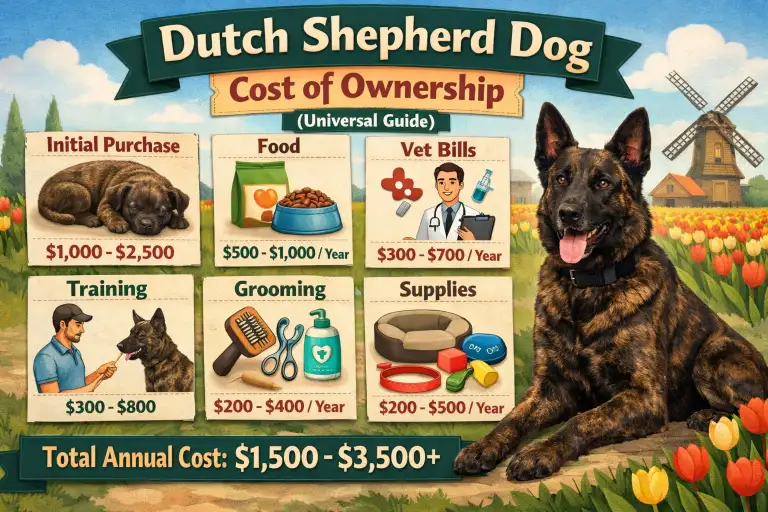
Owning a Dutch Shepherd is a serious financial commitment, and it’s often more expensive than many people expect from a medium-sized dog. While the breed doesn’t have the extreme grooming needs of long-coated dogs, its high energy level, intelligence, and working-dog traits drive costs up in other ways—especially food, training, and veterinary care.
For most owners, the first year is the most expensive. Between purchase or adoption fees, initial veterinary care, setup supplies, and intensive training, first-year costs are typically significantly higher than later years. After that, expenses stabilize into predictable monthly and annual patterns, though emergency care and lifestyle choices can still cause major swings.
At a high level, Dutch Shepherd ownership costs fall into three phases:
- First year: higher startup and training expenses
- Ongoing years: steady monthly and annual costs for food, vet care, grooming, and enrichment
- Lifetime: long-term medical care, aging-related needs, and replacement costs over 10–14 years
To give you an immediate snapshot before diving into the details, the table below shows what most owners can realistically expect to spend.
Dutch Shepherd Cost Overview (First Year vs Ongoing vs Lifetime)
| Cost Phase | Typical Range (USD) | What This Includes |
|---|---|---|
| First year | $2,500–$5,500 | Purchase or adoption, initial vet care, setup supplies, training, food |
| Ongoing annual cost | $1,500–$3,000 | Food, routine vet care, preventatives, grooming, training upkeep |
| Estimated lifetime cost | $15,000–$40,000+ | All care over 10–14 years, including medical risks |
These numbers reflect average pet ownership, not extreme working or sport scenarios. Owners who pursue protection work, competitive sports, raw feeding, or premium insurance can easily exceed the upper ranges, while minimal-care setups often underestimate long-term veterinary and training needs.
The key takeaway is simple: a Dutch Shepherd isn’t “cheap” just because it’s medium-sized. The breed’s drive, intelligence, and physical demands mean ongoing investment—not just money, but planning and consistency. The sections that follow break these costs down so you can see exactly where the money goes and decide whether this breed fits your budget before you commit.
Dutch Shepherd First-Year Costs (Puppy vs Adult Dog)
The first year with a Dutch Shepherd is almost always the most expensive. This is when you pay for the dog itself, early vet care, training, and all the basic supplies needed to start safely.
Buying from a responsible breeder usually costs more upfront, especially for working-line dogs. Adoption is cheaper at first, but adult rescues can still come with medical or training costs in the first year.
Dutch Shepherd Purchase or Adoption Costs
| Option | Typical Cost (USD) |
|---|---|
| Reputable breeder puppy | $1,200–$2,500 |
| Working-line or imported puppy | $2,000–$3,500+ |
| Rescue or shelter adoption | $200–$600 |
Vet care is another major first-year cost. Puppies need vaccines, parasite prevention, and usually spay or neuter surgery. Adult dogs may still need exams, blood work, or dental checks when adopted.
First-Year Veterinary and Setup Costs
| Expense | Typical Cost (USD) |
|---|---|
| Vaccines & initial exams | $200–$400 |
| Spay / neuter | $250–$600 |
| Microchip & registration | $50–$100 |
| Crate, leash, collar, bowls | $150–$300 |
| Bed, toys, enrichment gear | $150–$300 |
Training is often higher for puppies, especially with a smart, high-energy breed like the Dutch Shepherd. Skipping training can lead to behavior problems that cost more later.
Puppy vs Adult First-Year Cost Comparison
| Dog Type | Typical First-Year Cost |
|---|---|
| Puppy | $3,000–$5,500 |
| Adult rescue | $2,000–$4,000 |
For most owners, planning extra money for the first year helps avoid stress and rushed decisions.
Ongoing Monthly and Annual Costs of Owning a Dutch Shepherd
After the first year, costs become more steady. These are the expenses you should expect every month and every year for the rest of the dog’s life.
Food is one of the biggest monthly costs. Dutch Shepherds are active dogs and usually eat more than calm breeds of the same size. Vet care, preventatives, and training also add up over time.
Typical Monthly Costs of Owning a Dutch Shepherd
| Expense | Monthly Cost (USD) |
|---|---|
| Food | $40–$80 |
| Flea, tick, heartworm prevention | $20–$40 |
| Training or enrichment | $30–$80 |
| Grooming & supplies | $10–$30 |
| Miscellaneous | $10–$30 |
Annual Recurring Costs Breakdown
| Expense | Annual Cost (USD) |
|---|---|
| Food | $500–$1,000 |
| Routine vet care | $300–$600 |
| Preventatives & meds | $250–$500 |
| Training & enrichment | $300–$1,000 |
| Total annual cost | $1,500–$3,000 |
Even with a short coat, Dutch Shepherds still need nail trims, brushing, and skin care. Ongoing training is also important to keep behavior under control and prevent destructive habits.
What Drives Dutch Shepherd Ownership Costs Up or Down?
Not all Dutch Shepherds cost the same to own. Lifestyle choices and living situations can change expenses a lot.
Active dogs in sports or work roles often cost more due to training, injuries, and higher food needs. City living can raise vet, training, and boarding prices compared to rural areas.
Cost Differences by Lifestyle and Living Situation
| Situation | Cost Impact |
|---|---|
| Apartment living | Higher training & enrichment costs |
| House with yard | Lower enrichment costs |
| Urban area | Higher vet and boarding fees |
| Rural area | Lower service costs, fewer options |
| Multi-dog home | Food and vet costs increase |
Emergency vet care is another major risk. High-energy dogs are more likely to get injuries from running, jumping, or rough play.
Pet insurance can help manage this risk, but it also adds a monthly bill.
Pet Insurance Cost Scenarios for Dutch Shepherds
| Plan Type | Monthly Cost (USD) |
|---|---|
| Accident-only | $20–$35 |
| Accident & illness | $35–$70 |
| High-coverage plans | $70–$100+ |
Insurance helps most when unexpected injuries or serious illness happen, not for routine care.
Hidden Costs, Lifetime Cost Estimates, and Financial Reality Check
Many owners only budget for food and vet visits. Hidden costs are what usually cause problems later.
Travel, boarding, dental care, and damaged household items are often forgotten but very real expenses.
Hidden and Often Forgotten Dutch Shepherd Costs
| Expense | Typical Cost |
|---|---|
| Boarding or pet sitting | $30–$75 per day |
| Dental cleanings | $300–$800 |
| Property damage | $200–$1,000+ |
| Emergency diagnostics | $500–$2,000+ |
Over a lifetime of 10 to 14 years, these costs add up.
Dutch Shepherd Lifetime Cost Estimates
| Scenario | Estimated Lifetime Cost |
|---|---|
| Low-cost care | $15,000–$20,000 |
| Average realistic care | $25,000–$35,000 |
| High-cost / medical issues | $40,000+ |
Dutch Shepherds are rewarding dogs, but they are not low-effort or low-cost. Owners who plan ahead, budget honestly, and invest in training and health care usually spend less in the long run and enjoy a better life with their dog.
For general dog ownership cost data and national averages, you can also review the ASPCA’s breakdown of the cost of caring for a dog, which provides a helpful baseline for comparing breed-specific expenses: https://www.aspca.org/pet-care/general-pet-care/cost-owning-pet

Ata Ur Rehman is the founder of Pet Age in Human Years Calculator, an educational platform that provides age conversion charts and lifespan guides for dogs, cats, birds, and other companion animals. His work focuses on helping pet owners understand how animal ages translate into human years using commonly accepted age conversion formulas and published lifespan averages.
The website compiles breed and species lifespan data from kennel clubs, breed organizations, and general animal lifespan studies to present simple and easy-to-understand guides for pet owners worldwide.
This website was created to centralize animal age conversion charts into one easy reference platform for pet owners.