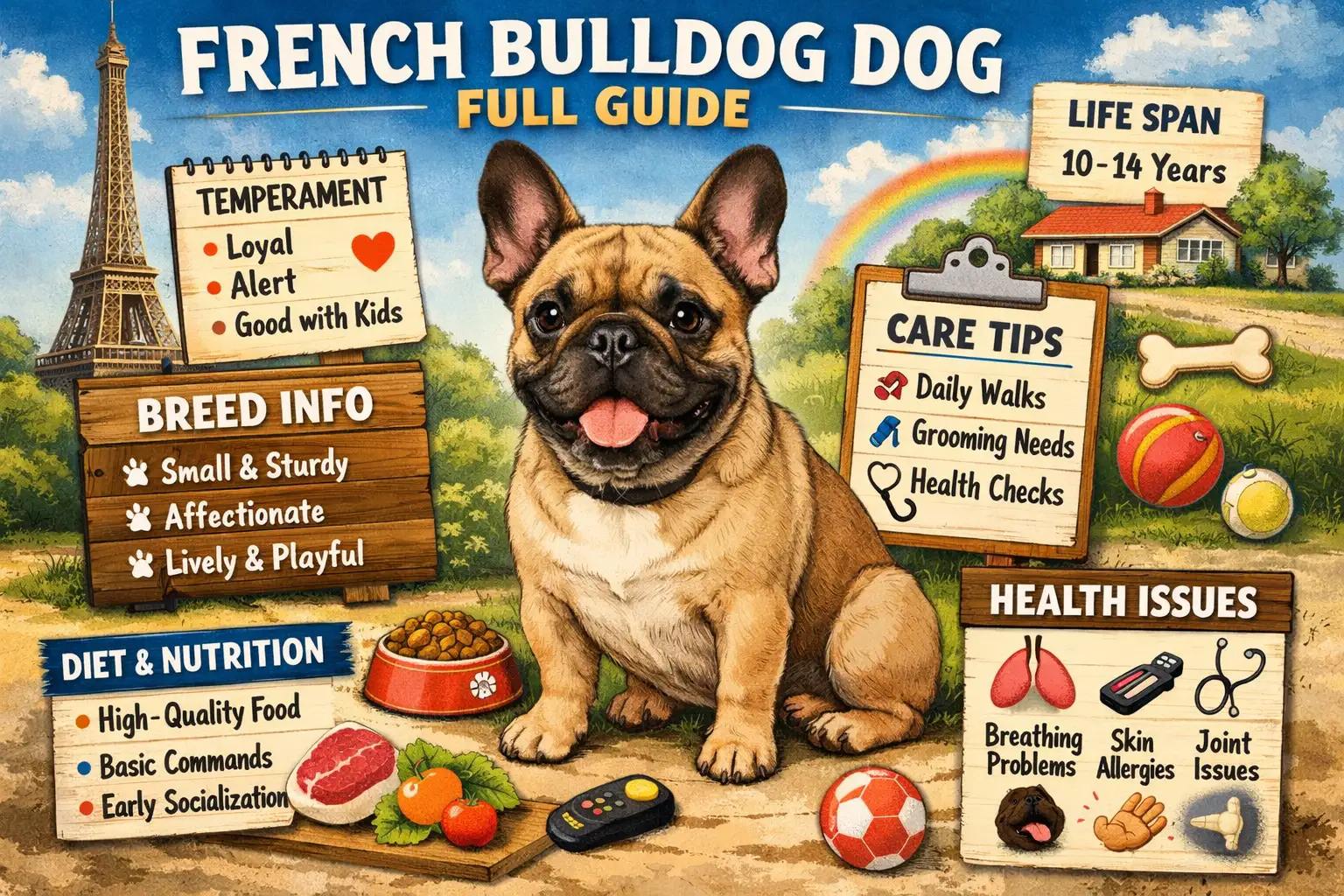
French Bulldog Dog Full Guide
The French Bulldog is one of the most recognizable and in-demand companion dog breeds in the world, known for its bat-like ears, compact build, and deeply people-focused personality. Often seen in apartments, cafés, and city homes, this breed has built a reputation as an ideal urban dog—but that popularity also hides important realities many prospective owners overlook.
At its core, the French Bulldog is a companion-first breed. It thrives on human interaction, prefers being close to its people, and forms strong emotional bonds with its household. This makes the breed incredibly affectionate and entertaining, but it also means French Bulldogs are not well-suited to owners who are away for long hours or looking for a low-commitment dog.
Physically, the French Bulldog’s unique appearance is part of its charm and part of its challenge. The flat face, compact frame, and short coat contribute to its iconic look, but they also play a major role in the breed’s health needs, exercise limits, and long-term care costs. French Bulldogs are not athletic dogs, not endurance walkers, and not heat-tolerant—yet they are confident, playful, and surprisingly stubborn when motivated.
This guide is designed to give you a clear, experience-based understanding of what it truly means to live with a French Bulldog. Instead of focusing on hype or social media trends, it breaks down temperament, care needs, health realities, and ownership costs so you can decide—honestly—whether this breed fits your lifestyle. Whether you are researching your first dog or considering adding a French Bulldog to your home, this article aims to replace guesswork with clarity and realistic expectations.
French Bulldog History, Appearance, and Size
The French Bulldog has a short but interesting history. The breed began in England in the 1800s, where small bulldogs were kept by lace workers. When many of these workers moved to France, they brought their dogs with them. Over time, the dogs were crossed with local breeds, and the modern French Bulldog was born. In France, the breed became popular with artists, shopkeepers, and city families, which is why it is still known as a city-friendly dog today.
Appearance and body shape (easy overview)
French Bulldogs are small dogs, but they are strong and muscular for their size. They have a wide chest, short legs, and a compact body. Their most famous feature is their large, upright “bat ears,” along with a short, flat face. This face shape is cute, but it also affects breathing and exercise ability, which owners must understand.
Their coat is short and smooth, which makes grooming simple. French Bulldogs do shed, but not heavily compared to long-haired breeds. Common coat colors include brindle, fawn, cream, and pied. Some rare colors are advertised online, but these do not make the dog healthier and often come from poor breeding.
Size and weight
French Bulldogs are considered a small breed, but they are heavier than they look. Many adults are overweight if their diet and exercise are not managed well.
Table: French Bulldog size and physical traits
| Feature | Typical range |
|---|---|
| Height | About 11–13 inches |
| Weight | 16–28 pounds |
| Body type | Compact and muscular |
| Coat | Short and smooth |
| Shedding | Low to moderate |
| Distinctive traits | Bat ears, flat face, short tail |
Because of their body shape, French Bulldogs are not built for running long distances or jumping a lot. Their size makes them easy to carry and suitable for apartments, but their weight means they still need strong joints and proper care.
French Bulldog Temperament, Personality, and Behavior
French Bulldogs are known for being loving, friendly, and people-focused. They enjoy being close to their owners and often follow them from room to room. Many owners call them “shadow dogs” because they like to stay near their favorite person.
These dogs are playful but not overly active. They enjoy short play times, toys, and simple games. French Bulldogs are not working dogs and do not need heavy exercise. Instead, they want attention, comfort, and daily interaction.
Personality in everyday life
French Bulldogs are often described as funny and charming. They make people laugh with their silly habits and expressions. At the same time, they can be stubborn. This means they may ignore commands if they are bored or not motivated. Food rewards and praise usually work best.
They do not bark much compared to many small breeds. This makes them a good choice for apartment living. However, they can be vocal in other ways, such as snorting, snoring, and making playful sounds.
Table: French Bulldog temperament at a glance
| Trait | What to expect |
|---|---|
| Affection level | Very high |
| Energy level | Low to medium |
| Friendliness | Very friendly |
| Barking | Low |
| Stubbornness | Medium |
| Need for attention | High |
Behavior with people and other animals
French Bulldogs usually do well with family members. They enjoy spending time with adults and children, especially when kids are calm and gentle. Because of their small size and sensitive body, rough play should always be avoided.
With strangers, most French Bulldogs are friendly or curious. They are not strong guard dogs, but they may alert you if someone comes to the door. With other dogs and pets, they often get along well, especially if they are socialized early.
Table: French Bulldog compatibility
| Situation | Suitability |
|---|---|
| Families with kids | Good with supervision |
| First-time owners | Good choice |
| Apartments | Excellent |
| Seniors | Very suitable |
| Other pets | Usually good |
French Bulldogs do not like being alone for long periods. If left alone too often, they may become anxious or bored. This breed does best in homes where someone is around most of the day.
French Bulldog Care, Exercise, and Training Needs
French Bulldogs are easy to live with, but they still need daily care and attention. This breed is not hard to manage, but owners must understand its limits and special needs.
Daily care and exercise
French Bulldogs do not need long walks. Short walks once or twice a day are enough. They also enjoy light indoor play. Because of their short nose, they can get tired fast and may struggle to breathe if pushed too hard.
Hot weather is a serious problem for this breed. French Bulldogs can overheat quickly, even during short walks. Exercise should always be gentle, and outdoor time should be limited on warm days.
Mental activity is just as important. Simple toys, puzzle feeders, and short training games help keep their mind busy and prevent boredom.
Table: French Bulldog daily care needs
| Care area | What they need |
|---|---|
| Exercise | Short walks and light play |
| Mental activity | Toys and simple games |
| Grooming | Low to moderate |
| Training time | Short daily sessions |
| Alone time | Low tolerance |
| Heat tolerance | Very low |
Training needs
French Bulldogs are smart, but they can be stubborn. They learn best when training is fun and rewarding. Harsh training does not work well with this breed. Positive methods, treats, and praise give the best results.
House training can take time, so patience is important. Short and regular training sessions work better than long ones. French Bulldogs like routines and clear rules.
Grooming basics
Their short coat is easy to care for. Weekly brushing is enough to remove loose hair. Bathing is only needed when they get dirty. Special care should be given to skin folds, ears, teeth, and nails to avoid infections and discomfort.
Overall, French Bulldogs are low-energy dogs, but they need close care and attention every day. They are best for owners who enjoy spending time at home with their dog.
French Bulldog Health, Lifespan, Cost, and Ownership Reality
French Bulldogs are loving dogs, but they come with serious health and cost responsibilities. Anyone thinking about this breed must understand these points before bringing one home.
Health and lifespan
French Bulldogs usually live 10 to 12 years. Some live longer with good care, but many face health problems during their life. Most of these problems are linked to their flat face and body shape.
Breathing trouble is the most common issue. French Bulldogs can snort, snore, and struggle to breathe, especially in hot weather or during exercise. They can also have spine problems, skin allergies, eye issues, and heat stroke.
Table: Common French Bulldog health problems
| Health issue | How common it is |
|---|---|
| Breathing problems | Very common |
| Overheating | High risk |
| Skin allergies | Common |
| Spine problems | Medium to high |
| Eye problems | Common |
Regular vet visits are very important. Good breeders test their dogs, but health problems can still happen even with the best care.
Cost of owning a French Bulldog
French Bulldogs are one of the most expensive dog breeds to own. The high cost is not just the puppy price, but also vet care over time.
Puppies often cost more than many other breeds. Medical care is also higher because of breathing issues, skin problems, and possible surgeries. Many owners choose pet insurance to help manage these costs.
Table: French Bulldog ownership costs
| Expense type | Cost level |
|---|---|
| Puppy price | Very high |
| Vet care | Above average |
| Grooming | Low |
| Emergency care | High |
| Pet insurance | Strongly recommended |
Ownership reality
French Bulldogs are not low-effort dogs. They need time, attention, and money. They do best with owners who are home often and ready to handle health needs. They are not good for people who travel a lot, live in very hot climates, or want a sporty dog.
At the same time, for the right owner, French Bulldogs are loving, funny, and loyal companions. They give a lot of affection and enjoy being part of everyday life.
For trusted, official details on the French Bulldog breed standard, history, and care recommendations, you can visit the American Kennel Club French Bulldog breed page here: https://www.akc.org/dog-breeds/french-bulldog/
French Bulldog Cost of Ownership: Full Price Breakdown 2025
[…] French Bulldog Dog Full Guide French Bulldog Training: A Practical Guide for Everyday Obedience French Bulldog Age Calculator: Dog Years to Human Years Chart French Bulldog Grooming Basics: A Complete Owner’s Guide French Bulldog Nutrition & Feeding Guide French Bulldog Cost of Ownership: What It Really Costs to Own a Frenchie Small DogsLeave a Comment on French Bulldog Cost of Ownership: What It Really Costs to Own a Frenchie […]
French Bulldog Grooming Basics: Easy Care Guide for Owners 2026
[…] French Bulldog Dog Full Guide French Bulldog Training: A Practical Guide for Everyday Obedience French Bulldog Age Calculator: Dog Years to Human Years Chart French Bulldog Nutrition & Feeding Guide French Bulldog Cost of Ownership: What It Really Costs to Own a Frenchie […]