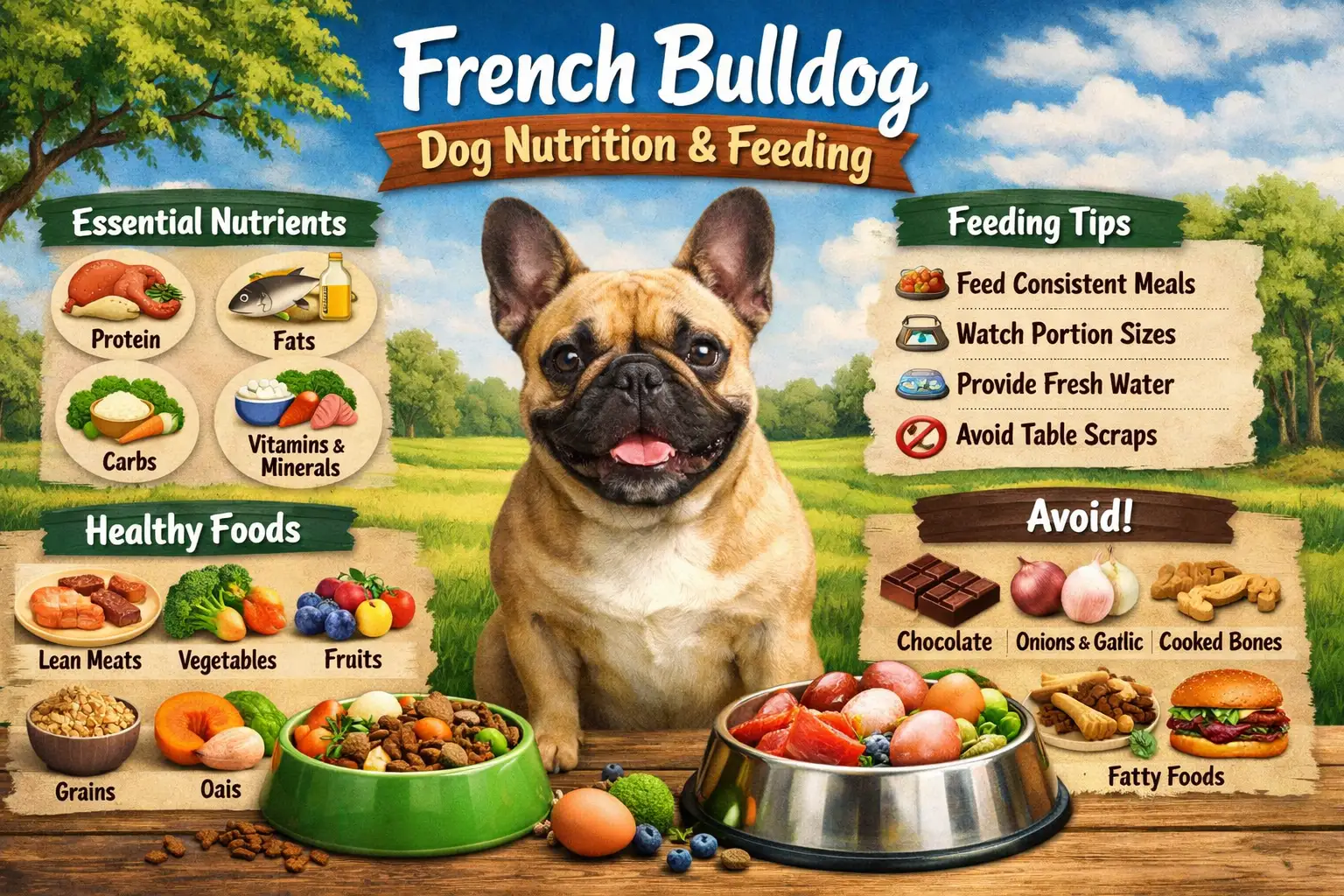
French Bulldog Nutrition & Feeding Guide
French Bulldog nutrition is not just about choosing a “good” dog food — it’s about feeding a breed with very specific physical and metabolic challenges. Frenchies are compact, muscular, brachycephalic dogs with a strong tendency toward weight gain, digestive sensitivity, skin allergies, and joint strain. What you put in the bowl directly affects how comfortably they breathe, how well they digest food, how healthy their skin stays, and how long they remain active.
One of the biggest mistakes owners make is feeding French Bulldogs the same way they would feed other small or medium breeds. Frenchies typically have lower daily calorie needs, yet they are extremely food-motivated. Even slightly oversized portions or frequent treats can quickly lead to obesity, which worsens breathing difficulties, increases heat intolerance, and places extra stress on the spine and joints. For this breed, proper portion control is just as important as food quality.
Digestive issues are another major reason diet matters so much. Many French Bulldogs experience gas, bloating, soft stools, or frequent stomach upset, often due to poor ingredient tolerance or sudden food changes. Diets that are too rich, overly processed, or loaded with low-quality fillers can aggravate these problems. A well-chosen diet supports gut health, produces firmer stools, and noticeably reduces gas — something most Frenchie owners care deeply about.
Skin and allergy problems are also closely tied to nutrition. French Bulldogs are prone to itching, ear infections, paw licking, and skin fold irritation, which can often be improved — or worsened — by diet. While food isn’t the only cause of allergies, ingredient quality, protein sources, and fat balance play a major role in managing inflammation and maintaining a healthy skin barrier.
Finally, nutrition affects energy levels and behavior. Overfed French Bulldogs often appear lazy or sluggish, while under-nourished or poorly fed dogs may seem constantly hungry, restless, or unsatisfied after meals. A properly balanced diet helps maintain steady energy, better focus, and healthier eating habits throughout the day.
This guide is designed to help you understand why French Bulldog nutrition is different, what their bodies truly need, and how to feed them in a way that supports long-term health — not just short-term appetite. In the next section, we’ll break down what an ideal French Bulldog diet actually looks like, starting with the nutrients that matter most.
Best Diet for French Bulldogs: Nutritional Needs Explained
To feed a French Bulldog well, you don’t need complicated science words. You just need to understand what their body needs most and what to avoid. French Bulldogs do best on a simple, balanced diet that supports digestion, healthy skin, strong muscles, and steady energy — without adding extra weight.
Protein: the most important nutrient
Protein helps your French Bulldog build and keep muscle, repair skin, and support the immune system. Frenchies are muscular dogs, so protein is essential.
Look for real animal protein like chicken, turkey, lamb, beef, or fish as the first ingredient. Very low-protein foods can leave your dog feeling hungry and weak, while extremely high-protein foods may upset sensitive stomachs.
Fat: helpful, but easy to overdo
Fat gives energy and keeps the skin and coat healthy. But French Bulldogs gain weight easily, so fat must be controlled. Too much fat can cause weight gain, loose stools, and gas.
Healthy fats like fish oil are good in small amounts, but greasy foods are not.
Carbohydrates and fiber: support digestion
Carbs are not “bad” for dogs. In French Bulldogs, easy-to-digest carbs like rice, oats, or sweet potato can help provide energy and support digestion.
Fiber helps with stool quality and gut health. Too little fiber can cause constipation, and too much can cause gas.
Vitamins and minerals: small amounts, big impact
Vitamins and minerals support bones, joints, skin folds, and the immune system. A complete dog food already contains these. Adding extra supplements without advice can be risky and is usually not needed.
Grain-free vs grain-inclusive food
Many owners worry about grains. In reality, most French Bulldogs tolerate grains well. Grain-free diets are only helpful if your dog has a proven grain sensitivity. For many dogs, grain-free foods can actually be harder to digest.
How to read a dog food label (simple version)
- The first ingredient should be real meat
- The food should say it is complete and balanced
- Look for AAFCO or FEDIAF feeding standards
- Avoid foods with long lists of unnamed fillers
Ideal nutrient ranges for French Bulldogs
Below is a simple guide to what most healthy adult French Bulldogs do best on:
| Nutrient | Recommended Range | Why It Matters |
|---|---|---|
| Protein | 22–28% | Supports muscle, skin, and immune health |
| Fat | 10–15% | Provides energy without excess weight gain |
| Fiber | 3–6% | Helps digestion and stool quality |
| Moisture | Moderate to high | Supports digestion and hydration |
| Omega-3 fats | Small but present | Helps skin, coat, and inflammation |
These ranges are not about being perfect — they are about staying in a safe, healthy zone for this breed.
A good diet should keep your French Bulldog:
- At a healthy weight
- Comfortable after meals (no constant gas or bloating)
- With firm stools and healthy skin
How Much and How Often to Feed a French Bulldog
Feeding the right amount is just as important as choosing the right food. French Bulldogs gain weight very easily, so overfeeding is one of the most common problems owners face. The goal is to keep your dog full, active, and at a healthy weight — not stuffed.
How much food does a French Bulldog need?
French Bulldogs are small dogs with low daily calorie needs. The exact amount depends on:
- Your dog’s weight
- Activity level (active vs mostly indoors)
- Age (puppy, adult, or senior)
- Whether your dog is neutered or spayed
Below is a general feeding guide for healthy adult French Bulldogs. These are starting points, not strict rules.
French Bulldog feeding amounts by weight
| Dog Weight | Daily Calories | Approx. Dry Food per Day |
|---|---|---|
| 16–20 lbs (7–9 kg) | 450–550 kcal | ¾ to 1 cup |
| 21–25 lbs (9.5–11 kg) | 550–650 kcal | 1 to 1¼ cups |
| 26–28 lbs (12–13 kg) | 650–750 kcal | 1¼ to 1½ cups |
If your Frenchie is:
- Low activity / mostly indoors → feed the lower end
- More active / playful → feed the higher end
Always adjust slowly and watch your dog’s body shape.
How often should you feed a French Bulldog?
Most French Bulldogs do best when their food is split into smaller meals. This helps digestion and reduces gas.
| Life Stage | Meals per Day |
|---|---|
| Puppy (up to 6 months) | 3–4 meals |
| Puppy (6–12 months) | 2–3 meals |
| Adult | 2 meals |
| Senior | 2 smaller meals |
Avoid feeding one large meal per day. Large meals can cause bloating, gas, and discomfort.
Portion control and body condition
A healthy French Bulldog should:
- Have a visible waist when viewed from above
- Have ribs you can feel but not see
- Not look round or heavy in the belly
If your dog:
- Gains weight → reduce food slightly
- Seems hungry all the time → check treat intake first
- Loses weight → increase food slowly
Treats count too. Treats should make up no more than 10% of daily calories.
Helpful feeding tips
- Measure food using a cup or scale
- Feed at the same times each day
- Avoid free-feeding (leaving food out all day)
- Adjust food amounts every few weeks if needed
Best Food Types for French Bulldogs (Kibble, Wet, Fresh, Raw)
There is no single “perfect” food for every French Bulldog. The best choice depends on your dog’s stomach, weight, age, and lifestyle. What matters most is that the food is balanced, easy to digest, and fed in the right amount.
Below are the main food types French Bulldog owners use, with simple pros and cons.
Comparing food types for French Bulldogs
| Food Type | Pros | Cons | Best For |
|---|---|---|---|
| Dry kibble | Easy to store, affordable, helps clean teeth | Some dogs get gas or dry stools | Most healthy French Bulldogs |
| Wet/canned food | Tasty, high moisture, easy to chew | Can cause weight gain if overfed | Picky eaters, seniors |
| Fresh cooked food | Very digestible, fewer fillers | More expensive, shorter shelf life | Sensitive stomachs |
| Freeze-dried food | High-quality ingredients, easy to prepare | Needs water, higher cost | Owners wanting premium options |
| Raw diet | High protein, fewer carbs | Risk of bacteria, hard to balance | Only with vet guidance |
| Homemade food | Full control of ingredients | Easy to unbalance nutrients | Only with nutritionist help |
Many owners mix foods, such as kibble with a small amount of wet or fresh food. This is fine as long as portions are controlled.
Treats and human food
French Bulldogs love treats, but treats can quickly cause weight gain. Choose small, low-calorie treats and avoid giving food from the table.
Treat tips:
- Break treats into small pieces
- Use treats mainly for training
- Reduce meal size if treats are given
Foods French Bulldogs can eat vs foods to avoid
Some human foods are safe, while others are dangerous. Use this simple guide.
| Safe in Small Amounts | Limit or Occasional | Toxic / Never Feed |
|---|---|---|
| Plain chicken | Cheese | Chocolate |
| Plain rice | Bread | Grapes & raisins |
| Carrots | Peanut butter | Onions & garlic |
| Apples (no seeds) | Eggs | Xylitol (sweetener) |
| Pumpkin (plain) | Yogurt | Alcohol |
When in doubt, do not feed it.
Simple food rules to remember
- Choose food labeled “complete and balanced”
- Avoid foods with too many fillers
- Watch stool quality and gas after meals
- Change foods slowly over 7–10 days
Common Feeding Problems, Special Diets, and Practical Tips
Many French Bulldog owners worry because their dog has gas, itchy skin, weight gain, or picky eating habits. These problems are very common in this breed and are often linked to diet. The good news is that most feeding issues can be improved with small, smart changes.
Common French Bulldog feeding problems and solutions
| Problem | Likely Cause | What You Can Do | When to See a Vet |
|---|---|---|---|
| Gas and bad smell | Poor digestion, rich food | Switch to simple ingredients, feed smaller meals | If gas is constant or painful |
| Loose stools | Sudden food change | Change food slowly over 7–10 days | If diarrhea lasts more than 2 days |
| Itchy skin or ears | Food sensitivity | Try one protein source, avoid table food | If itching is severe |
| Weight gain | Too much food or treats | Reduce portions, cut treats | If weight keeps increasing |
| Picky eating | Too many treats or food switching | Stick to a schedule, remove food after 20 minutes | If appetite drops suddenly |
Special diet needs in French Bulldogs
Some French Bulldogs need extra care with food:
- Sensitive stomachs: Choose simple foods with fewer ingredients
- Food allergies: Avoid common triggers like chicken or beef if needed
- Overweight dogs: Use lower-fat food and strict portion control
- Low-activity dogs: Feed fewer calories, avoid rich treats
Never start extreme diets without guidance.
Switching food safely
Changing food too fast is one of the biggest mistakes owners make.
Safe food switch steps:
- Mix a small amount of new food with old food
- Increase new food slowly over 7–10 days
- Watch stool, gas, and appetite
- Stop and slow down if problems appear
Everyday feeding tips that help
- Feed at the same times each day
- Measure food, don’t guess
- Avoid feeding from the table
- Keep fresh water available at all times
- Weigh your dog once a month
When to talk to a vet or nutritionist
Get professional help if your French Bulldog:
- Loses weight without reason
- Has constant diarrhea or vomiting
- Has severe itching or ear infections
- Refuses food for more than 24 hours
- Has health conditions needing special diets
For additional, science-based guidance on dog nutrition standards and feeding safety, you can visit the World Small Animal Veterinary Association (WSAVA) nutrition guidelines, which are widely used by veterinarians to evaluate healthy dog diets: https://wsava.org/global-guidelines/global-nutrition-guidelines/