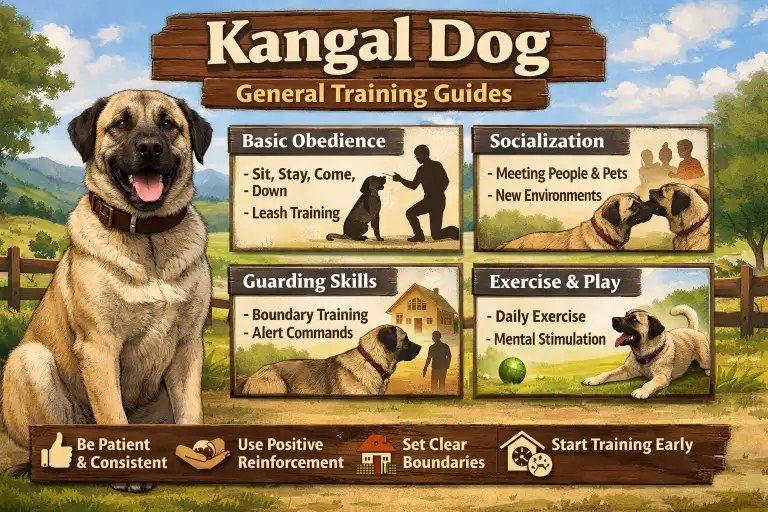
Kangals are known for being calm, confident, and independent. They are natural guardians, which means they watch over their home, family, or livestock carefully. While this makes them great protectors, it also affects how they learn and follow commands. Understanding their behavior is the first step to successful training.
Kangals have strong instincts. They think for themselves, which can make them stubborn at times. They also have high energy and need exercise to stay focused. Age, environment, and past experiences influence how quickly they learn. For example, a puppy is curious and eager, but may have a short attention span, while an adult Kangal is wise and strong-willed but may resist commands if training is inconsistent.
Some common behavior traits include: guarding, alertness, independence, and occasional stubbornness. By knowing these traits, you can plan training sessions that match their personality and keep them motivated.
Behavior Traits Table
| Behavior Trait | Training Implications | Tips for Owners |
|---|---|---|
| Independence | May ignore commands | Keep sessions short and consistent |
| Guarding instinct | Can be protective | Introduce new people and animals slowly |
| High energy | Can get distracted | Give exercise before training |
| Stubbornness | May resist commands | Use positive reinforcement and patience |
Understanding these traits helps you set realistic expectations and choose the right training methods. Recognizing when your Kangal is learning versus when it is testing boundaries makes training smoother and safer for both dog and owner.
Step-by-Step Training Methods for Kangals
Training your Kangal is easier when you break it into small steps. Consistency and patience are very important. Use short sessions, clear commands, and positive rewards like treats or praise. Start with basic commands, then add socialization, leash skills, and house-training.
Basic Commands and Obedience
Teach your Kangal commands like sit, stay, come, and down. Always give the command clearly, wait for your dog to respond, then reward immediately. Repeat in short sessions of 5–15 minutes, several times a day.
Leash Training and Recall
Kangals can pull on the leash or ignore calls because of their independent nature. Start in a quiet place with minimal distractions. Use a strong, happy voice when calling, and reward them when they come. Leash walks should be calm, controlled, and consistent.
Socialization
Expose your Kangal to people, children, and other animals slowly. Positive experiences help them stay confident and reduce guarding behaviors. Use treats and praise to encourage calm behavior during introductions.
Crate and House Training
Crates give Kangals a safe space. Introduce the crate gradually and reward your dog for going inside. For house training, take them out regularly, especially after meals or naps, and praise them for going in the right place.
Training Step Table
| Training Step | Method / Command | Reward / Reinforcement | Session Length |
|---|---|---|---|
| Sit | Hold treat above head | Treat + praise | 5-10 min |
| Come / Recall | Call name + reward | High-value treat | 5-15 min |
| Leash Walking | Stop + redirect | Verbal praise | 10-15 min |
| Down | Lure with treat | Treat + calm praise | 5-10 min |
| Crate Training | Gradual entry | Treat + calm praise | 5-10 min |
| House Training | Take outside regularly | Praise + treat | 10-15 min |
Following these steps consistently helps your Kangal learn faster and behave reliably. Remember, patience is key — Kangals are smart but independent, so building trust is just as important as giving commands.
Troubleshooting Common Training Problems
Even with consistent training, Kangals can show some challenging behaviors. Understanding why these problems happen and how to fix them makes training easier and safer. Most issues come from their natural independence, guarding instincts, or fear. Patience, positive reinforcement, and adjusting the environment are key to solving problems.
Common Problems and Solutions
Recall problems happen when Kangals get distracted or decide not to listen. Stubbornness may appear if your dog loses interest or does not see the reward. Barking and guarding behaviors are natural, but you can teach your dog when it is appropriate to alert and when to stay calm. Fear or anxiety may appear with loud noises, strangers, or new experiences and should be addressed with slow exposure and reassurance.
Troubleshooting Table
| Problem | Likely Cause | Quick Fix / Strategy |
|---|---|---|
| Poor recall | Distraction / independence | Use high-value treats, start short distance recall |
| Excessive barking | Guarding instinct or alerting | Calmly redirect, practice “quiet” command |
| Stubborn behavior | Loss of interest or lack of reward | Change reward, keep sessions short and fun |
| Fear / anxiety | New situations or poor socialization | Slowly expose to stimuli, give praise and treats |
By identifying the cause of each problem, you can choose the best solution. Consistency and positive reinforcement help your Kangal learn what is expected without stress or fear.
When to Seek Professional Help
While most Kangals can be trained at home with patience and consistency, there are times when professional help is necessary. A trained behaviorist or Kangal-experienced trainer can guide you safely and prevent problems from becoming serious. Seeking help early can save time and reduce stress for both you and your dog.
Signs You May Need Professional Help
If your Kangal shows aggression toward people or other animals, persistent fear or anxiety, or refuses to respond to recall despite consistent training, it’s time to consult a professional. Adult Kangals with ingrained guarding behavior may also benefit from structured professional guidance. A trainer can provide a tailored plan, show you safe handling techniques, and help you understand your dog’s behavior better.
Professional Help Table
| Situation | Professional Help Needed | What Trainer Will Do |
|---|---|---|
| Aggression towards people or dogs | Yes | Behavior modification, safety planning, controlled exposure |
| Persistent recall failure | Yes | Develop a recall plan, guide step-by-step practice |
| Severe anxiety or fear | Yes | Desensitization and counterconditioning, confidence building |
| Uncontrolled guarding behavior | Yes | Structured socialization, obedience reinforcement |
Working with a professional does not replace at-home training. Instead, it supports your efforts, helps you handle difficult situations safely, and ensures your Kangal grows into a confident, well-behaved dog.
For more tips on Kangal care and behavior, visit the American Kennel Club Kangal Breed Page for expert guidance.

Ata Ur Rehman is the founder of Pet Age in Human Years Calculator, an educational platform that provides age conversion charts and lifespan guides for dogs, cats, birds, and other companion animals. His work focuses on helping pet owners understand how animal ages translate into human years using commonly accepted age conversion formulas and published lifespan averages.
The website compiles breed and species lifespan data from kennel clubs, breed organizations, and general animal lifespan studies to present simple and easy-to-understand guides for pet owners worldwide.
This website was created to centralize animal age conversion charts into one easy reference platform for pet owners.