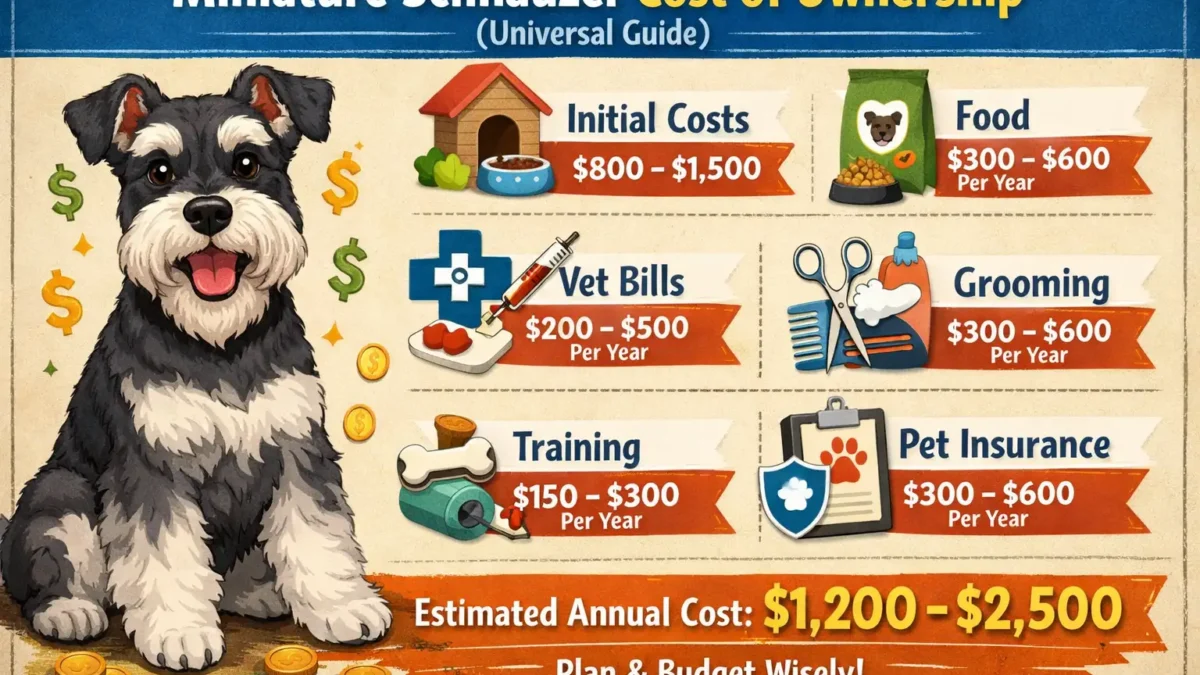
Miniature Schnauzer Cost of Ownership: What It Really Costs to Own One
Owning a Miniature Schnauzer is often described as choosing a “small dog with big-dog needs.” While their compact size can give the impression of lower expenses, the reality is more nuanced. Between professional grooming requirements, routine veterinary care, quality nutrition, and long-term health planning, the Miniature Schnauzer cost of ownership is higher than many first-time owners expect.
This guide is designed for prospective and current owners who want a realistic financial picture, not optimistic averages. Costs are influenced by factors such as whether you adopt or buy from a breeder, where you live, how much grooming you outsource, and how proactive you are with preventive care. A well-cared-for Miniature Schnauzer can live 12–15 years, making this a long-term financial commitment rather than a short-term expense.
Before getting into numbers, it’s important to understand how costs typically break down over time:
- First-year costs are the highest, especially for puppies, due to purchase or adoption fees, initial veterinary care, spay/neuter surgery, training, and basic supplies.
- Monthly and annual expenses make up the bulk of long-term ownership, including food, grooming, routine vet visits, preventatives, and optional insurance.
- Lifetime costs can vary widely depending on health, grooming frequency, and whether emergency or chronic medical issues arise.
Miniature Schnauzers are also known for breed-specific considerations that directly affect budgeting. Their low-shedding, wiry coat requires regular professional grooming or dedicated at-home maintenance. They are intelligent and energetic, which often means investing in training and enrichment to prevent behavioral issues. Additionally, they can be prone to certain medical conditions that make preventive care especially important from a cost perspective.
By the end of this article, you’ll have a clear understanding of:
- What it realistically costs to own a Miniature Schnauzer in the first year
- What you can expect to spend monthly and annually
- Why some owners pay significantly more (or less) than averages
- Whether a Miniature Schnauzer fits your long-term budget, not just your lifestyle
This upfront clarity helps avoid financial surprises and ensures you’re prepared to provide consistent, high-quality care throughout your dog’s life.
Miniature Schnauzer First-Year Costs (Purchase, Vet Care, Setup)
The first year is the most expensive year of owning a Miniature Schnauzer. This is when you pay for getting the dog, early medical care, and all the basic items your dog needs to live comfortably in your home.
Many new owners are surprised by how fast these costs add up, especially in the first few months.
Where first-year costs come from
In the first year, you usually pay for:
- Buying from a breeder or adopting from a shelter
- First vet visits and vaccinations
- Spay or neuter surgery
- Microchipping and basic health checks
- Crate, bed, bowls, leash, toys, and grooming tools
- Puppy training classes (very common for this breed)
Puppies cost more in the first year than adult dogs because they need more vet visits, training, and supervision.
Miniature Schnauzer first-year cost breakdown
| Expense category | Typical cost range (USD) |
|---|---|
| Purchase from breeder | $800 – $2,500 |
| Adoption fee | $150 – $500 |
| Initial vet visits & vaccines | $300 – $600 |
| Spay / neuter surgery | $200 – $600 |
| Microchipping | $40 – $75 |
| Basic supplies & setup | $250 – $500 |
| Puppy training classes | $100 – $300 |
| Estimated first-year total | $1,400 – $4,000+ |
These numbers can go higher if you live in a big city, choose premium services, or face early medical issues.
Puppy vs adult first-year costs
- Puppy: Higher costs due to vaccines, training, and surgery
- Adult dog: Lower first-year costs, but adoption fees may still apply
Adopting an adult Miniature Schnauzer can save money, but you should still budget for vet checks and supplies.
Why planning for the first year matters
If you only plan for food costs, the first year can feel overwhelming. Knowing these costs early helps you avoid stress and make better choices for your dog’s health and safety.
Monthly and Annual Miniature Schnauzer Expenses
After the first year, most costs become monthly and yearly bills. These are the expenses you will pay again and again for the rest of your Miniature Schnauzer’s life. Planning for these costs helps you avoid money stress later.
Even though Miniature Schnauzers are small dogs, they are not cheap to maintain. Grooming and health care make a big difference in the total cost.
Regular costs you should expect
Most owners spend money every month on:
- Food and treats
- Grooming or grooming tools
- Vet care and medicines that prevent illness
- Training or activities
- Pet insurance (optional but common)
Some costs are monthly, and some are paid once or twice a year, but they all add up.
Average monthly and annual cost breakdown
| Expense | Monthly cost | Annual cost |
|---|---|---|
| Food and treats | $30 – $60 | $360 – $720 |
| Grooming (professional or at home) | $40 – $90 | $480 – $1,080 |
| Routine vet care & preventatives | $25 – $50 | $300 – $600 |
| Pet insurance | $20 – $50 | $240 – $600 |
| Training, toys, enrichment | $15 – $40 | $180 – $480 |
| Estimated total | $130 – $290 | $1,560 – $3,480 |
These numbers are averages. Your real costs may be higher or lower based on where you live and how you care for your dog.
Why grooming is a big cost for this breed
Miniature Schnauzers have a wiry coat that does not shed much. This is great for allergies, but it means regular grooming is needed.
- Professional grooming is usually needed every 6–8 weeks
- Skipping grooming can cause matting, skin problems, and pain
- Learning basic grooming at home can lower costs but takes time
Grooming is one of the main reasons Miniature Schnauzers cost more than many other small dogs.
Vet care and health planning
Routine vet care includes:
- Yearly checkups
- Vaccines
- Flea, tick, and worm prevention
Healthy dogs cost less, but emergency vet visits can be expensive. This is why many owners choose pet insurance or build a savings fund just for vet bills.
What Makes Miniature Schnauzers More or Less Expensive to Own
Not all Miniature Schnauzer owners spend the same amount of money. Two people can own the same breed and still have very different costs. This section explains why costs go up or down, so you can see where you might save money or need a bigger budget.
Main factors that change the total cost
Some choices are in your control, and some are not. The biggest cost drivers are:
- Grooming style and how often it’s done
- Your dog’s health and medical needs
- Where you live
- Your lifestyle and daily routine
- Whether you use pet insurance or savings
Cost differences explained simply
| Cost factor | Lower-cost situation | Higher-cost situation |
|---|---|---|
| Grooming | Basic grooming at home | Professional grooming every 6–8 weeks |
| Health | Healthy dog with few issues | Allergies, dental problems, or chronic illness |
| Location | Small town or rural area | Big city or high-cost area |
| Lifestyle | Home often, no travel | Frequent travel, boarding or pet sitters |
| Insurance | Emergency savings only | Full pet insurance plan |
Grooming choices matter a lot
Miniature Schnauzers need regular grooming no matter what. The difference is who does the grooming.
- Home grooming costs less but needs tools and time
- Professional grooming costs more but saves effort and keeps the coat neat
Many owners use a mix of both to control costs.
Health and medical risks
Miniature Schnauzers are usually healthy, but some can have:
- Skin issues
- Dental problems
- Digestive sensitivities
A healthy dog costs less each year. Dogs with long-term health problems can cost much more due to vet visits and medicine.
Location and lifestyle impact
Living in a city often means:
- Higher vet bills
- Higher grooming prices
- Higher boarding costs
If you travel often, boarding or pet sitting becomes a regular expense. Owners who stay home more usually spend less.
Lifetime Cost, Hidden Expenses, and Smart Budgeting Tips
Owning a Miniature Schnauzer is a long-term money commitment. Most dogs live between 12 and 15 years, so it’s important to think beyond the first year and plan for the full lifetime.
Small monthly costs may seem easy to handle, but over many years, they become a big total.
Estimated lifetime cost of a Miniature Schnauzer
| Time period | Estimated cost (USD) |
|---|---|
| First year | $1,400 – $4,000+ |
| Each adult year | $1,500 – $3,500 |
| 12–15 year lifetime | $18,000 – $45,000+ |
These are average estimates. A healthy dog with basic care may cost less. A dog with medical problems or frequent grooming may cost more.
Hidden costs many owners forget
Some costs don’t happen every month, but they still matter:
- Emergency vet visits
- Dental cleanings
- Replacing chewed toys, beds, or furniture
- Boarding or pet sitting during travel
- Special food for allergies or stomach issues
- Medicine for long-term health problems
These costs can appear without warning, which is why planning ahead is important.
Simple budgeting tips that really help
You don’t need to be rich to own a Miniature Schnauzer, but you do need a plan.
Helpful ideas:
- Set aside a small amount of money each month for vet emergencies
- Learn basic grooming to lower salon visits
- Buy good-quality food to avoid health problems later
- Compare pet insurance plans carefully before choosing one
- Track yearly costs so nothing surprises you
Saving money is good, but skipping vet care or grooming can cause bigger problems and higher costs later.
Final reality check
Miniature Schnauzers are loving, smart, and fun dogs, but they are not a low-cost breed. Grooming needs, health care, and long life spans make them a serious financial responsibility.
If you can plan for the costs and stick to a budget, owning a Miniature Schnauzer can be very rewarding.
For a broader look at average dog ownership expenses across all breeds, you can also review the cost estimates published by the American Society for the Prevention of Cruelty to Animals, which provide general guidance on long-term dog care budgeting: : https://www.aspca.org/pet-care/general-pet-care/cost-owning-pet