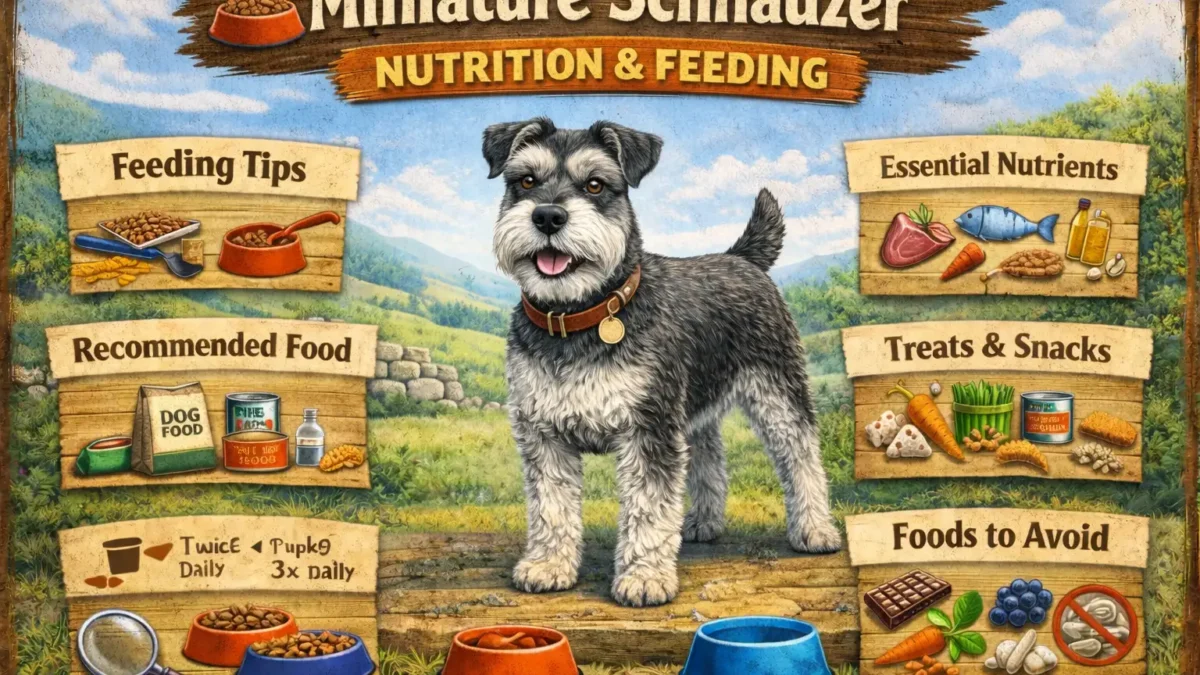
Miniature Schnauzer Nutrition & Feeding Guide
Miniature Schnauzers are not just small dogs with big personalities — they are a breed with very specific nutritional sensitivities that make diet far more important than many owners realize. Feeding a Miniature Schnauzer “like any other small dog” is one of the most common reasons this breed struggles with weight gain, digestive issues, and pancreatitis later in life.
This guide is built to help owners make practical, informed feeding decisions, not follow trends or marketing claims.
Why Miniature Schnauzer nutrition is different
Miniature Schnauzers have a combination of traits that directly affect how they should be fed:
- A small body with a relatively efficient metabolism, meaning even small overfeeding adds up quickly
- A genetic tendency toward fat intolerance, which increases the risk of pancreatitis
- A strong food drive, making them excellent trainers’ dogs — but also prone to begging and overeating
- A dense, wiry coat that reflects diet quality through skin health, shedding, and coat texture
Because of this, diet mistakes that might be minor in other breeds can become serious health problems in Miniature Schnauzers.
The real impact of proper nutrition
When a Miniature Schnauzer is fed appropriately for its breed, owners typically notice:
- Steadier energy levels without hyperactivity or crashes
- Easier weight maintenance and a visible waistline
- Fewer digestive upsets and more consistent stools
- Healthier skin and coat with less itching or dullness
- Reduced long-term risk of pancreatitis and obesity-related conditions
On the other hand, diets that are too high in fat, overly calorie-dense, or poorly portioned often lead to:
- Rapid weight gain despite “normal-looking” meals
- Chronic begging and food obsession
- Soft stool, gas, or intermittent vomiting
- Increased veterinary visits for preventable issues
Nutrition is a long-term health tool, not just feeding
For Miniature Schnauzers, nutrition is not just about keeping them full — it’s a daily health management tool. The right diet supports:
- Digestive stability
- Metabolic health
- Coat and skin integrity
- Joint support as they age
- Overall longevity and quality of life
This is especially important because many Miniature Schnauzers live well into their teens. Feeding correctly from puppyhood through senior years can make the difference between a dog that ages comfortably and one that struggles with chronic, diet-related conditions.
What Should a Miniature Schnauzer Eat? Core Nutritional Needs Explained
Many owners ask a simple question: What should a Miniature Schnauzer eat every day to stay healthy?
The answer is not about fancy food or trends. It is about balance, low fat, and correct portions.
Miniature Schnauzers do best on food that supports steady energy, easy digestion, and healthy weight control.
The three main nutrients your Miniature Schnauzer needs
Every complete dog food is made from three main nutrients. Each one has a job.
Protein helps build muscles, supports the immune system, and keeps the coat strong. Miniature Schnauzers need good-quality animal protein, but not extreme amounts.
Fat gives energy and helps absorb vitamins, but this is the most sensitive nutrient for this breed. Too much fat can lead to weight gain and pancreatitis.
Carbohydrates provide energy and fiber. They help with digestion and stool quality when chosen correctly.
Ideal macronutrient balance for Miniature Schnauzers
| Nutrient | Recommended Range | Why It Matters |
|---|---|---|
| Protein | Moderate to high | Supports muscles and coat |
| Fat | Low to moderate | Helps prevent pancreatitis |
| Carbohydrates | Moderate | Supports digestion and energy |
The key point: low to moderate fat matters more than high protein for this breed.
Important vitamins and minerals
Miniature Schnauzers also need small amounts of vitamins and minerals to stay healthy.
These nutrients help with skin, coat, bones, and digestion.
| Nutrient | Why It Helps |
|---|---|
| Omega-3 fatty acids | Skin, coat, and inflammation control |
| Vitamin E | Skin and immune health |
| Zinc | Coat quality and healing |
| Calcium & phosphorus | Strong bones and teeth |
Most complete dog foods already include these. Extra supplements are not needed unless your vet recommends them.
How to read a dog food label (simple guide)
Dog food labels can be confusing. This quick table helps you know what matters.
| Label Part | What to Look For | What to Be Careful About |
|---|---|---|
| First ingredients | Named meat (chicken, turkey, fish) | Vague words like “meat by-product” |
| Fat percentage | Lower fat numbers | Very high fat for small breeds |
| Statement | “Complete and balanced” | Missing feeding standards |
Always choose food that meets AAFCO or FEDIAF feeding standards. This means the food is made to support long-term health.
What matters most to remember
- Miniature Schnauzers need low-fat, balanced food
- Quality matters more than brand names
- Avoid very rich or greasy foods
- Simple, steady feeding works best
How Much to Feed a Miniature Schnauzer and How Often
One of the most common feeding mistakes with Miniature Schnauzers is giving too much food without realizing it. Because they are small, even a little extra food every day can lead to weight gain.
Feeding the right amount helps your dog stay active, healthy, and comfortable.
Daily calorie needs by weight and activity level
Miniature Schnauzers usually weigh between 11 and 20 pounds. Their calorie needs depend on how active they are.
| Weight | Low Activity | Average Activity | High Activity |
|---|---|---|---|
| 11–13 lbs | 300–350 calories | 350–400 calories | 400–450 calories |
| 14–16 lbs | 350–400 calories | 400–450 calories | 450–500 calories |
| 17–20 lbs | 400–450 calories | 450–500 calories | 500–550 calories |
These numbers include all food and treats combined, not just meals.
Feeding frequency by life stage
How often you feed matters just as much as how much you feed.
| Life Stage | Meals Per Day | Why |
|---|---|---|
| Puppy (up to 12 months) | 3 meals | Helps steady growth and energy |
| Adult | 2 meals | Supports digestion and weight control |
| Senior | 2 smaller meals | Easier digestion and better energy balance |
Skipping meals or feeding once per day can increase hunger, begging, and stomach upset.
Using body condition to adjust portions
Do not rely only on the feeding guide on the bag. Use your hands and eyes too.
| Body Look | What It Means | What to Do |
|---|---|---|
| Ribs hard to feel | Overweight | Reduce food by 10% |
| Ribs easy to feel, waist visible | Ideal | Keep feeding the same |
| Ribs very visible | Underweight | Increase food slightly |
Check body condition every 2 to 3 weeks, not every day.
Common portion mistakes to avoid
- Guessing instead of measuring food
- Forgetting to count treats
- Letting begging control feeding times
- Feeding table scraps “just a little”
Small dogs feel full faster, but they also gain weight faster.
Helpful feeding tips
- Use a measuring cup or kitchen scale
- Keep treats under 10% of daily calories
- Feed at the same times each day
- Adjust food after neutering or activity changes
Best Food Types, Treats, and Safe Human Foods for Miniature Schnauzers
Many Miniature Schnauzer owners feel confused when choosing food. There are many options, and not all are good for this breed. The goal is to pick food that is easy to digest, low in fat, and simple to feed every day.
Common dog food types and how they compare
| Food Type | Good Points | Things to Watch |
|---|---|---|
| Dry kibble | Easy to store, helps teeth, affordable | Some are too high in fat |
| Wet or canned food | Tasty, adds moisture | Can be high in calories |
| Fresh cooked food | Very digestible, clear ingredients | Must be balanced correctly |
| Freeze-dried food | Convenient, strong flavor | Often high in fat |
| Raw food | Natural protein source | Risky for pancreatitis and bacteria |
| Homemade food | Full control of ingredients | Needs vet guidance to avoid deficiencies |
For most Miniature Schnauzers, high-quality dry food or fresh cooked food works best when fat levels are kept low.
Safe and unsafe human foods
Many owners like to share food. Some human foods are safe in small amounts, while others are dangerous.
| Safe in Small Amounts | Unsafe or Toxic | Why Unsafe |
|---|---|---|
| Plain chicken breast | Fatty meats | Can trigger pancreatitis |
| Carrots | Chocolate | Toxic to dogs |
| Green beans | Onions and garlic | Damage red blood cells |
| Apples (no seeds) | Grapes and raisins | Can harm kidneys |
| Plain rice | Fried foods | Too much fat |
Always keep human food simple, plain, and unseasoned.
Treat guidelines for Miniature Schnauzers
Treats should be part of training, not a big part of daily food.
| Treat Type | Recommended | Limit or Avoid |
|---|---|---|
| Small training treats | Yes | Count calories |
| Fresh veggies | Yes | No butter or oil |
| Chewy fatty treats | No | High fat risk |
| Table scraps | No | Hard to control calories |
A good rule is that treats should be less than 10% of daily calories.
Simple feeding tips that work
- Choose food labeled for small breeds
- Check fat percentage before buying
- Avoid mixing too many food types
- Keep feeding routine steady
Too many food changes can cause stomach upset and picky eating.
Special Diets, Feeding Problems, and Real-Life Miniature Schnauzer Scenarios
Miniature Schnauzers often need special care with food. Small changes in diet can make a big difference for their health. This section helps you handle common problems in a simple and safe way.
Special diet needs in Miniature Schnauzers
Some Miniature Schnauzers need extra care with what they eat.
| Condition | Diet Focus | Simple Feeding Tips |
|---|---|---|
| Pancreatitis risk | Very low fat | Avoid fatty treats and table food |
| Overweight | Fewer calories | Measure food and limit treats |
| Food allergies | Limited ingredients | One protein, simple formula |
| Sensitive stomach | Easy digestion | Slow food changes, plain diets |
| Low activity dogs | Lower calories | Smaller portions, steady meals |
Always talk to your vet before starting a special diet.
Common feeding problems and easy fixes
Many feeding issues are caused by habits, not hunger.
| Problem | Common Cause | What Helps |
|---|---|---|
| Always hungry | Too many treats | Measure food and reduce snacks |
| Picky eating | Too many food changes | Stick to one food |
| Soft stool | Fast food switch | Slow transition over 7 days |
| Weight gain | Guessing portions | Use a measuring cup |
| Begging | Feeding from table | Ignore and keep routine |
Most problems improve when feeding is simple and consistent.
How to switch dog food safely
Changing food too fast can upset your dog’s stomach.
| Day | Old Food | New Food |
|---|---|---|
| 1–2 | 75% | 25% |
| 3–4 | 50% | 50% |
| 5–6 | 25% | 75% |
| 7 | 0% | 100% |
If your dog gets diarrhea or stops eating, slow the change.
Real-life feeding situations
- Picky eaters often eat better when food is offered for 15 minutes, then removed
- Feeding more than one dog works best when meals are given separately
- During travel, keep food and feeding times the same
- Begging gets worse when owners give in “just once”
When to see a vet
Call your vet if your Miniature Schnauzer:
- Vomits often
- Has long-lasting diarrhea
- Gains or loses weight quickly
- Refuses food for more than one day
- Has been diagnosed with pancreatitis
Final thoughts
Feeding a Miniature Schnauzer does not need to be complicated.
Keep food low in fat, measure portions, limit treats, and stay consistent.
For official nutrition standards and guidance used by most pet food manufacturers, you can review the dog food nutrient profiles published by Association of American Feed Control Officials https://www.aafco.org/consumers/understanding-pet-food/ to better understand what “complete and balanced” really means for your Miniature Schnauzer.