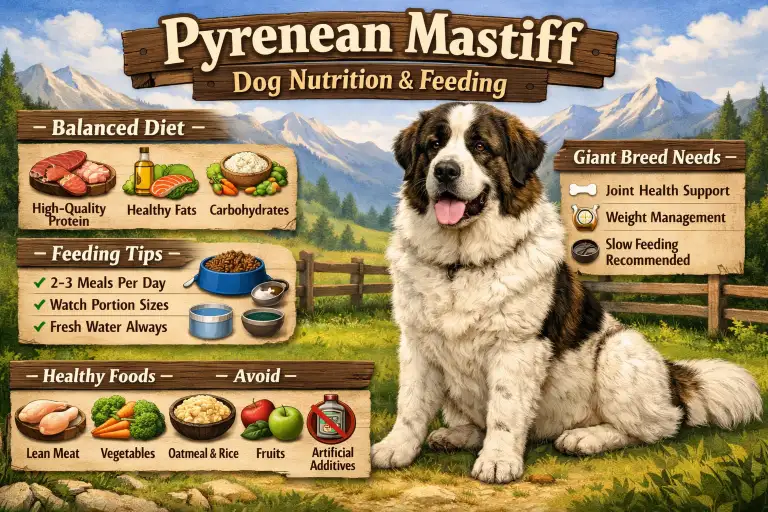
Feeding a Pyrenean Mastiff is not the same as feeding a medium or even a standard large dog. As a giant livestock guardian breed, they have unique nutritional needs that impact their growth, joint health, digestion, and long-term vitality. This guide is designed to help owners understand how to provide the right nutrients at the right time, whether your dog is a growing puppy, an active adult, or a senior.
Recommended Dog Care Products
Based on your dog’s age, these products may help with comfort, health, grooming, and daily care.

Purina Pro Plan Veterinary Supplements
Daily probiotics for dogs to support digestive and gut health.
View on Amazon ↗
Earth Rated Poop Bags for Dogs
Leak-proof, extra thick waste bag refill rolls with lavender scent.
View on Amazon ↗
Greenies Pill Pockets for Dogs
Large dog treats for capsule medication, peanut butter flavor.
View on Amazon ↗
HONEY CARE All-Absorb Dog Wrap
Small male dog wraps, 50 count, useful for daily care support.
View on Amazon ↗
Seresto Flea & Tick Collar
Flea and tick treatment and prevention for dogs over 18 lbs.
View on Amazon ↗
Milk-Bone MaroSnacks
Small dog treats with real bone marrow in a 40 oz canister.
View on Amazon ↗
Vital Essentials Dog Treats
Freeze dried beef liver dog treats, grain free and single ingredient.
View on Amazon ↗
Stain & Odor Eliminator
Enzyme cleaner for pet stains, carpet messes, and strong odors.
View on Amazon ↗
Pur Luv Chicken Jerky Treats
Dog treats made with real chicken breast, high protein and chew-friendly.
View on Amazon ↗
Milk-Bone Flavor Snacks
Mini crunchy dog biscuits in a 36 oz canister for small rewards.
View on Amazon ↗As an Amazon Associate, we may earn from qualifying purchases.
Pyrenean Mastiffs grow slowly but can reach 100–120 pounds (45–55 kg) or more. During the growth phase, overfeeding or providing improper nutrients—especially excess calcium or protein—can lead to rapid bone growth, joint stress, and skeletal issues like hip dysplasia or elbow problems. Conversely, underfeeding can stunt growth and reduce muscle development, leaving your dog weaker and more prone to injuries.
Nutrition also affects energy levels, temperament, and overall health. A poorly fed Pyrenean Mastiff may be lethargic, prone to digestive upset, or gain weight too quickly, which increases the risk of obesity and related conditions. On the other hand, a carefully balanced diet supports healthy growth, strong muscles, joint protection, and a shiny coat, making day-to-day life easier for both the dog and the owner.
Skimming tips:
- Watch for tables on nutrients, calories, and feeding schedules for quick reference.
- Remember that overfeeding at any stage can have long-term consequences for a giant breed like the Pyrenean Mastiff.
Core Nutrition Needs of a Pyrenean Mastiff (Protein, Fat, Minerals, and Safety)
Pyrenean Mastiffs need carefully balanced nutrition to grow healthy and stay strong. Because they are giant dogs, giving too much or too little of certain nutrients can hurt their bones, joints, or overall health. Understanding what they need in protein, fat, fiber, vitamins, and minerals helps you make better feeding choices.
Recommended Dog Care Products
Based on your dog’s age, these products may help with comfort, health, grooming, and daily care.
Purina Pro Plan Veterinary Supplements
Daily probiotics for dogs to support digestive and gut health.
View on Amazon ↗
Earth Rated Poop Bags for Dogs
Leak-proof, extra thick waste bag refill rolls with lavender scent.
View on Amazon ↗
Greenies Pill Pockets for Dogs
Large dog treats for capsule medication, peanut butter flavor.
View on Amazon ↗
HONEY CARE All-Absorb Dog Wrap
Small male dog wraps, 50 count, useful for daily care support.
View on Amazon ↗
Seresto Flea & Tick Collar
Flea and tick treatment and prevention for dogs over 18 lbs.
View on Amazon ↗
Milk-Bone MaroSnacks
Small dog treats with real bone marrow in a 40 oz canister.
View on Amazon ↗
Vital Essentials Dog Treats
Freeze dried beef liver dog treats, grain free and single ingredient.
View on Amazon ↗
Stain & Odor Eliminator
Enzyme cleaner for pet stains, carpet messes, and strong odors.
View on Amazon ↗
Pur Luv Chicken Jerky Treats
Dog treats made with real chicken breast, high protein and chew-friendly.
View on Amazon ↗
Milk-Bone Flavor Snacks
Mini crunchy dog biscuits in a 36 oz canister for small rewards.
View on Amazon ↗As an Amazon Associate, we may earn from qualifying purchases.
Recommended Nutrient Ranges for Pyrenean Mastiffs
| Nutrient | Puppy (up to 18 months) | Adult (18 months+) | Notes |
|---|---|---|---|
| Protein | 22–26% | 18–22% | Support muscle growth without overloading bones |
| Fat | 8–12% | 6–10% | Provides energy; avoid excess to prevent obesity |
| Calcium | 1.0–1.3% | 0.8–1.1% | Key for bone growth; too much can cause skeletal problems |
| Phosphorus | 0.8–1.1% | 0.6–1.0% | Works with calcium for healthy bones |
| Fiber | 2–4% | 2–4% | Supports digestion; giant breeds need moderate fiber |
These ranges help puppies grow safely and adults maintain muscle and weight. Always check your dog food label for AAFCO or FEDIAF approval to ensure these ranges are met.
Common Nutrition Myths vs Reality for Giant Breeds
| Myth | Reality |
|---|---|
| More protein = faster growth | Too much protein can stress bones; follow recommended ranges |
| Calcium supplements help all puppies | Excess calcium can cause joint issues; only give if vet recommends |
| Grain-free is always healthier | Grains can be safe; the key is overall balance |
| Raw diets are always best | Raw diets can be risky if not properly balanced for nutrients and hygiene |
Knowing the truth about nutrition myths helps you avoid mistakes that could harm your Pyrenean Mastiff. Always consult your vet before starting supplements or unusual diets.
Providing the right nutrient balance now makes the next steps easier: feeding schedules, portion control, and choosing the best food types.
How Much to Feed a Pyrenean Mastiff (Calories, Portions, and Feeding Frequency)
Knowing how much to feed your Pyrenean Mastiff is one of the most important parts of keeping them healthy. Overfeeding can cause weight gain and joint problems, while underfeeding can slow growth and reduce energy. Feeding depends on age, weight, activity level, and life stage.
Daily Calorie Needs by Weight and Activity
| Weight (kg) | Low Activity | Average Activity | High Activity |
|---|---|---|---|
| 40–50 kg | 1,400–1,600 kcal | 1,600–1,900 kcal | 1,900–2,200 kcal |
| 51–60 kg | 1,600–1,900 kcal | 1,900–2,200 kcal | 2,200–2,500 kcal |
| 61–70 kg | 1,900–2,200 kcal | 2,200–2,500 kcal | 2,500–2,800 kcal |
| 71–80 kg | 2,200–2,500 kcal | 2,500–2,800 kcal | 2,800–3,200 kcal |
Tip: Adjust calories based on body condition. Use the Body Condition Score to check if your dog is too thin, ideal, or overweight.
Feeding Schedule by Life Stage
| Life Stage | Meals per Day | Notes |
|---|---|---|
| Puppy (up to 18 months) | 3–4 | Feed smaller meals to prevent bloating and support steady growth |
| Adult (18 months+) | 2 | Divide food evenly in morning and evening to reduce bloat risk |
| Senior (7+ years) | 2 | Adjust portion size and calories based on activity level |
Portion Control with Body Condition Score
| Body Condition | What to Do |
|---|---|
| Underweight | Increase daily portions by 10–15%, monitor weight weekly |
| Ideal | Keep portions steady, maintain current weight |
| Overweight | Reduce daily portions by 10–15%, avoid high-calorie treats |
Following these guidelines helps prevent joint stress, obesity, and digestive issues, which are common in giant breeds like Pyrenean Mastiffs. Always adjust food gradually and weigh your dog regularly.
Best Food for Pyrenean Mastiffs: Kibble, Fresh, Raw, and Homemade Diets
Choosing the right food for your Pyrenean Mastiff is important for their growth, energy, and joint health. This giant breed digests food more slowly than smaller dogs, so the type of food you choose can affect their health, coat, and energy levels.
Comparison of Food Types
| Food Type | Pros | Cons | Best For |
|---|---|---|---|
| Kibble | Convenient, long shelf life, easy to measure | Some brands have fillers, not always high-quality protein | Adult dogs, busy owners |
| Canned | High moisture, easy to digest | Expensive, may spoil quickly | Dogs with poor appetite or sensitive stomach |
| Fresh / Gently Cooked | Highly digestible, balanced nutrients | Time-consuming, costly | Puppies, seniors, dogs with joint issues |
| Raw | Natural, may improve coat and teeth | Risk of bacteria if not handled properly, hard to balance nutrients | Active dogs, experienced owners |
| Homemade | Full control of ingredients | Requires careful planning to balance nutrients | Dogs with allergies or sensitivities |
Foods Pyrenean Mastiffs Can Eat vs Must Avoid
| Safe Foods (Moderation) | Avoid / Toxic Foods |
|---|---|
| Carrots, green beans, pumpkin | Chocolate, grapes, raisins |
| Cooked chicken, beef, lamb | Onions, garlic, chives |
| Apples (without seeds), blueberries | Avocado, macadamia nuts |
| Plain rice, pasta, oats | Alcohol, caffeine |
| Low-fat yogurt, cottage cheese | Xylitol (sugar substitute), raw bread dough |
Treat Guidelines
- Use small treats for training to avoid adding too many calories.
- Avoid giving human snacks high in fat, sugar, or salt.
- Treats should make up no more than 10% of daily calories.
Choosing the right food type and checking ingredients ensures your Pyrenean Mastiff stays healthy, energetic, and at an ideal weight.
Common Feeding Problems, Special Diets, and Real-Life Pyrenean Mastiff Scenarios
Even with the best intentions, feeding a Pyrenean Mastiff can come with challenges. Giant breeds often have slower digestion, joint risks, and picky eating habits. Knowing how to handle common problems, special diets, and real-life situations can help keep your dog healthy and happy.
Common Feeding Problems and Practical Fixes
| Problem | Likely Cause | What to Do | When to See a Vet |
|---|---|---|---|
| Won’t eat breakfast | Bored, spoiled, or sudden food change | Try smaller meals, add moisture or mix foods | If loss of appetite lasts more than 24–48 hours |
| Weight gain | Overfeeding, low activity | Reduce portions, increase exercise | If weight continues to rise despite changes |
| Loose stool | Sudden food change, too rich food | Gradually switch food, add fiber | If diarrhea lasts more than 2–3 days or blood appears |
| Gas or bloating | Eating too fast or inappropriate foods | Slow feeder bowl, smaller meals | Immediate vet visit if stomach is hard, swollen, or painful |
| Picky eating | Texture, flavor, or routine | Rotate flavors, add safe toppers | If dog refuses all foods consistently |
Special Diets
- Joint support: Foods higher in protein, moderate fat, and with glucosamine/chondroitin for active or aging dogs
- Weight management: Lower fat and calorie-controlled diets for low-activity dogs
- Sensitive stomachs or allergies: Limited-ingredient diets or hydrolyzed protein formulas recommended by a vet
- Working dogs: Higher calorie, nutrient-dense meals to support energy and muscle maintenance
Real-Life Owner Scenarios
- Multiple dogs with different diets: Feed dogs separately and measure portions to prevent overeating
- Travel feeding: Use pre-measured portions and stick to regular meal times
- Food aggression: Teach calm feeding routines, separate dogs while eating
- Switching foods: Always transition over 7–10 days to prevent digestive upset
By understanding these common problems, special needs, and scenarios, you can prevent mistakes and make feeding your Pyrenean Mastiff easier and safer. Regular check-ins with your vet help adjust diet and catch any health issues early.
For more detailed guidance on dog nutrition standards, you can visit the official AAFCO website: https://www.aafco.org.

Ata Ur Rehman is the founder of Pet Age in Human Years Calculator, an educational platform that provides age conversion charts and lifespan guides for dogs, cats, birds, and other companion animals. His work focuses on helping pet owners understand how animal ages translate into human years using commonly accepted age conversion formulas and published lifespan averages.
The website compiles breed and species lifespan data from kennel clubs, breed organizations, and general animal lifespan studies to present simple and easy-to-understand guides for pet owners worldwide.
This website was created to centralize animal age conversion charts into one easy reference platform for pet owners.