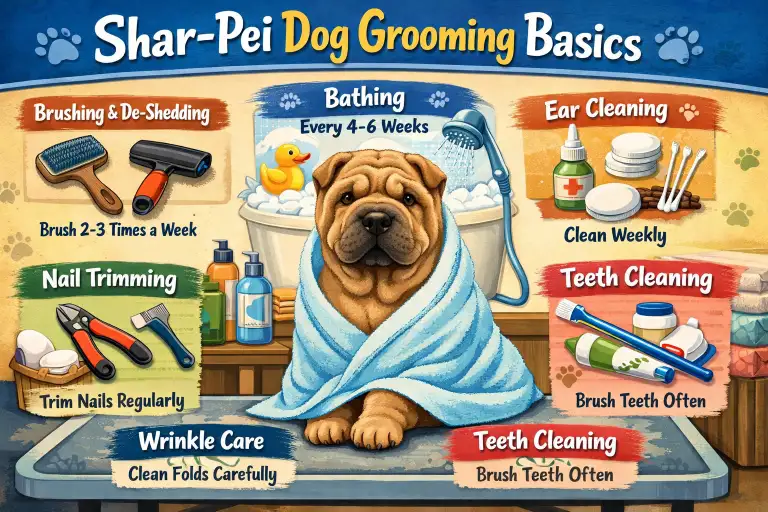
Shar-Pei grooming is not the same as grooming most short-coated dogs. While their coat looks simple on the surface, their skin structure and wrinkles make them one of the most grooming-sensitive breeds. Understanding why Shar-Peis need a different approach helps owners avoid common mistakes that lead to skin infections, odor, and chronic discomfort.
Unlike typical dog skin, Shar-Pei skin is thicker, looser, and heavily folded, especially around the face, neck, shoulders, and legs. These folds create warm, moist pockets where bacteria and yeast can thrive if not cleaned and dried properly. In grooming salons, Shar-Peis are one of the breeds most likely to come in with hidden skin irritation that owners never noticed until the coat was wet.
Their coat type adds another layer of complexity. Most Shar-Peis have a horse coat or brush coat, which sheds lightly year-round and more heavily during seasonal changes. Even though the hair is short, it can trap oil, dirt, and allergens close to the skin. Over-bathing or using harsh shampoos strips away the skin’s protective barrier, often triggering itchiness, redness, or flares in dogs already prone to allergies.
Wrinkle care is where many owners struggle. Skin folds that stay damp after baths or outdoor walks are a leading cause of yeast infections, hot spots, and foul odor in Shar-Peis. Groomers frequently see irritation behind the ears, under the chin, and around the neck where collars rub and moisture builds up. Proper grooming isn’t about scrubbing harder—it’s about gentle cleaning, thorough drying, and the right product choices.
Good grooming also affects behavior and comfort. Shar-Peis with itchy skin or painful infections often become sensitive to touch, resist handling, or show signs of anxiety during grooming sessions. When grooming is done correctly and consistently, most Shar-Peis tolerate handling better, smell cleaner, and have noticeably healthier skin.
Shar-Pei Coat Types and Grooming Frequency
Shar-Peis may all look similar at first glance, but their coat type makes a big difference in how often they need grooming and what kind of care works best. Knowing your dog’s coat helps you avoid over-grooming, skin irritation, and unnecessary shedding problems.
Most Shar-Peis fall into one of three coat types: horse coat, brush coat, or bear coat. Each behaves differently on the skin and needs a slightly different routine.
Shar-Pei Coat Types and Grooming Needs
| Coat type | How it feels | Shedding level | Brushing need | Bathing need | Special notes |
|---|---|---|---|---|---|
| Horse coat | Very short, stiff, rough | Low to moderate | 1× per week | Every 4–6 weeks | Can irritate skin if brushed too hard |
| Brush coat | Short but soft and dense | Moderate | 1–2× per week | Every 4–6 weeks | Most common coat type |
| Bear coat | Long, soft, fluffy | Moderate to high | 2–3× per week | Every 4–6 weeks | Mats easily, needs extra brushing |
Horse coats are the shortest and roughest. They are easy to maintain but can irritate skin if scrubbed too hard, especially during baths. Brush coats are the most common and easier to manage, but they shed more. Bear coats are rare and need the most brushing to prevent tangles and mats.
Grooming Frequency for Shar-Peis
Many owners think short hair means less grooming. For Shar-Peis, this is not true. Their skin folds and sensitive skin mean routine care matters more than coat length.
Shar-Pei Grooming Frequency by Lifestyle
| Dog lifestyle | Brushing | Bathing | Wrinkle care |
|---|---|---|---|
| Indoor, low activity | Once a week | Every 4–6 weeks | 2–3× per week |
| Active or outdoor dog | 1–2× per week | Every 3–4 weeks | After dirty or wet days |
| Allergy-prone Shar-Pei | Gentle brushing weekly | Vet-approved schedule | Daily checks |
Seasonal shedding usually happens in spring and fall. During these times, brushing more often helps remove loose hair and keeps oils balanced on the skin. Bathing more often does not reduce shedding and can make skin problems worse.
The key rule with Shar-Peis is balance. Groom too little and moisture builds up in the folds. Groom too much and the skin barrier breaks down. A steady, gentle routine works best.Shar-Pei Coat Types and Grooming Frequency
Sh
Shar-Pei Grooming Routine at Home (Bathing, Brushing, Wrinkle Care)
Grooming a Shar-Pei at home does not need to be hard, but it must be done the right way. The goal is to keep the skin clean and dry without hurting the skin or removing healthy oils.
A calm, gentle routine works best. Rushing, scrubbing too hard, or using strong products often causes skin problems in this breed.
Essential Shar-Pei Grooming Tools
| Tool | What it is used for | How often to use | Important notes |
|---|---|---|---|
| Soft rubber brush | Removes loose hair | 1–2 times per week | Avoid hard bristles |
| Soft slicker brush | Light brushing for bear coats | 2–3 times per week | Do not press hard |
| Dog shampoo (gentle) | Cleaning skin and coat | During baths only | Must be dog-safe and mild |
| Soft towels | Drying folds and skin | After every bath | Very important for wrinkle care |
| Cotton pads or cloth | Cleaning skin folds | 2–3 times per week | Never leave folds wet |
Bathing a Shar-Pei Safely
| Shar-Pei condition | Bathing frequency | Notes |
|---|---|---|
| Healthy skin | Every 4–6 weeks | Use mild shampoo only |
| Active or outdoor dog | Every 3–4 weeks | Rinse very well |
| Skin allergies or infections | Vet-guided only | May need medicated shampoo |
When bathing:
- Use warm water, not hot
- Wet the coat fully
- Massage shampoo gently into the skin
- Do not scrub hard, especially in folds
- Rinse until water runs clear
Leftover shampoo can cause itching and redness.
Brushing and Shedding Control
Brushing removes loose hair and spreads natural oils on the skin. Short hair still sheds, especially during seasonal changes.
- Brush in the direction the hair grows
- Keep sessions short and calm
- Stop if the skin looks red or sore
Brushing more often during shedding seasons helps, but bathing more often does not.
Cleaning and Drying Skin Wrinkles
Wrinkle care is one of the most important parts of Shar-Pei grooming.
- Use a clean, dry cloth or cotton pad
- Gently wipe inside each fold
- Dry the fold fully before letting it close
- Never leave moisture trapped inside
Moist folds can quickly lead to bad smell, redness, and infection.
A clean and dry Shar-Pei is a comfortable Shar-Pei.
Nail, Ear, Eye, and Skin Health Care for Shar-Peis
This part of grooming focuses on small areas that cause big problems if they are ignored. Shar-Peis are very sensitive in their nails, ears, eyes, and skin, so gentle and regular care is important.
Shar-Pei Hygiene Care Schedule
| Care area | How often | Why it matters |
|---|---|---|
| Nails | Every 3–4 weeks | Long nails cause pain and bad posture |
| Ears | Once a week | Helps prevent infections |
| Eyes | 2–3 times per week | Keeps dirt and discharge away |
| Skin folds | 2–3 times per week | Prevents moisture and odor |
| Teeth | 2–3 times per week | Reduces bad breath and gum disease |
Nail Care Basics
Shar-Peis often dislike nail trimming, so go slow and stay calm.
- Trim a little at a time
- Use dog nail clippers only
- Stop if you see pink inside the nail
- Give treats to keep the dog relaxed
Long nails can change how your dog walks and may crack or bleed.
Ear Care and Infection Prevention
Shar-Pei ears are small and tight, which traps moisture.
- Clean only the visible part of the ear
- Use a dog ear cleaner
- Never push cotton deep into the ear
- Dry ears well after baths
Redness, bad smell, or head shaking can be signs of infection.
Eye Care
Some Shar-Peis get watery eyes or mild discharge.
- Wipe eyes with a clean, damp cloth
- Use a fresh cloth for each eye
- Watch for redness or swelling
Heavy discharge or squinting needs a vet visit.
Skin Health Warning Signs
Shar-Pei skin problems can start small and get worse fast.
Early Warning Signs of Shar-Pei Skin Problems
| Sign | What it may mean | What to do |
|---|---|---|
| Red or sore skin | Irritation or allergy | Stop grooming and check folds |
| Strong bad smell | Yeast infection | Clean and dry, see vet |
| Constant scratching | Allergy or dry skin | Review products used |
| Thick or dark skin | Long-term skin issue | Vet check needed |
Catching skin problems early helps avoid pain and long treatments.
Grooming Mistakes, Safety Tips, and When to See a Professional
Shar-Pei grooming can go wrong if you are not careful. This section helps you avoid common mistakes, stay safe, and know when to ask for help. Following these tips keeps your dog healthy and happy.
Common Shar-Pei Grooming Mistakes
| Mistake | Why it is harmful | Safe alternative |
|---|---|---|
| Over-bathing | Strips natural oils, causes dry skin | Bathe every 4–6 weeks unless vet recommends otherwise |
| Leaving skin folds wet | Traps moisture, causes yeast infection | Always dry folds thoroughly after baths or walks |
| Using human shampoo | pH too harsh for dogs | Use dog-specific, gentle shampoo |
| Shaving the coat | Can damage hair, interfere with temperature | Only trim lightly if needed; never shave a double coat |
| Skipping brushing | Hair and dirt build up | Brush at least once a week for horse or brush coats, more for bear coats |
Safety Tips During Grooming
| Safety area | Tips |
|---|---|
| Nail trimming | Go slowly, trim a little at a time, avoid quick |
| Bathing | Use lukewarm water, gentle massage, rinse thoroughly |
| Ear cleaning | Only clean visible parts, never push cotton deep |
| Handling folds | Be gentle, do not pinch or rub hard |
| Drying | Use soft towels, air dry if needed, avoid high heat dryers |
When to See a Professional Groomer or Veterinarian
| Situation | Recommended action |
|---|---|
| Severe mats | Groomer can safely remove without hurting skin |
| Persistent skin infections | Vet visit for proper diagnosis and treatment |
| Difficult or anxious dog | Groomer experienced with Shar-Peis can help |
| Nail trimming problems | Groomer can trim safely and prevent bleeding |
| Unusual odor or discharge | Vet check for yeast, bacteria, or allergy |
Shar-Peis have sensitive skin and wrinkles that require extra care. Knowing when to DIY and when to get professional help prevents injuries and long-term problems.
For more expert tips on keeping your Shar-Pei healthy, visit the American Kennel Club’s grooming guide: https://www.akc.org/dog-breeds/shar-pei/

Ata Ur Rehman is the founder of Pet Age in Human Years Calculator, an educational platform that provides age conversion charts and lifespan guides for dogs, cats, birds, and other companion animals. His work focuses on helping pet owners understand how animal ages translate into human years using commonly accepted age conversion formulas and published lifespan averages.
The website compiles breed and species lifespan data from kennel clubs, breed organizations, and general animal lifespan studies to present simple and easy-to-understand guides for pet owners worldwide.
This website was created to centralize animal age conversion charts into one easy reference platform for pet owners.