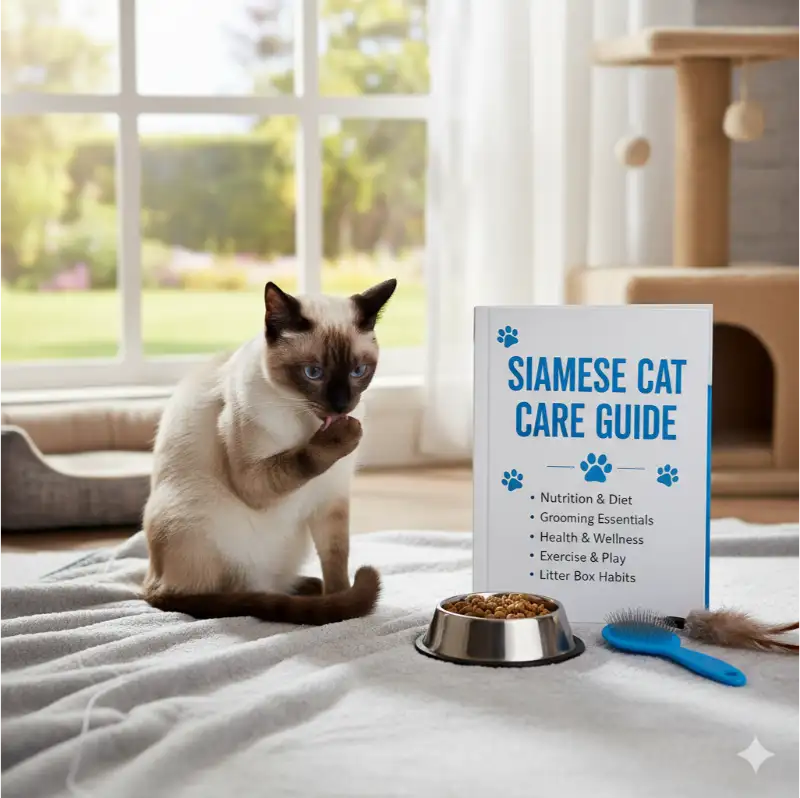
Siamese cat care is very different from caring for a quiet, independent house cat. If you are thinking about bringing a Siamese into your home, you need to understand one important thing first: this breed wants to be involved in your life every single day. They are smart, emotional, vocal, and deeply attached to their people. This is not a cat that hides all day and only comes out for food.
Siamese cats are known for their loud voices. Many owners are surprised by how much they “talk.” They will meow to greet you, to ask for food, to demand playtime, and sometimes just to have a conversation. This vocal nature is normal for the breed. It does not mean something is wrong. However, it does mean you must respond. Ignoring a Siamese for long periods can lead to stress, frustration, and behavior problems.
They are also highly intelligent. A Siamese cat can learn routines quickly. Many can learn tricks, respond to their name, and even enjoy leash training. Because of this intelligence, they get bored easily. A bored Siamese may knock things over, scratch furniture, or cry loudly. Mental stimulation is not optional for this breed. It is a daily need.
Another important trait is their strong attachment to people. Siamese cats often bond closely with one or two family members. They may follow you from room to room and sleep near you at night. They do not like being alone for long hours. If you work long shifts or travel often, you should plan for enrichment or even consider adopting two cats so they can keep each other company.
Many people ask, “Are Siamese cats high maintenance?” The answer is yes — but mostly emotionally, not physically. Their short coat is easy to care for. The real effort comes from giving them attention, play, and social time. If you want a quiet, independent pet, this may not be the right breed. But if you want a loyal, interactive companion, a Siamese can be an amazing choice.
Daily & Weekly Siamese Cat Care Routine
A healthy Siamese cat needs structure. A simple daily routine helps prevent stress and bad behavior. Feeding, playtime, and interaction should happen around the same time each day. Cats feel safer when they know what to expect.
Interactive play is one of the most important daily tasks. Plan at least two or three short play sessions every day. Each session can be 10 to 15 minutes. Use wand toys, feather toys, or toys that move like prey. Siamese cats love to chase and jump. Playtime helps burn energy and reduces loud, attention-seeking meowing.
Feeding should also be structured. Most adult Siamese cats do well with two or three measured meals per day. Avoid free-feeding large bowls of food all day. This breed can gain weight if they are bored. Puzzle feeders are a great option because they make your cat work for food and keep their brain active.
Grooming needs are simple but still important. Their short coat should be brushed once a week to remove loose hair. Nails should be trimmed every two to three weeks. Ears should be checked weekly for dirt or redness. Dental care is very important because Siamese cats can be prone to dental disease. Brushing their teeth several times a week can make a big difference.
Here is a simple care checklist:
| Task | How Often | Why It Matters |
|---|---|---|
| Interactive play | 2–3 times daily | Burns energy and prevents boredom |
| Feeding measured meals | 2–3 times daily | Supports healthy weight |
| Scoop litter box | Daily | Keeps stress low and prevents odor |
| Brush coat | Weekly | Removes loose hair |
| Trim nails | Every 2–3 weeks | Prevents overgrowth |
| Brush teeth | 3–5 times weekly | Reduces dental disease risk |
Common Siamese Cat Behavior Problems and Prevention
Because Siamese cats are so intelligent and emotional, behavior issues often happen when their needs are not met. The good news is that most problems can be prevented with the right care.
Excessive meowing is the most common complaint. Siamese cats are naturally vocal, but nonstop crying can mean boredom, hunger, or loneliness. If your cat cries often, increase structured playtime first. Many owners notice a big improvement after adding more daily interaction.
Separation anxiety is another issue. This breed does not enjoy being left alone for long periods. Signs include loud crying, destructive scratching, or following you constantly. Leaving puzzle toys, rotating new toys weekly, and providing window perches can help. In some cases, adopting a second cat can reduce loneliness.
Destructive behavior like scratching furniture usually means your cat does not have enough scratching options. Place tall scratching posts in rooms where your cat spends the most time. Vertical space, like cat trees and shelves, also helps because Siamese cats love climbing.
Here is a simple behavior guide:
| Behavior | Likely Cause | What To Do |
|---|---|---|
| Loud meowing | Attention or boredom | Add more play sessions |
| Scratching furniture | No proper scratching post | Provide tall sisal posts |
| Following you constantly | Strong attachment | Encourage short independent play |
| Sudden hiding | Stress or illness | Monitor closely and call vet if needed |
Always watch for sudden behavior changes. If your Siamese stops eating, hides more than usual, or becomes unusually quiet, this may signal a health issue.
Siamese Cat Health Care & Lifespan Support
Siamese cats are generally healthy, but like all purebred cats, they can have certain genetic risks. Understanding these risks helps you act early.
Some Siamese cats may develop dental disease. Regular tooth brushing and yearly dental exams are important. They can also be prone to progressive retinal atrophy (PRA), which affects vision. Regular veterinary exams help detect early changes.
Amyloidosis, a liver condition, has been reported in some Siamese lines. While not common, it shows why routine bloodwork during yearly vet visits is helpful. Respiratory sensitivity can also appear in some cats, especially in dusty environments. Keeping litter boxes clean and using low-dust litter can help.
Below is a warning sign table to help you know when to call a vet:
| Symptom | Possible Concern | Action |
|---|---|---|
| Bad breath | Dental disease | Schedule dental check |
| Sudden vision problems | Eye disorder | Prompt vet visit |
| Ongoing vomiting | Digestive issue | Veterinary exam |
| Lethargy | Infection or illness | Immediate attention |
Indoor living is strongly recommended for Siamese cats. Outdoor life increases risk of injury, disease, and theft. If you want safe outdoor time, consider a secure catio or leash training.
With proper care, Siamese cats often live 12 to 20 years. Regular vet visits, good nutrition, daily exercise, and strong emotional bonding all support a long, healthy life.
Cost, Commitment & Long-Term Ownership Planning
Owning a Siamese cat is a long-term responsibility. Before adopting, you should understand the time and money involved.
Daily time commitment usually includes feeding, cleaning the litter box, and at least 30 minutes of interactive play. Many Siamese cats want even more attention. If your schedule is very busy, you may need help from family members or pet sitters.
Monthly costs include food, litter, and small supplies like toys. Veterinary care should always be planned for, not treated as an emergency surprise. Setting aside savings each month helps cover unexpected medical bills.
Here is a general cost estimate:
| Category | Estimated Monthly | Estimated Yearly |
|---|---|---|
| Food | $40–$80 | $480–$960 |
| Litter | $20–$40 | $240–$480 |
| Routine vet care | — | $200–$500 |
| Emergency fund | — | $300–$1000+ |
| Toys and enrichment | $10–$30 | $120–$360 |
Beyond money, emotional commitment is just as important. A Siamese cat will likely bond closely with you. They may sleep near you, follow you around, and expect daily interaction. If you welcome that kind of relationship, you will likely find this breed very rewarding.
Before bringing one home, ask yourself: Do I have time every day for play and interaction? Can I afford yearly vet care? Am I ready for a vocal, social pet? If the answer is yes, a Siamese cat can become a loving and loyal companion for many years.
For more detailed veterinary-backed guidance on feline preventive care, you can visit the American Association of Feline Practitioners at https://catvets.com

Ata Ur Rehman is the founder of Pet Age in Human Years Calculator, an educational platform that provides age conversion charts and lifespan guides for dogs, cats, birds, and other companion animals. His work focuses on helping pet owners understand how animal ages translate into human years using commonly accepted age conversion formulas and published lifespan averages.
The website compiles breed and species lifespan data from kennel clubs, breed organizations, and general animal lifespan studies to present simple and easy-to-understand guides for pet owners worldwide.
This website was created to centralize animal age conversion charts into one easy reference platform for pet owners.