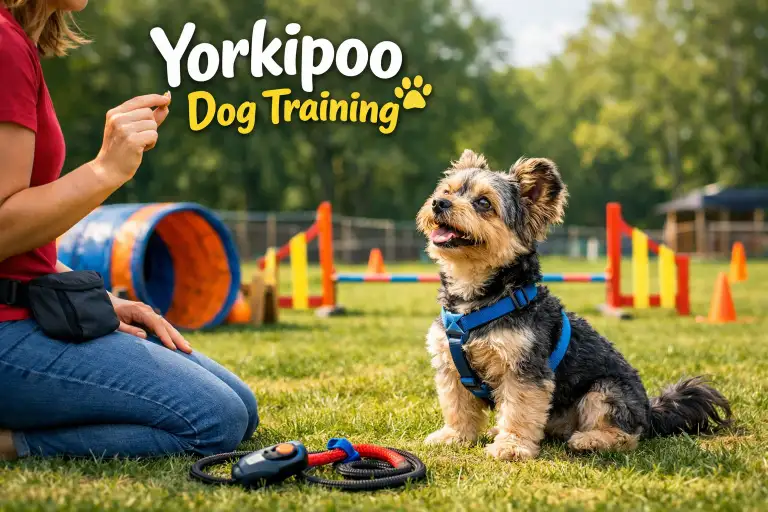
Training your Yorkipoo is both an exciting and important journey. Whether you have a playful puppy or an adult Yorkipoo, understanding how this unique breed learns is the first step toward a happy, well-behaved companion. Yorkipoos are a mix of Yorkshire Terrier and Poodle, giving them a combination of intelligence, alertness, and sensitivity. While these traits make them quick learners, they also require gentle handling and consistent guidance.
This guide is designed for first-time owners, families, and even experienced dog owners who want to understand the best way to train their Yorkipoo. You’ll learn practical, step-by-step methods tailored to the breed’s small size, high intelligence, and attachment tendencies. By following this guide, you can set realistic expectations, prevent common behavior problems, and build a strong bond with your dog.
Key things to keep in mind before starting:
- Training sessions should be short but frequent to match your Yorkipoo’s attention span.
- Positive reinforcement is essential—these dogs respond best to gentle praise, treats, and play.
- Patience and consistency are more effective than strict corrections.
By the end of this guide, you’ll have a clear understanding of your Yorkipoo’s behavior, the tools to teach core skills, and the confidence to prevent common problems before they start.
Understanding Yorkipoo Behavior and Learning Style
Yorkipoos are a mix of Yorkshire Terrier and Poodle. This makes them smart, alert, and sometimes sensitive. Understanding their behavior helps you train them more effectively and keeps your dog happy and confident.
Yorkipoos can be playful, curious, and very attached to their owners. Because they are small and sensitive, they may get scared easily or bark at new sounds. They learn quickly, but they can get bored if training is too long or repetitive. Gentle, positive training works best for this breed.
Here’s a simple table to help you understand their traits and how they affect training:
| Yorkipoo Trait | What You Might See | Training Tip |
|---|---|---|
| High intelligence | Learns new things quickly | Keep sessions short and varied |
| Sensitivity | Can get scared easily | Use calm praise and gentle handling |
| Alert nature | Barks at noises or strangers | Teach a “quiet” or “enough” cue early |
| Strong attachment | Follows you everywhere | Practice short periods of being alone |
By keeping these traits in mind, you can adjust your training style. Short sessions with lots of rewards, gentle corrections, and patience will help your Yorkipoo learn faster and enjoy training.
Step-by-Step Yorkipoo Training Basics
Training your Yorkipoo works best when you follow short, consistent steps. Puppies and adult dogs need slightly different approaches, but the rules are mostly the same: keep sessions short, reward good behavior, and be patient.
Start with 5–10 minute sessions, 2–4 times a day. Use treats, praise, and play as rewards. Keep distractions low at first, then slowly introduce new environments as your dog improves.
Here’s a simple table to guide daily training:
| Training Task | Recommended Session | Reward | Tip |
|---|---|---|---|
| Focus / attention | 5 minutes | Treat or praise | Stop if dog loses interest, start again later |
| Recall / come | 5–10 minutes | Favorite toy | Practice in a quiet room first, then yard |
| Leash walking | 5–10 minutes | Treat or praise | Keep leash loose, reward calm walking |
| Calm handling | 5 minutes | Gentle petting | Practice picking up paws, ears, and gentle grooming |
| Socialization | 5–10 minutes | Praise | Introduce new people, dogs, and sounds slowly |
Consistency is key. Even short, daily sessions are better than long, irregular training. Always end on a positive note so your Yorkipoo looks forward to the next session.
Common Yorkipoo Training Problems and Solutions
Even with the best training, Yorkipoos can face common behavior problems. Knowing what to do helps you fix them quickly and keeps training fun for both you and your dog.
House-training can take time, especially for small breeds. Barking is also common because Yorkipoos are alert and protective. Separation anxiety is another issue because they are very attached to their owners. Overexcitement, nipping, and not listening can also happen if training is inconsistent.
Here’s a simple table with common problems and how to fix them:
| Problem | Common Mistake | What Actually Works |
|---|---|---|
| Barking | Yelling or punishing | Teach “quiet” command and reward calm behavior |
| Potty accidents | Inconsistent schedule | Stick to regular potty breaks and praise successes |
| Separation anxiety | Giving too much attention when leaving | Practice short alone times, gradually increasing |
| Overexcitement / nipping | Ignoring or rough corrections | Stop play, reward calm behavior, redirect attention |
| Not listening | Repeating commands | Reward first correct response, keep sessions short |
Remember, patience and consistency are key. Small, positive steps every day help your Yorkipoo learn faster and prevent these problems from becoming habits.
When to Get Professional Help for Your Yorkipoo
Sometimes, training at home is not enough. Some behavior problems may need help from a professional dog trainer or a behavior specialist. Knowing when to get help keeps your Yorkipoo safe and makes training more effective.
Red flags include fear or aggression that does not improve, severe separation anxiety, or behaviors that could harm your dog or others. If you notice no progress after consistent training, it’s a good idea to get expert advice.
Here’s a simple table to help you understand when professional help is needed:
| Issue | Normal Progress | Red Flag / When to Seek Help |
|---|---|---|
| Focus & obedience | Learns basic commands in 2–4 weeks | No response at all or confusion persists |
| House-training | Mostly accidents-free in 1–2 months | Frequent accidents or stress around potty |
| Barking | Barking reduces with training in a few weeks | Continuous uncontrolled barking despite training |
| Separation anxiety | Can be left alone for short periods | Extreme stress, destruction, or self-harm |
| Socialization | Gets comfortable with new people/dogs | Fear or aggression continues |
Getting help early can prevent bad habits from becoming permanent. Professional trainers can provide guidance tailored to your Yorkipoo’s personality and specific challenges.
For more guidance on small dog behavior, check out the American Kennel Club’s expert advice on small breed dog training.

Ata Ur Rehman is the founder of Pet Age in Human Years Calculator, an educational platform that provides age conversion charts and lifespan guides for dogs, cats, birds, and other companion animals. His work focuses on helping pet owners understand how animal ages translate into human years using commonly accepted age conversion formulas and published lifespan averages.
The website compiles breed and species lifespan data from kennel clubs, breed organizations, and general animal lifespan studies to present simple and easy-to-understand guides for pet owners worldwide.
This website was created to centralize animal age conversion charts into one easy reference platform for pet owners.