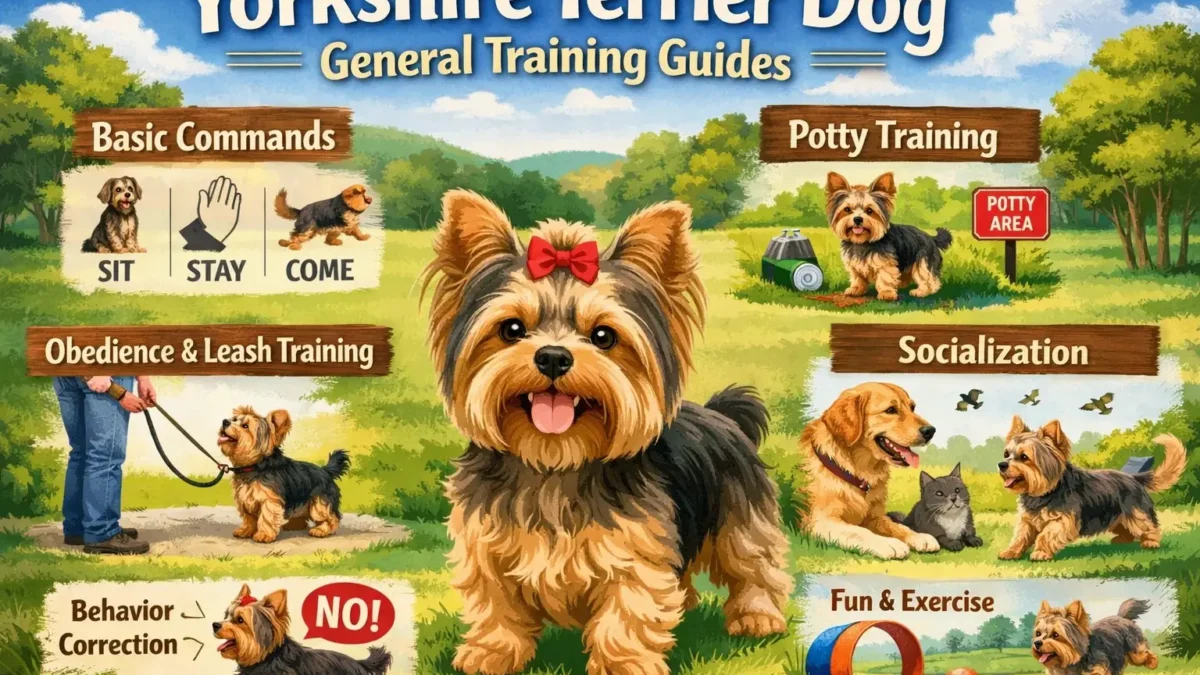
Yorkshire Terrier Training Guide: Simple, Effective Methods That Actually Work
Yorkshire Terriers may be small in size, but they are bold, intelligent, and highly capable learners when trained the right way. This guide is designed to help you understand how to train a Yorkshire Terrier effectively, whether you’re raising a young puppy or working with an adult Yorkie that needs better manners.
General training for Yorkshire Terriers isn’t about forcing obedience or using harsh corrections. Because Yorkies are sensitive, confident, and quick to pick up patterns, training must be clear, consistent, and rewarding. When done properly, it builds trust, prevents common behavior problems, and helps your Yorkie feel secure in everyday situations.
This article focuses on practical, real-world training that fits normal households. You’ll learn how to structure short training sessions, understand Yorkie behavior, avoid common owner mistakes, and set realistic expectations for progress. The goal is not perfection, but a well-behaved, confident Yorkshire Terrier that listens reliably and enjoys learning alongside you.
Understanding Yorkshire Terrier Behavior and Temperament
To train a Yorkshire Terrier well, you must first understand how they think and feel. Many training problems happen because owners expect Yorkies to behave like larger, calmer dogs. Yorkies are different, and that difference matters.
Yorkshire Terriers are smart, alert, and very confident for their size. They learn quickly, but they also notice patterns fast. If rules change from day to day, a Yorkie will test limits. This is often mistaken for stubbornness, but it is usually confusion or lack of clear guidance.
Yorkies are also sensitive dogs. Loud voices, punishment, or rough handling can make them shut down or become fearful. On the other hand, gentle guidance, clear rules, and rewards help them feel safe and willing to learn.
Their terrier instincts also play a role. Yorkies were bred to chase small animals and alert their owners. This explains common behaviors like barking, chasing movement, and acting fearless. Training should guide these instincts, not try to remove them completely.
Puppies and adult Yorkies learn differently. Puppies are curious and need very short lessons. Adult Yorkies may have habits already, which means training takes patience and consistency, not force.
Below is a simple table to help you understand common Yorkshire Terrier traits and how they affect training.
Yorkshire Terrier Traits and How They Affect Training
| Yorkie Trait | What Owners Often Notice | What It Means for Training |
|---|---|---|
| High intelligence | Learns fast, gets bored easily | Keep sessions short and interesting |
| Bold confidence | Acts fearless, challenges rules | Clear boundaries are very important |
| Sensitivity | Reacts badly to yelling | Use calm voice and rewards |
| Terrier instincts | Barking, chasing, alert behavior | Teach control, not suppression |
Understanding these traits helps you train with patience instead of frustration. When you work with your Yorkie’s nature, training becomes much easier and more enjoyable.
Step-by-Step Yorkshire Terrier Training Basics
Training a Yorkshire Terrier works best when it is simple, short, and consistent. Yorkies learn fast, but they also get tired or distracted quickly. This is why small steps and clear routines matter more than long training sessions.
Start training as early as possible, even with young puppies. Adult Yorkies can also learn new skills, but they may need more patience because old habits take time to change.
Keep each training session short. Most Yorkshire Terriers do best with a few minutes at a time. Always end on a good note, even if progress feels small.
Use rewards your Yorkie truly likes. This can be tiny treats, a happy voice, or a short play break. Rewards must come right after the correct behavior so your dog understands what they did right.
Train in a calm place first. Once your Yorkie listens well at home, slowly practice in new places like the yard or on quiet walks.
Below is a simple guide to help you plan training based on your Yorkie’s age.
TYorkshire Terrier Training Schedule by Age
| Age | Session Length | Sessions per Day | Main Focus |
|---|---|---|---|
| 8–16 weeks | 3–5 minutes | 3–4 | Name, potty routine, simple cues |
| 4–6 months | 5–7 minutes | 2–3 | Sit, come, leash walking |
| Adult | 5–10 minutes | 1–2 | Practice skills, better listening |
Choosing the right reward also makes a big difference. Yorkies are small, so rewards should be small too.
Effective Rewards for Yorkshire Terriers
| Reward Type | Best Time to Use | Helpful Tips |
|---|---|---|
| Small soft treats | Learning new skills | Use tiny pieces to avoid weight gain |
| Praise and voice | After good behavior | Use a happy, calm tone |
| Toys or play | High energy moments | Keep play short and controlled |
Training should feel like teamwork, not a struggle. When sessions are short and rewards are clear, most Yorkshire Terriers enjoy learning and try harder.
Common Yorkshire Terrier Training Problems and Solutions
Even with good training, most Yorkshire Terrier owners face a few problems. This is normal. Small dogs like Yorkies react strongly to changes in routine, noise, and excitement. The key is to fix problems early and stay calm and consistent.
One common issue is barking. Yorkies are alert dogs and bark to warn or get attention. Yelling usually makes barking worse. Instead, teach calm behavior and reward quiet moments.
Potty training can also take time. Many Yorkies struggle if schedules change or supervision is weak. A clear routine and close watching help prevent accidents.
Some Yorkies refuse to walk on a leash. This often comes from fear or too much noise around them. Going slowly and using rewards helps build confidence.
Another issue is selective listening. Yorkies may listen at home but ignore commands outside. This means they need more practice in different places, not stronger punishment.
Below is a simple table showing common problems and what works best to fix them.
Common Yorkshire Terrier Training Problems and Fixes
| Problem | Why It Happens | What Helps Most |
|---|---|---|
| Too much barking | Alert instinct or boredom | Teach quiet cue and add mental play |
| Potty accidents | No clear routine | Set fixed times and supervise |
| Won’t walk on leash | Fear or overstimulation | Start slow and reward steps |
| Ignores commands | Training only done at home | Practice in new places |
| Fearful behavior | Past stress or loud handling | Calm voice and positive rewards |
Most problems improve when owners stay patient and consistent. Quick fixes rarely work. Small daily effort brings better long-term results.
When to Get Professional Help for Your Yorkie
Most Yorkshire Terriers can be trained at home with patience and clear routines. However, some problems need extra help. Getting support early can prevent stress for both you and your dog.
If your Yorkie shows fear often, such as shaking, hiding, or refusing to move, this may mean anxiety. If your dog growls, snaps, or tries to bite, this is a safety concern and should not be ignored. Training should never feel scary or out of control.
Another sign is no progress. If you have been training the same skill for many weeks with no improvement, the method may not be right for your dog. A professional can spot mistakes and adjust the plan quickly.
Choose a trainer who uses calm, reward-based methods. Harsh training can make problems worse, especially for small and sensitive dogs like Yorkies.
The table below helps you know when home training may not be enough.
: When Home Training Isn’t Enough
| Sign | What It May Mean | What to Do Next |
|---|---|---|
| Strong fear or shaking | Anxiety or poor social skills | Contact a positive trainer |
| Aggression or biting | Safety risk | Seek a behavior specialist |
| No progress after weeks | Wrong training approach | Get a professional review |
| Owner feels overwhelmed | Stress for both sides | Ask for guided help |
Getting help does not mean failure. It means you care about your Yorkshire Terrier’s well-being and saf
For additional breed-specific guidance and training basics, you can also review the official Yorkshire Terrier information provided by the American Kennel Club, which offers trusted resources for dog owners:
https://www.akc.org/dog-breeds/yorkshire-terrier/
Yorkshire Terrier Dog Full Guide: Care, Temperament & Costs 2026
[…] Yorkshire Terrier Training Guide: Simple, Effective Methods That Actually Work Yorkshire Terrier Dog Age Calculator to Human Years (Age Chart & Lifespan Guide) Yorkshire Terrier Grooming Basics: A Complete Guide for Healthy Coat and Care Yorkshire Terrier Dog Nutrition & Feeding Guide Yorkshire Terrier Cost of Ownership: Real Monthly, Yearly & Lifetime Costs […]
Yorkshire Terrier Cost of Ownership: Monthly, Yearly & Lifetime Costs 2026
[…] Terrier Dog Full Guide: Temperament, Care, Training & Costs Yorkshire Terrier Training Guide: Simple, Effective Methods That Actually Work Yorkshire Terrier Dog Age Calculator to Human Years (Age Chart & Lifespan Guide) Yorkshire […]