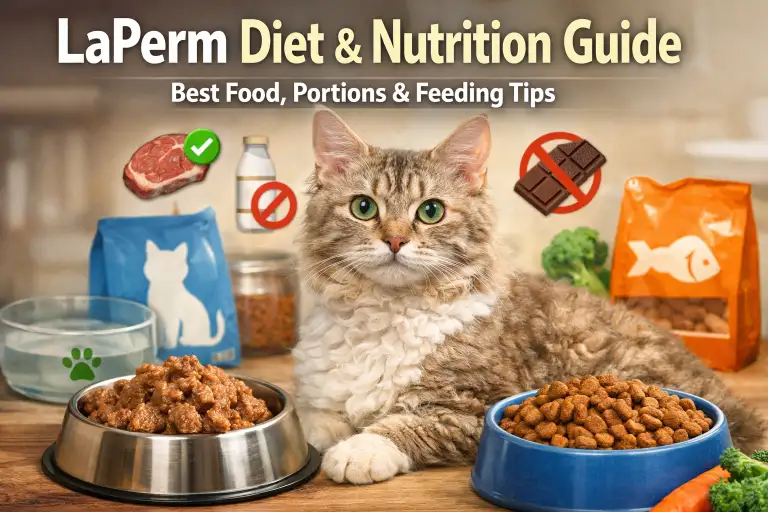
LaPerm cats are known for their affectionate personalities, playful energy, and distinctive curly coats. While the LaPerm breed does not require a highly specialized or exotic diet, they thrive best on a feeding plan that supports overall feline health, strong muscles, and healthy skin and fur.
Like all cats, LaPerms are obligate carnivores. This means their bodies are biologically designed to get most of their nutrition from animal-based ingredients rather than plant-based foods. A balanced LaPerm diet should focus on high-quality protein, moderate healthy fats, and essential nutrients that cats cannot produce on their own.
The most important nutritional foundations for a LaPerm cat include:
- Animal-based protein to maintain lean muscle and energy
- Healthy fats to support coat condition and provide concentrated calories
- Taurine and essential amino acids for heart, vision, and immune function
- Adequate moisture intake, especially for cats that drink little water
Even though LaPerm cats may appear naturally athletic and active, portion control and balanced nutrition are still important. Indoor lifestyles, spaying or neutering, and age-related metabolism changes can all affect how much food your cat truly needs.
Below is a helpful overview of the core nutrients every LaPerm cat requires in a complete and balanced diet:
| Nutrient | Why It Matters for LaPerm Cats |
|---|---|
| Animal Protein | Supports muscle strength and daily energy |
| Healthy Fats | Helps maintain skin health and a soft curly coat |
| Taurine | Essential for heart function and vision |
| Moisture | Supports hydration and urinary tract health |
A good LaPerm feeding plan is not about finding a breed-specific formula, but about choosing a complete and balanced cat food that matches your cat’s life stage, activity level, and overall health.
Wet Food vs Dry Food — What Should You Feed a LaPerm?
Many LaPerm owners wonder if wet food or dry food is better. The good news is that both can work well. The best choice depends on your cat’s needs, your budget, and what your cat enjoys eating.
Here is a simple way to understand the difference.
Wet food has more water, which helps cats stay hydrated. This is helpful because many cats do not drink enough water on their own.
Dry food is easy to store and serve. Some cats like to snack on it during the day, but it can be easier to overfeed if portions are not measured.
A mixed feeding style (both wet and dry) is often a good choice for many LaPerm cats. It gives moisture from wet food and convenience from dry food.
Here is a quick comparison:
| Feeding Style | Benefits | Best For |
|---|---|---|
| Wet Food | High moisture, strong smell, tasty | Cats who don’t drink much water |
| Dry Food | Convenient, affordable, easy to store | Busy owners (with portion control) |
| Mixed Feeding | Balanced option, variety for cats | Most LaPerm households |
When choosing any cat food, look for one that says it is “complete and balanced.” This means it meets basic nutrition standards for cats.
Also remember: no single food is perfect for every cat. Some LaPerms prefer wet food, others enjoy dry food, and many do best with a mix.
How Much and How Often to Feed a LaPerm Cat
Feeding the right amount is just as important as choosing the right food. Even a healthy food can cause weight gain if your LaPerm eats too much.
Cats need the right balance of calories, protein, and moisture each day.
The amount your LaPerm needs depends on:
- Age (kitten, adult, or senior)
- Activity level (playful or more relaxed)
- Indoor lifestyle
- If they are spayed or neutered
Most cats do best with scheduled meals instead of eating all day. Free-feeding (leaving food out all the time) can lead to overeating.
A simple feeding routine helps keep your cat healthy.
Here is a general guide for how often to feed:
| Age/Type | Meals Per Day (Typical) |
|---|---|
| Kitten (under 6 months) | 3–4 meals |
| Adult LaPerm | 2 meals |
| Senior Cats | 2–3 smaller meals |
Helpful tips for portion control:
- Follow the feeding guide on the food label as a starting point
- Measure food instead of guessing
- Watch your cat’s body shape and weight over time
- Limit treats so they don’t replace healthy meals
Signs your cat may be eating too much:
- Weight gain
- Less energy
- Begging often even after meals
Signs your cat may not be eating enough:
- Weight loss
- Low energy
- Visible ribs or spine
If you are unsure about the right portion, it is always best to ask your veterinarian for general feeding guidance.
Feeding LaPerm Cats Through Every Life Stage
LaPerm cats need different nutrition as they grow. A kitten, an adult cat, and a senior cat all have different energy and health needs.
Feeding the right food for your cat’s age helps them stay strong, active, and healthy.
Here is what to focus on at each life stage:
| Life Stage | Main Diet Focus |
|---|---|
| Kitten | Growth, high energy, strong muscles |
| Adult | Healthy weight, daily maintenance |
| Senior | Easy digestion, muscle support |
Kitten feeding (0–12 months)
LaPerm kittens grow quickly and need more calories and protein than adult cats. They should eat kitten-formulated food and have several small meals each day.
Adult feeding (1–7 years)
Adult LaPerm cats do well with balanced meals that support energy and weight control. Most adults eat twice a day and enjoy a mix of wet and dry food.
Senior feeding (7+ years)
Older cats may become less active and may need smaller meals. Senior cats also benefit from food that is easier to chew and digest. Keeping protein in the diet is still important for muscle strength.
Helpful life-stage feeding tips:
- Always choose food labeled for your cat’s age group
- Make diet changes slowly over 7–10 days
- Keep an eye on weight and appetite as your cat ages
Feeding your LaPerm based on their life stage is one of the easiest ways to support long-term health.
Treats, Human Food Risks, and Common Feeding Mistakes to Avoid
Treats can be a fun way to reward your LaPerm cat, but they should only be a small part of the diet. Too many treats can lead to weight gain and poor nutrition.
A good rule is that treats should make up no more than about 10% of your cat’s daily food.
Healthy treat tips:
- Choose cat-safe treats made for cats
- Give small pieces, not large amounts
- Do not use treats as meal replacements
Some human foods are unsafe for cats and should always be avoided.
Here are common foods that can be dangerous:
| Food | Why It’s Risky |
|---|---|
| Onions and Garlic | Can harm red blood cells |
| Chocolate | Toxic and unsafe for cats |
| Grapes and Raisins | May cause kidney problems |
| Alcohol or Caffeine | Very dangerous, even in small amounts |
Common feeding mistakes many owners make:
- Overfeeding dry food without measuring
- Giving too many treats or table scraps
- Not providing enough fresh water
- Switching foods too quickly
- Feeding dog food instead of cat food (cats need different nutrients)
If your LaPerm stops eating, vomits often, or has sudden weight changes, it is best to contact a veterinarian for advice.
For more trusted information on complete and balanced cat nutrition standards, you can visit the Association of American Feed Control Officials (AAFCO) guidelines.

Ata Ur Rehman is the founder of Pet Age in Human Years Calculator, an educational platform that provides age conversion charts and lifespan guides for dogs, cats, birds, and other companion animals. His work focuses on helping pet owners understand how animal ages translate into human years using commonly accepted age conversion formulas and published lifespan averages.
The website compiles breed and species lifespan data from kennel clubs, breed organizations, and general animal lifespan studies to present simple and easy-to-understand guides for pet owners worldwide.
This website was created to centralize animal age conversion charts into one easy reference platform for pet owners.