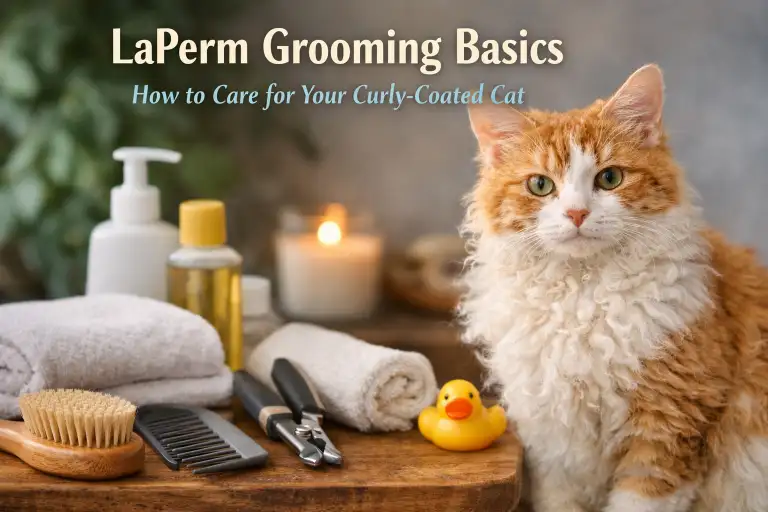
LaPerm cats are known for their soft, curly coats that look almost like a natural perm. While their fur is often described as low-maintenance compared to some long-haired breeds, LaPerms still need regular grooming to keep their coat healthy, comfortable, and free of tangles.
The key difference with LaPerm grooming is that their curls require a gentler approach. Over-brushing or using the wrong tools can flatten the curl pattern or cause unnecessary breakage. Instead of focusing on heavy daily grooming, LaPerm care is about light, consistent maintenance that supports their unique coat texture.
Many owners assume LaPerm cats do not shed at all, but that is a common myth. LaPerms may shed less than some straight-coated cats, yet they still experience normal seasonal shedding, especially in spring and fall. During these times, grooming becomes more important to prevent loose hair from forming mats.
Grooming also serves a bigger purpose beyond appearance. Regular coat care helps:
- Remove loose fur before it tangles
- Prevent painful matting in curly areas
- Support healthy skin and natural oils
- Reduce hairballs from self-grooming
- Build trust and bonding through gentle handling
LaPerm cats can have either short or long curly coats, and grooming needs vary slightly depending on coat length. Long-coated LaPerms are more likely to develop tangles around friction areas like the belly, behind the ears, and under the legs, while short-coated LaPerms usually need lighter weekly upkeep.
The goal of LaPerm grooming basics is simple: keep grooming sessions calm, gentle, and consistent so your cat stays comfortable and your curly-coated companion stays mat-free without stress.
Brushing and Combing a LaPerm Cat (How, Tools, and Frequency)
Brushing is the most important part of grooming a LaPerm cat. Their curly fur can tangle easily if it is not cared for, especially in areas where the fur rubs together.
The good news is that LaPerm cats do not need heavy brushing every day. A gentle routine is usually enough.
How often should you brush a LaPerm?
Most LaPerm cats do well with brushing once or twice a week. Long-haired LaPerms may need a little more care.
Here is a simple guide:
| Coat Type | Brushing Schedule | Notes |
|---|---|---|
| Short curly coat | 1 time per week | Keep it gentle |
| Long curly coat | 2–3 times per week | More tangles can form |
| Seasonal shedding (spring/fall) | Add 1 extra session | Helps remove loose fur |
Best tools for a curly coat
LaPerm curls can be damaged by rough brushes. The best tools are simple and gentle:
- A wide-tooth comb
- Your fingers for small tangles
- A soft brush (only if your cat enjoys it)
Avoid sharp or harsh grooming tools that pull on the curls.
How to brush without hurting the curls
Follow these easy steps:
- Start when your cat is calm
- Use your fingers first to feel for knots
- Comb slowly in the direction the fur grows
- Stop if you meet a tangle and work gently
- Keep sessions short, especially for beginners
Areas where mats form most often
Always check these spots:
- Behind the ears
- Under the front legs
- Around the belly
- Near the tail
These areas are common trouble zones for curly-coated cats.
What owners should never do
For safety, never:
- Pull hard on mats
- Cut mats with scissors at home
- Brush too much until the curls flatten
- Force grooming if your cat is scared
If mats become thick or painful, a professional groomer or vet is the safest choice.
Brushing should feel like a calm bonding time, not a struggle. Small weekly sessions help keep your LaPerm’s coat soft, curly, and comfortable.
Bathing LaPerm Cats (When It’s Needed and When It’s Not)
Most LaPerm cats do not need regular baths. Cats are very good at cleaning themselves, and LaPerm coats usually stay clean with simple brushing.
Baths should only be done when they are truly needed.
Do LaPerm cats need baths?
Usually, the answer is no.
A healthy indoor LaPerm cat may only need a bath once in a while, or not at all.
When a bath may be helpful
A bath can be useful if your cat:
- Gets into something dirty or sticky
- Has oily fur that feels greasy
- Has allergies and needs extra cleaning
- Cannot groom well because of age or illness
Here is a quick guide:
| Situation | Bath? |
|---|---|
| Dirty or greasy coat | Yes, sometimes |
| Normal indoor cat | Usually no |
| Skin problem or rash | Vet first |
When you should not bathe your cat
Avoid bathing if:
- Your cat is very stressed or afraid
- The coat is already clean
- Your cat has a medical skin issue (ask a vet first)
Bathing too often can dry out the skin and damage the natural oils in the coat.
Tips for bathing a LaPerm safely
If you do need to bathe your cat, keep it simple:
- Use warm (not hot) water
- Keep the bath short
- Speak softly and stay calm
- Use a cat-safe shampoo only
- Rinse very well so no soap stays in the fur
Drying curly fur the right way
LaPerm curls are delicate. After a bath:
- Pat dry gently with a towel
- Do not rub hard
- Avoid strong heat from hair dryers
- Let the curls air-dry naturally if possible
A calm, gentle bath once in a while is enough. Most of the time, brushing is all your LaPerm needs.
Essential Hygiene Grooming (Nails, Ears, Eyes, and Dental Basics)
Grooming is not only about fur. LaPerm cats also need basic hygiene care to stay healthy and comfortable. This includes trimming nails, checking ears, cleaning eyes, and caring for teeth.
These tasks are simple when done slowly and gently.
Nail trimming basics
Most cats need their nails trimmed every 2 to 4 weeks. Indoor cats often need it more because their nails do not wear down naturally.
Safe nail trimming tips:
- Use a cat nail clipper
- Trim only the sharp tip
- Never cut the pink area (called the quick)
- Give treats after each paw
If your cat fights or bites, stop and try again another day.
Ear care
LaPerm cats should have their ears checked about once a week.
Only clean the ears if you see dirt or wax.
Safe ear care rules:
- Use a soft cotton pad (not a cotton swab)
- Wipe only the outer ear
- Never push anything deep inside
If you notice a bad smell, swelling, or heavy wax, call a vet.
Eye care
Some cats get small eye crusts, especially after sleeping.
To clean eyes gently:
- Use a warm, damp cloth
- Wipe softly from the corner outward
- Use a clean area of the cloth for each eye
If you see thick discharge or redness, a vet check is needed.
Dental care basics
Teeth are often forgotten, but dental care helps prevent pain and bad breath.
Simple beginner habits:
- Offer dental treats or vet-approved dental care
- Try brushing with a cat toothbrush (start slowly)
- Have your vet check teeth during regular visits
Quick 5-minute hygiene routine
Once a week, you can do this:
- Check fur for tangles
- Look at ears for dirt
- Wipe eyes if needed
- Check nail length
- Give a treat and praise
Small hygiene steps help prevent bigger problems later.
Stress-Free Grooming Tips, Common Mistakes, and When to Get Professional Help
Grooming should feel calm and safe for your LaPerm cat. A gentle approach helps your cat trust you and makes grooming much easier over time.
LaPerm cats are often friendly, but any cat can feel nervous during brushing, nail trims, or baths.
Signs your cat is stressed
Watch your cat’s body language. Stop grooming if you notice:
- Tail flicking fast
- Ears flattened back
- Growling or hissing
- Trying to escape
- Biting or swatting
Here is a helpful guide:
| Sign | What It Means | Action |
|---|---|---|
| Tail twitching, tense body | Stress building | Pause grooming |
| Growling or biting | Fear or anger | Stop right away |
| Calm posture, slow blinking | Comfortable | Continue gently |
Tips for stress-free grooming
These simple tips can help:
- Groom when your cat is relaxed
- Start with short sessions (2–5 minutes)
- Give treats and praise often
- Use slow and gentle movements
- Stop before your cat gets upset
Grooming should never feel like a fight.
Common grooming mistakes to avoid
Many beginners make the same mistakes. Try not to:
- Pull on mats or tangles
- Cut mats with scissors at home
- Brush too hard and flatten curls
- Bathe too often
- Force grooming when your cat is scared
Small gentle care is better than stressful grooming sessions.
When to get professional help
Sometimes home grooming is not enough. Call a professional groomer or vet if:
- Mats are thick or close to the skin
- Your cat becomes aggressive during grooming
- You see skin redness, sores, or hair loss
- Nails are overgrown or bleeding
- Your cat seems in pain
Professionals have the right tools and training to help safely.
Quick grooming reminder
A simple LaPerm grooming routine looks like this:
- Brush 1–2 times per week
- Trim nails every few weeks
- Check ears and eyes weekly
- Bathe only when truly needed
- Keep grooming calm and gentle
For more general cat grooming safety tips recommended by veterinary experts, you can visit the ASPCA’s guide to grooming your cat.

Ata Ur Rehman is the founder of Pet Age in Human Years Calculator, an educational platform that provides age conversion charts and lifespan guides for dogs, cats, birds, and other companion animals. His work focuses on helping pet owners understand how animal ages translate into human years using commonly accepted age conversion formulas and published lifespan averages.
The website compiles breed and species lifespan data from kennel clubs, breed organizations, and general animal lifespan studies to present simple and easy-to-understand guides for pet owners worldwide.
This website was created to centralize animal age conversion charts into one easy reference platform for pet owners.