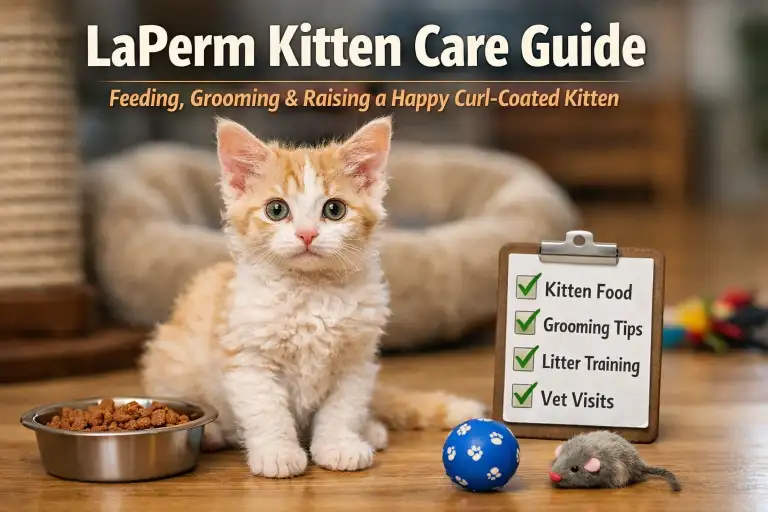
Bringing home a LaPerm kitten is exciting, a little emotional, and sometimes honestly… a bit overwhelming. If you’re staring at your tiny curly-coated kitten thinking, “I hope I’m doing this right,” take a deep breath.
LaPerm kittens are known for their soft, wavy or curly coats and their affectionate, people-loving personalities. They tend to be playful, gentle, and very social — which makes them wonderful companions for first-time kitten owners.
This guide will walk you through the basics of LaPerm kitten care in a calm, beginner-friendly way, focusing on what really matters in the early months: food, grooming, routines, safety, and normal kitten behavior.
What Makes LaPerm Kittens Special?
While all kittens need the same core care, LaPerm kittens have a few traits that new owners should understand right away:
- Curly coats that need gentle grooming (not heavy brushing)
- A very affectionate temperament — many LaPerms love being close to their people
- High playfulness, especially during kitten growth stages
- A coat that may change texture as they grow, which is completely normal
The good news? LaPerm kittens are not “high-maintenance.” With a simple daily routine and a little patience, they are usually easy to raise.
What Your Kitten Needs Every Day
In the first few months, your LaPerm kitten’s needs are simple and predictable. Most days will revolve around:
- Eating several small meals
- Drinking fresh water
- Using the litter box
- Short bursts of play and exploration
- Lots of naps (kittens sleep more than you expect)
- Gentle bonding and handling time
If your kitten spends half the day sleeping and the other half bouncing off the walls, don’t worry — that’s normal kitten life.
A Quick Reassurance for New Owners
New kitten parents often worry about doing everything perfectly. But kittens don’t need perfection — they need consistency, safety, and comfort.
If your LaPerm kitten is:
- Eating well
- Playing daily
- Sleeping a lot
- Curious and active between naps
…you’re already off to a great start.
Bringing Home a LaPerm Kitten (First Week Setup + Indoor Safety)
The first week with your LaPerm kitten is all about helping them feel safe, calm, and comfortable. Everything is new for them — new smells, new people, and a new home.
Don’t worry if your kitten seems shy at first. Many kittens need a little time to settle in.
Set Up a Small Safe Space First
Before letting your kitten explore the whole house, start with one quiet room.
This helps your kitten feel less scared and more secure.
In this starter space, include:
- A soft bed or blanket
- A litter box nearby
- Food and water bowls (not right next to the litter box)
- A few safe toys
- A scratching post
- A hiding spot (like a small box)
A calm space makes the first days much easier.
First Week Checklist (Quick Table)
Here is a simple guide for what to focus on during the first 7 days:
| Day 1–7 Priority | What to Do |
|---|---|
| Safe space | Keep kitten in one quiet room at first |
| Litter training | Place kitten in the box after meals and naps |
| Play + bonding | Short gentle play times every day |
| Kitten-proofing | Remove cords, small objects, and unsafe plants |
Indoor Safety Tips for LaPerm Kittens
LaPerm kittens are curious and playful. They will climb, jump, and explore everything.
Make your home safer by:
- Hiding electrical cords
- Keeping small objects off the floor
- Closing windows and balcony doors
- Removing toxic plants
- Keeping cleaning products locked away
Indoor-only life is the safest choice for most kittens.
Helping Your Kitten Feel Comfortable
During the first week, your kitten may:
- Hide under furniture
- Meow more than usual
- Sleep a lot
- Follow you everywhere
All of this is normal.
The best thing you can do is stay gentle, patient, and calm.
Common Beginner Mistakes to Avoid
Many new owners do these by accident:
- Letting the kitten roam the whole house too soon
- Using loud voices or forcing cuddles
- Moving the litter box too often
- Giving too many treats early on
Slow and steady is best.
Feeding a LaPerm Kitten (Food Choices + Simple Feeding Schedule)
Feeding your LaPerm kitten the right way is one of the most important parts of kitten care.
Kittens grow very fast, so they need food that gives them energy, protein, and healthy nutrients.
The good news is that feeding can stay simple if you follow a basic routine.
Choose Food Made for Kittens
Always pick food that says “kitten formula” or “for growth.”
Kitten food is different from adult cat food because it has:
- More protein for growing muscles
- More calories for energy
- Extra nutrients for brain and body development
Both wet and dry food can work, but many kittens do well with a mix of both.
How Often Should a LaPerm Kitten Eat?
Young kittens need several small meals each day.
Here is an easy feeding guide by age:
| Kitten Age | Meals Per Day | What’s Normal |
|---|---|---|
| 8–12 weeks | 4 meals | Tiny stomach, lots of energy |
| 3–6 months | 3 meals | Growth spurts and playful days |
| 6–12 months | 2 meals | More steady routine, still growing |
If your kitten acts hungry often, that is normal. Growing kittens burn a lot of energy.
Fresh Water Matters Too
Always keep clean water available.
Some kittens prefer water in a wide bowl, and some drink more when the bowl is placed away from food.
Treats and Human Food (Keep It Simple)
Treats are fine, but only in small amounts.
Avoid giving:
- Milk (many kittens cannot digest it well)
- Spicy or salty foods
- Table scraps
Most of the time, kitten food is all they need.
A Calm Reminder for New Owners
New owners often worry if their kitten eats “enough.”
As long as your LaPerm kitten is:
- Eating daily
- Gaining weight slowly
- Playing and sleeping normally
…you are doing great.
If your kitten skips one meal but seems fine, don’t panic. Sometimes kittens are just adjusting.
LaPerm Kitten Grooming (Curly Coat Care + Hygiene Basics)
LaPerm kittens are famous for their soft, curly coats. Their fur can look wavy, fluffy, or even a little messy in a cute way.
The good thing is that LaPerm kittens usually do not need hard grooming. You just need to be gentle and consistent.
Do LaPerm Kittens Need Special Grooming?
LaPerm coats are different from straight-haired cats, but they are not difficult.
Their curls can change as they grow, and that is completely normal.
Some kittens have loose waves, while others have tighter curls later on.
Simple Curly Coat Grooming Routine
Here is an easy grooming guide for beginners:
| Grooming Task | How Often | Beginner Tip |
|---|---|---|
| Light combing | 1–2 times a week | Be gentle so curls stay soft |
| Nail trims | Every 2–3 weeks | Start young with treats after |
| Bathing | Only if needed | Most kittens stay clean on their own |
Brushing Tips for LaPerm Kittens
When grooming your kitten:
- Use a soft comb or gentle brush
- Do not brush too hard
- Keep sessions short (1–2 minutes at first)
- Give praise or a small treat after
Over-brushing can pull on curly fur, so light grooming is best.
Nail Trimming and Clean Paws
Kittens have sharp little claws, and trimming helps prevent scratching accidents.
Start slowly:
- Touch paws gently during cuddle time
- Trim only the very tip
- Stop if your kitten gets wiggly
This helps your kitten get used to grooming early.
Ear, Eye, and Dental Basics
You do not need to do anything complicated, but it helps to check:
- Ears (clean, no strong smell)
- Eyes (bright, not crusty)
- Mouth (healthy gums, no bad odor)
These quick checks help you notice changes early.
Reassurance for New Owners
Many people worry about the curly coat, but LaPerm kittens are usually easy to care for.
If your kitten looks a little fluffy or uneven, don’t stress — kitten coats often change as they grow.
Behavior, Training & Health Basics (Biting, Litter, Vet Visits + FAQs)
This is the stage where your LaPerm kitten starts showing their big personality.
They will play, climb, chase, pounce, and sometimes bite or scratch during games. This is all part of normal kitten growth.
With gentle training and a simple routine, your kitten will learn good habits.
Litter Training Basics
Most kittens learn the litter box quickly, especially if they have a clean and easy setup.
Helpful tips:
- Keep the litter box in a quiet spot
- Show your kitten the box after meals and naps
- Scoop daily so it stays clean
- Use unscented litter if possible
If your kitten has an accident, don’t punish them. Just clean the area and try again.
Play Biting and Scratching (Very Normal)
Kittens explore the world with their paws and teeth.
If your LaPerm kitten bites during play:
- Stop playing for a moment
- Give a toy instead of your hand
- Use wand toys for safe distance
- Praise gentle play
Scratching is also normal. Provide:
- Scratching posts
- Cardboard scratch pads
- Positive attention when they use them
Socialization and Bonding
LaPerm kittens are often very loving and enjoy being near people.
To build trust:
- Hold your kitten gently for short times
- Speak softly
- Play every day
- Let them come to you when they want cuddles
Bonding happens slowly, and that is okay.
First Vet Visits (Basic and Calm)
A first vet visit helps make sure your kitten is growing well.
Your vet may check:
- Weight and growth
- Overall health
- Basic kitten care needs
This is a normal part of responsible kitten care, not something to fear.
Quick FAQs for New LaPerm Kitten Owners
- Are LaPerm kittens easy to care for?
Yes, they are usually friendly, playful, and beginner-friendly. - Do LaPerm kittens need special grooming?
Not really. Gentle combing once or twice a week is enough. - Are LaPerm kittens cuddly?
Many are very affectionate and love being close to their people. - How often should my LaPerm kitten eat?
Young kittens eat 3–4 small meals a day, then slowly fewer as they grow. - Are LaPerm kittens good with other pets?
Yes, with slow and careful introductions. - When should I take my kitten to the vet?
Soon after bringing them home for a healthy start and guidance.
Final Reassurance
Raising a LaPerm kitten is a joyful experience. You do not need to be perfect.
If your kitten is:
- Eating well
- Playing daily
- Sleeping a lot
- Growing slowly and steadily
…you are doing a wonderful job.
For more trusted beginner information on kitten care and early development, you can also visit the ASPCA’s official guide.

Ata Ur Rehman is the founder of Pet Age in Human Years Calculator, an educational platform that provides age conversion charts and lifespan guides for dogs, cats, birds, and other companion animals. His work focuses on helping pet owners understand how animal ages translate into human years using commonly accepted age conversion formulas and published lifespan averages.
The website compiles breed and species lifespan data from kennel clubs, breed organizations, and general animal lifespan studies to present simple and easy-to-understand guides for pet owners worldwide.
This website was created to centralize animal age conversion charts into one easy reference platform for pet owners.