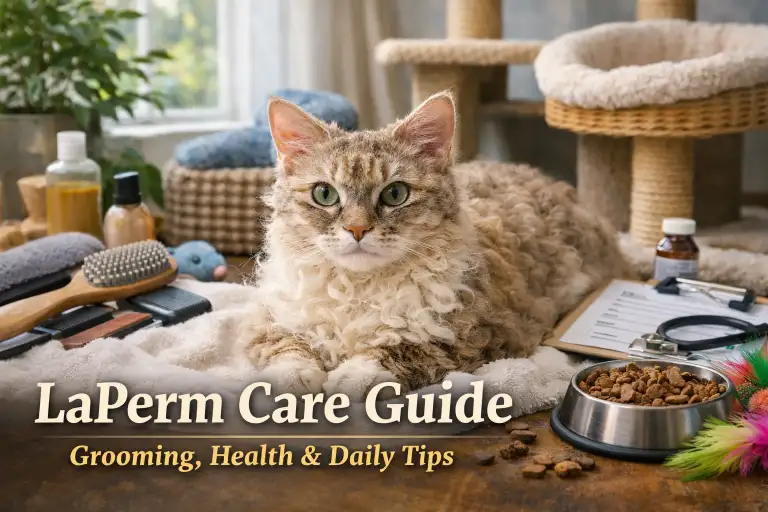
The LaPerm is a truly unique cat breed, best known for its soft, curly coat and affectionate, people-oriented personality. If you’re considering bringing one home—or you already share your life with a LaPerm—this care guide will help you understand what daily life with this breed actually looks like.
LaPerms are often described as “curly-coated companions” because they tend to stay close to their humans. They’re not usually the type of cat that hides all day or keeps their distance. Many owners notice that LaPerms follow them from room to room, enjoy being involved in household routines, and often seek out laps or shoulder time.
This breed is a great fit for:
- First-time cat owners who want an affectionate, social cat
- Families looking for a friendly, adaptable companion
- Indoor households that can provide play and enrichment
- Multi-pet homes, as LaPerms are usually gentle and tolerant
LaPerms are moderately active cats. They enjoy playtime, climbing, and interactive toys, but they are not typically hyperactive. A healthy LaPerm will often balance bursts of energy with long periods of cuddling and relaxation.
One of the biggest advantages of the LaPerm is that their coat, while unusual, is not as high-maintenance as many people assume. Their curls don’t mat as easily as some long-haired breeds, but they still need consistent, gentle grooming and coat checks.
Here’s a quick snapshot of what most owners can expect with LaPerm care:
| Care Category | Difficulty Level | Time Needed |
|---|---|---|
| Grooming | Low–Moderate | 5–10 min/week |
| Shedding | Low | Seasonal |
| Activity | Moderate–High | Daily play |
| Health Risks | Generally Low | Annual vet care |
Overall, LaPerm cats are affectionate, curious, and relatively easy to care for when their basic grooming, enrichment, and health needs are met. The key is understanding their coat, keeping them mentally stimulated, and watching for subtle signs of stress or discomfort—especially as they age.
When cared for properly, a LaPerm can be a loyal, playful, and loving companion for well over a decade.
LaPerm Grooming & Curly Coat Care (Brushing, Bathing, Shedding)
LaPerm cats are famous for their soft, curly fur. Their coat looks special, but the good news is that grooming is usually simple if you do it gently and regularly.
This section will help you understand how to care for your LaPerm’s curls without harming them.
Do LaPerm Cats Shed?
Yes, LaPerm cats do shed, but most shed less than many other breeds. Shedding may increase during seasonal changes, like spring or fall.
Some people think LaPerms are fully hypoallergenic, but no cat is 100% allergy-free. Their coat may cause fewer allergy problems for some owners, but it depends on the person.
How Often Should You Brush a LaPerm?
LaPerm fur is light and curly, so you do not need heavy brushing every day.
A gentle brush 1 to 2 times a week is usually enough.
Here is an easy grooming schedule:
| Grooming Task | How Often | Simple Tip |
|---|---|---|
| Gentle brushing | 1–2 times a week | Use a soft brush or wide comb |
| Coat check for mats | Weekly | Look behind ears and under arms |
| Bathing (if needed) | Every 6–8 weeks | Only use cat-safe shampoo |
| Nail trimming | Every 2–4 weeks | Start slowly and reward your cat |
Important Grooming Tips for LaPerm Owners
To keep your cat comfortable, follow these tips:
- Brush gently to protect the curls
- Do not over-brush, or the coat may become frizzy
- Never pull on knots or mats
- Use your fingers first if the coat feels tangled
- Give treats after grooming so your cat stays calm
Common Grooming Mistakes to Avoid
Many new owners make small mistakes that can upset their cat’s coat:
- Brushing too hard or too often
- Using human shampoo during baths
- Ignoring small mats until they get worse
- Bathing too frequently (it can dry out the skin)
When Grooming May Need Extra Help
Call your vet or a professional groomer if:
- Your cat has painful mats that won’t loosen
- You notice bald spots or red, itchy skin
- Grooming becomes stressful or your cat acts aggressive
LaPerm grooming should feel gentle, easy, and stress-free for both you and your cat.
Daily Routine & Home Setup (Indoor Life, Enrichment, Litter, Scratching)
LaPerm cats are friendly, curious, and active. They enjoy being close to people and need a good daily routine to stay happy and healthy.
This section will explain how to care for your LaPerm at home, especially if they live indoors.
Daily Care Basics
Most LaPerm cats do best with simple daily habits:
- Fresh food and clean water
- A clean litter box
- Playtime and attention
- A calm, safe place to rest
Even 15 minutes of play each day can make a big difference.
Easy Daily Checklist
Here are simple things to do every day:
- Feed your cat at regular times
- Refill water with fresh, clean water
- Scoop the litter box once a day
- Play with a toy (wand toys work great)
- Spend quiet time together (LaPerms love company)
Keeping Your LaPerm Entertained
LaPerm cats are smart and can get bored if they have nothing to do.
Good enrichment ideas include:
- Cat trees for climbing
- Puzzle toys for thinking
- Window perches to watch birds
- Short play sessions throughout the day
Interactive play is important because it helps prevent stress and weight gain.
Scratching Needs
All cats need to scratch. It keeps their claws healthy and helps them feel relaxed.
Make sure your home has:
- A tall scratching post
- A flat scratching pad
- Scratching areas near where your cat sleeps
If your LaPerm scratches furniture, gently guide them to the scratching post instead.
Litter Box Setup
A clean litter box is one of the most important parts of cat care.
Simple litter box tips:
- Scoop daily
- Change litter fully every 1–2 weeks
- Use unscented litter if possible
- Have one extra litter box if you own more than one cat
Home Essentials Table
Here is a quick look at helpful items for LaPerm cats:
| Need | Best Setup |
|---|---|
| Scratching | Vertical and flat scratchers |
| Play | Wand toys, balls, puzzle toys |
| Rest | Soft beds near family areas |
| Climbing | Cat trees or shelves |
Indoor vs Outdoor Safety
Most LaPerm cats are safest indoors. Indoor cats live longer and avoid dangers like:
- Cars
- Fights with other animals
- Parasites like fleas and ticks
If you want outdoor time, consider a secure catio or leash training.
A good home routine helps your LaPerm feel safe, loved, and active every day.
LaPerm Health Basics (Lifespan, Vet Triggers, Allergy Reality)
LaPerm cats are usually healthy and strong. They are not known for many serious breed problems. Still, like all cats, they need regular care, vet visits, and attention to small changes in their body or behavior.
This section explains basic health facts every LaPerm owner should know.
LaPerm Lifespan
Most LaPerm cats live a long life.
A healthy LaPerm can live about:
- 12 to 15 years
- Sometimes even longer with good care
Good food, indoor safety, and yearly vet checkups help them stay healthy.
Common Health Concerns
LaPerms do not have many breed-specific diseases, but they can still face common cat health issues such as:
- Dental problems (dirty teeth or gum disease)
- Weight gain if they don’t get enough play
- Hairballs from grooming
- Ear dirt or mild infections
Regular grooming and vet care can prevent many problems.
Are LaPerm Cats Hypoallergenic?
Some people believe LaPerm cats are hypoallergenic because of their curly coat.
The truth is:
- No cat is fully hypoallergenic
- Allergies are usually caused by proteins in saliva and skin, not just fur
Some allergy sufferers may react less to LaPerms, but it depends on the person.
Warning Signs to Watch For
Cats often hide pain, so small signs matter.
Call your vet if you notice:
- Eating less or skipping meals
- Hiding more than usual
- Sudden weight loss or weight gain
- Vomiting often
- Trouble using the litter box
- Constant scratching or bald spots
Normal vs Vet-Visit Signs Table
Here is a simple guide:
| If You Notice… | Often Normal | Call the Vet If… |
|---|---|---|
| Mild shedding | Seasonal change | Bald patches appear |
| Occasional hairball | Common in cats | Vomiting happens often |
| Small coat changes | Age-related | Skin becomes red or itchy |
| Sneezing once in a while | Dust or mild irritation | Thick discharge or constant sneezing |
Regular Vet Care
To keep your LaPerm healthy, plan for:
- Yearly vet visits
- Vaccines and parasite prevention
- Dental checkups
- Spaying or neutering if not already done
Early care is always easier than treating a big problem later.
LaPerm cats do best when owners notice changes early and stay consistent with health routines.
Special Situations & FAQs (Kittens, Seniors, Multi-Cat Homes)
LaPerm cats are friendly and adaptable, but care can change depending on your cat’s age or home life. This section covers special situations and answers common questions owners often ask.
Caring for a LaPerm Kitten
LaPerm kittens are playful, curious, and full of energy.
Important kitten care tips:
- Handle them gently every day so they get used to people
- Start brushing early with a soft brush
- Give safe toys for learning and play
- Schedule kitten vaccines and vet visits on time
Kittens learn habits fast, so early grooming and training helps a lot.
Caring for a Senior LaPerm Cat
As LaPerm cats get older, they may slow down.
Senior care tips include:
- Softer beds for joint comfort
- More vet checkups (often twice a year)
- Gentle play instead of rough jumping
- Watching for weight loss, stiffness, or changes in eating
Older cats need comfort, calm, and close attention.
Multi-Cat Homes and Other Pets
LaPerm cats are usually social and do well with other animals.
They often get along with:
- Other cats
- Friendly dogs
- Gentle children
Tips for introducing pets:
- Introduce slowly over several days
- Give each cat their own food bowl and litter box
- Provide quiet spaces to rest alone
Care Differences by Life Stage Table
| Life Stage | Main Care Focus |
|---|---|
| Kitten | Training, early grooming, play |
| Adult | Routine care, enrichment, coat checks |
| Senior | Comfort, health monitoring, gentle care |
Common FAQs About LaPerm Cats
Do LaPerm cats shed a lot?
No, they usually shed less than many breeds, but shedding can increase during seasonal changes.
Are LaPerm cats high maintenance?
Not usually. Their coat needs gentle care, but they are not hard to manage.
How often should I brush a LaPerm?
Most need brushing only 1 to 2 times a week.
Are LaPerm cats good indoor pets?
Yes. They are safer indoors and enjoy being close to their family.
Are LaPerm cats cuddly?
Yes, many LaPerm cats are affectionate and love attention.
Final Owner Advice
LaPerm cats are loving, playful, and fairly easy to care for. With gentle grooming, daily play, and regular vet visits, they can live a long and happy life.
For more trusted guidance on feline health, grooming, and lifelong care, you can visit the American Association of Feline Practitioners (AAFP) website, which provides vet-approved cat care resources for owners.

Ata Ur Rehman is the founder of Pet Age in Human Years Calculator, an educational platform that provides age conversion charts and lifespan guides for dogs, cats, birds, and other companion animals. His work focuses on helping pet owners understand how animal ages translate into human years using commonly accepted age conversion formulas and published lifespan averages.
The website compiles breed and species lifespan data from kennel clubs, breed organizations, and general animal lifespan studies to present simple and easy-to-understand guides for pet owners worldwide.
This website was created to centralize animal age conversion charts into one easy reference platform for pet owners.