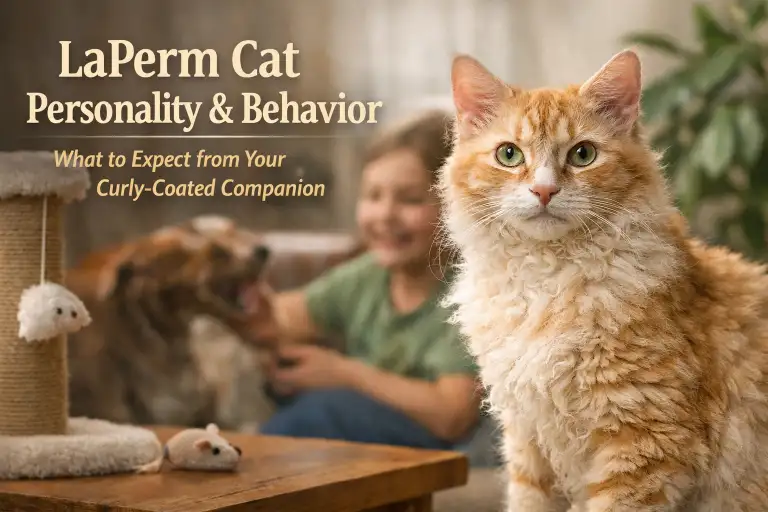
The LaPerm cat is best known for its curly coat, but what truly makes this breed memorable is its warm, engaging personality. LaPerms are often described as affectionate, people-oriented companions with a playful spark and a gentle sense of curiosity. They tend to enjoy being involved in everyday life, not as demanding attention-seekers, but as cats who genuinely like being near their humans.
A helpful way to understand the LaPerm temperament is to think of it as balanced. Many LaPerm cats are social and friendly without being overly clingy. They often follow family members from room to room, settle nearby during quiet moments, and show affection through soft contact, slow blinks, and relaxed companionship. Some may happily curl up in a lap, while others prefer to sit close enough to feel connected without being held.
Like all cats, LaPerms still have individual personalities. One may be outgoing and instantly welcoming, while another may be more reserved at first, choosing to observe before engaging. This variation is completely normal and reflects how feline personality is shaped by both genetics and life experience.
LaPerm cats are also known for their gentle curiosity. They often enjoy exploring their environment, perching in high spots, and interacting with people in subtle, attentive ways. Their temperament makes them a popular choice for households looking for a cat that is affectionate, playful, and socially adaptable.
Table: LaPerm Personality Snapshot
| Trait | What It Often Looks Like in LaPerm Cats |
|---|---|
| Affection Level | Warm, people-oriented, enjoys closeness |
| Energy Level | Playful bursts with calm downtime |
| Vocal Behavior | Usually moderate, may “chat” softly |
| Independence | Balanced, likes company but not overly needy |
| Social Style | Friendly, curious, often follows family members |
| Adaptability | Generally adjusts well to home routines |
Understanding the LaPerm personality begins with recognizing that this breed thrives on gentle connection. They are often at their happiest when they feel included, respected, and free to express affection in their own unique way.
Core Behavior Traits: Affection, Playfulness, and Intelligence
LaPerm cats are known for having a sweet and friendly nature. They often enjoy being close to people, but they also like having their own space. This makes them a great mix of loving and independent.
Many LaPerm cats show affection in gentle ways. Some may sit on your lap, while others prefer to sit beside you or follow you around the house. They enjoy being part of daily life without always needing to be the center of attention.
LaPerm cats are also playful. They often stay curious and active, even as adults. You may see them:
- Chasing toys
- Jumping onto cat trees
- Exploring shelves or windows
- Playing short “hunt” games indoors
Because they are smart, LaPerm cats learn routines quickly. They notice small changes in the home and often enjoy interactive play. Their intelligence also means they like mental stimulation, such as puzzle toys or new spaces to explore.
Table: Affection Styles in LaPerm Cats
| Affection Style | What It Looks Like |
|---|---|
| Lap Cat | Loves cuddling and sitting on you |
| Nearby Companion | Sits close but not always on your lap |
| Shadow Cat | Follows you from room to room |
| Playful Attention-Seeker | Brings toys or starts games for bonding |
These traits make the LaPerm a wonderful companion for people who want a cat that is loving, playful, and emotionally aware.
How LaPerm Cats Communicate (Body Language & Vocal Behavior)
LaPerm cats may not speak with words, but they communicate all the time through their body and sounds. Learning these signals can help you understand how your cat is feeling.
LaPerms are usually gentle and friendly, and their body language often shows that.
Common body language signs include:
- Slow blinking: This is a sign of trust and comfort.
- Tail held up: A happy greeting or friendly mood.
- Relaxed ears and soft eyes: Your cat feels safe.
- Rubbing against you: This is a way of showing affection and connection.
LaPerm cats can also be vocal, but they are not usually very loud. Many make soft sounds like small meows or quiet chirps, especially when they want attention or are excited.
Some reasons a LaPerm may meow include:
- Saying hello
- Asking for food
- Wanting playtime
- Looking for you
Quick Guide: Comfort vs Needing Space
| Signal | What It Often Means |
|---|---|
| Purring and relaxed body | Feeling calm and happy |
| Slow blinking | Trusting you |
| Hiding or turning away | Wants quiet time |
| Tail swishing fast | Feeling annoyed or overstimulated |
Every cat is different, so it helps to watch patterns over time. LaPerm cats are often good at showing their feelings in gentle, clear ways.
Social Behavior With Humans, Kids, and Other Pets
LaPerm cats are known for being friendly and social. They often enjoy spending time with people and can fit well into many types of homes.
With Humans
LaPerm cats usually form strong bonds with their owners. They may:
- Follow you around the house
- Sit nearby while you relax
- Greet you when you come home
- Enjoy gentle petting and attention
They like being included, but they are not always clingy. Many LaPerms are happy just being close.
With Children
LaPerm cats are often a good match for families with kids, especially when children are calm and respectful. They do best with gentle handling, not rough play.
A LaPerm may enjoy:
- Quiet playtime with toys
- Sitting near children during homework or TV time
- Being part of family routines
With Other Pets
LaPerm cats are usually social with other animals, especially when introduced slowly. Many get along well with:
- Other cats
- Friendly dogs
- Household pets that respect their space
Table: Social Compatibility Guide
| Relationship | How LaPerm Cats Often Behave |
|---|---|
| Adults | Very affectionate and people-friendly |
| Children | Gentle and patient with calm kids |
| Other Cats | Often social and playful |
| Dogs | Usually friendly with proper introduction |
| Strangers | Curious but may take time to warm up |
LaPerm cats are often happiest in homes where they get attention, play, and peaceful companionship.
Natural Instincts, Comfort Needs, and Misunderstood Behaviors
Even though LaPerm cats are loving and social, they are still cats with natural instincts. Many behaviors that seem strange to humans are actually normal and healthy.
Play and Hunting Instincts
LaPerm cats often enjoy play that looks like hunting. This is part of their natural behavior. You may see them:
- Pouncing on toys
- Chasing moving objects
- Stalking before they jump
- Playing more in the evening
Short bursts of energy, sometimes called the “zoomies,” are very common.
Comfort Behaviors
LaPerm cats also have habits that help them feel safe and relaxed, such as:
- Sitting in high places like shelves or cat trees
- Scratching posts or furniture (this helps stretch and mark territory)
- Hiding in quiet spots when they want alone time
These are normal comfort behaviors, not signs of a “bad” cat.
Misunderstood Cat Behaviors
Some actions are often misunderstood by owners.
Table: Normal vs Misunderstood LaPerm Behaviors
| Behavior | What It Really Means |
|---|---|
| Hiding sometimes | Needs quiet time or feels safe there |
| Scratching surfaces | Normal stretching and territory marking |
| Night activity | Cats are naturally more active at dawn and dusk |
| Gentle biting during play | Play behavior, not true aggression |
| Following you around | Social bonding and curiosity |
Personality Changes With Age
LaPerm cats may change slightly as they grow:
- Kittens are usually more energetic and playful
- Adults become more balanced and calm
- Senior cats may rest more but still enjoy affection
Understanding these natural behaviors helps you build a stronger bond with your LaPerm.
For more expert information on understanding normal cat behavior and communication, you can visit the American Association of Feline Practitioners (AAFP) guide.

Ata Ur Rehman is the founder of Pet Age in Human Years Calculator, an educational platform that provides age conversion charts and lifespan guides for dogs, cats, birds, and other companion animals. His work focuses on helping pet owners understand how animal ages translate into human years using commonly accepted age conversion formulas and published lifespan averages.
The website compiles breed and species lifespan data from kennel clubs, breed organizations, and general animal lifespan studies to present simple and easy-to-understand guides for pet owners worldwide.
This website was created to centralize animal age conversion charts into one easy reference platform for pet owners.