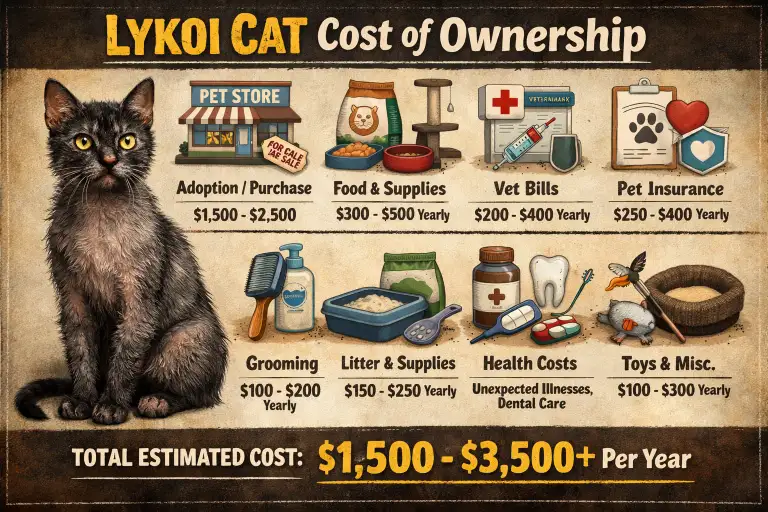
Buying a Lykoi cat is usually the biggest cost you will face at the start. This breed is rare, and most kittens come from specialized breeders. Because of this, the price is much higher than a typical shelter cat. The cost often reflects health testing, careful breeding, and limited availability—not just looks.
Before the cat even comes home, there are early medical costs. A first vet visit is important to check overall health, skin condition, ears, and growth. Some Lykois also need extra skin checks early in life because their coat is thin or uneven. These early exams help catch problems before they become expensive later.
Setting up your home also costs money. A Lykoi does not need luxury items, but it does need basics that fit its needs. Soft bedding helps protect exposed skin. Indoor setups are common for this breed, which may require scratch posts, litter boxes, and safe resting spots.
Many people forget these setup costs when planning. Skipping them can lead to stress for both the owner and the cat. Planning early makes the transition smoother and avoids surprise spending in the first month.
One-Time Setup Cost Breakdown
| Cost Item | What It Covers |
|---|---|
| Purchase or adoption | Breeder price or rare rescue fees |
| First vet visit | General exam, skin and ear check |
| Spay or neuter | One-time surgical cost |
| Basic supplies | Litter box, bowls, bed, carrier |
| Indoor setup | Scratching posts, safe spaces |
Monthly and Ongoing Costs of Owning a Lykoi
Monthly costs are where long-term ownership really adds up. Food is one of the biggest regular expenses. Lykois do not need special food by default, but many owners choose higher-quality diets to support skin and coat health. Better food often means fewer health problems later.
Litter is another steady cost. Most Lykois are indoor cats, so litter use is constant. Odor control and cleanliness matter, especially because their skin can get dirty faster than fully coated cats.
Skin care is a unique part of Lykoi ownership. Some months may need wipes, gentle baths, or ear cleaning supplies. Not every Lykoi needs frequent care, but owners should plan for it anyway.
There is also a time cost. Cleaning, checking skin, and monitoring changes takes effort. Time may not feel like money, but it affects daily life and should be part of the decision.
Average Monthly Cost Ranges
| Category | Low | Average | High |
|---|---|---|---|
| Food | Basic diet | Quality diet | Premium or special diet |
| Litter | Economy | Standard | Premium or multi-box setup |
| Skin & hygiene | Minimal | Regular care | Frequent care needs |
| Supplies replacement | Rare | Occasional | Frequent |
Annual, Veterinary, and Health-Related Costs
Every cat needs routine vet care, and Lykois are no different. Annual checkups help track weight, skin health, teeth, and overall condition. These visits are important because this breed can show skin or immune issues slowly over time.
Vaccines and parasite prevention are usually yearly or seasonal costs. Even indoor cats need protection, especially if they travel, visit groomers, or live with other pets.
Dental care is another area owners often overlook. Teeth cleaning may not happen every year, but it becomes more common as the cat ages. Dental problems can become painful and costly if ignored.
As a Lykoi gets older, vet visits often increase. Senior cats may need blood tests, joint checks, or more frequent exams. Planning for rising costs later helps avoid difficult choices.
Routine vs Periodic Veterinary Expenses
| Type of Care | How Often | Purpose |
|---|---|---|
| Wellness exam | Yearly | General health check |
| Vaccinations | Yearly or scheduled | Disease prevention |
| Parasite control | Ongoing | Fleas, worms, mites |
| Dental cleaning | Periodic | Oral health support |
| Senior screenings | Later years | Early problem detection |
Unexpected and Long-Term Costs to Plan For
Unexpected costs are the hardest part of pet ownership. For Lykois, skin issues are a common surprise. Flare-ups may need tests, medication, or follow-up visits. These costs can appear without warning.
Emergency vet care is another risk. Accidents, sudden illness, or rapid weight loss can lead to urgent visits. Because Lykois are rare, some vets may run extra tests to be safe, which can increase bills.
Long-term costs also include end-of-life care. This may involve pain management, special diets, or supportive treatments. These moments are emotional, and financial stress makes them harder.
Planning for these costs does not mean expecting the worst. It means being ready so care decisions are based on what is best for the cat, not just what is affordable that day.
Common Unexpected Costs and Triggers
| Situation | Possible Trigger |
|---|---|
| Skin treatment | Inflammation, infection |
| Emergency visit | Injury, sudden illness |
| Diagnostic tests | Ongoing or unclear symptoms |
| Long-term medication | Chronic conditions |
| End-of-life care | Age-related decline |
Total Lifetime Cost of a Lykoi and Who This Breed Is Financially Right For
When all costs are combined, owning a Lykoi is usually more expensive than owning an average domestic cat. The higher starting price, regular care, and possible medical needs raise the lifetime total.
Costs are not the same for everyone. A healthy indoor Lykoi with steady care may stay in a moderate range. A cat with skin problems or emergency needs can move into a high-cost range quickly.
This breed is often best for owners who are financially stable, patient, and able to handle surprise expenses. It may not be ideal for someone on a tight or fixed budget.
Before committing, it helps to ask one simple question: can I afford this cat for its entire life, even if costs increase? Honest answers protect both the owner and the cat.
Lifetime Cost Scenarios
| Scenario | What It Looks Like |
|---|---|
| Lower-cost | Healthy cat, minimal issues |
| Average | Routine care, occasional problems |
| High-cost | Ongoing medical or skin issues |
For general cat care standards and owner responsibilities, you can also review guidance from the ASPCA:
https://www.aspca.org/pet-care/cat-care

Ata Ur Rehman is the founder of Pet Age in Human Years Calculator, an educational platform that provides age conversion charts and lifespan guides for dogs, cats, birds, and other companion animals. His work focuses on helping pet owners understand how animal ages translate into human years using commonly accepted age conversion formulas and published lifespan averages.
The website compiles breed and species lifespan data from kennel clubs, breed organizations, and general animal lifespan studies to present simple and easy-to-understand guides for pet owners worldwide.
This website was created to centralize animal age conversion charts into one easy reference platform for pet owners.