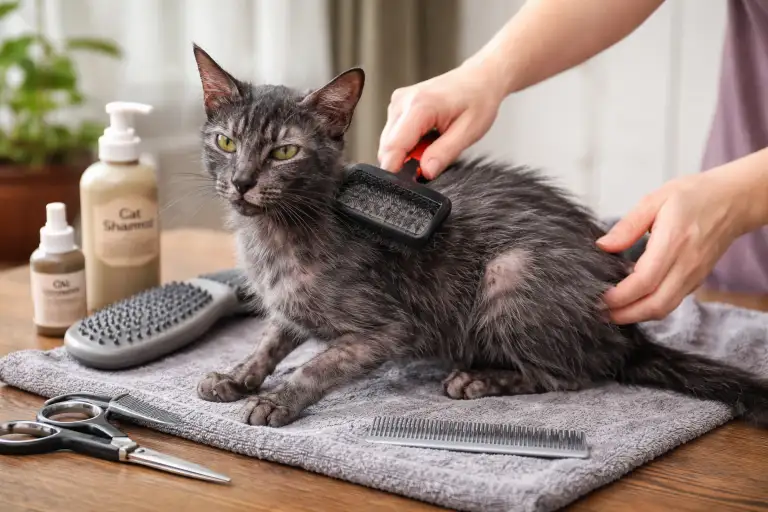
The Lykoi cat, often called the “werewolf cat,” looks very different from most other cats. Because of this, many owners are unsure how to groom them properly. Some people think Lykois do not need grooming at all, while others worry they need special care every day. The truth is somewhere in between.
Lykois have a partial coat. Some areas of their body have thin hair, while other areas may be completely bald. Their coat can also change over time. A Lykoi may look quite furry one month and much more hairless the next. This is normal for the breed and does not always mean something is wrong.
Grooming a Lykoi is not about making them look fluffy or perfect. The main goal is to keep their skin clean, healthy, and comfortable. Because their skin is more exposed than most cats, Lykois can build up oil and dirt more easily. At the same time, too much grooming can irritate their skin.
This guide focuses on basic, safe grooming that most Lykoi owners can do at home. It does not include show grooming, medical treatments, or heavy product use. If something ever looks painful, infected, or unusual, a veterinarian should always be your first stop.
Understanding the Lykoi Coat, Skin, and Shedding
The Lykoi coat is made up of a mix of hair and bare skin. They usually lack an undercoat, which is the soft layer of fur most cats have. Because of this, their coat feels rougher and thinner, and it does not protect the skin as much.
Shedding in Lykois can look dramatic. Many Lykois go through heavy shedding phases where they lose large amounts of hair and may appear almost bald. This can happen seasonally or during times of stress or growth. In most cases, the hair grows back on its own.
Lykoi skin also produces oil, just like human skin. Since there is less fur to absorb this oil, it can build up on the surface. This may cause the cat to feel greasy, especially around the face, neck, and legs. This does not always mean the cat is dirty or unhealthy.
Knowing what is normal helps prevent panic and over-grooming. The table below helps explain common coat changes.
Normal vs Concerning Lykoi Coat Changes
| Observation | Normal for Lykoi | Needs Vet Attention |
|---|---|---|
| Patchy hair loss | Yes, common | If skin is red or sore |
| Greasy skin | Often normal | If strong odor or sores |
| Seasonal shedding | Yes | If sudden and extreme |
| Bald face or legs | Normal | If scabs or swelling appear |
Brushing and Bathing a Lykoi Cat Safely
Many Lykois do not need regular brushing like fluffy cats do. If your Lykoi has very little hair, brushing may not help and can even irritate the skin. During higher shedding phases, light brushing can help remove loose hair, but it should always be gentle.
Use soft tools only, such as a soft-bristle brush or grooming glove. Never press hard or brush the same spot over and over. If the skin turns red or your cat pulls away, stop immediately. Short sessions are much safer than long ones.
Bathing is one of the most misunderstood parts of Lykoi grooming. Some Lykois do need baths, especially if oil builds up on their skin. However, bathing too often can dry out the skin and cause irritation. Most Lykois only need a bath when they feel greasy or dirty, not on a fixed schedule.
Always use a cat-safe shampoo and lukewarm water. Never use human shampoo. If your Lykoi hates water, do not force it. Stress can be more harmful than a little oil. The table below gives a simple guide.
Brushing and Bathing Guidelines
| Grooming Task | How Often | Notes |
|---|---|---|
| Light brushing | As needed | Only during shedding |
| Bathing | Occasionally | Only if greasy |
| Wipe-downs | Rare | Use vet-approved wipes |
Essential Grooming Tasks Beyond the Coat
Even though the coat gets the most attention, other grooming tasks are just as important for Lykois. Nail trimming helps prevent scratches and skin injuries, especially since Lykois have more exposed skin. Most Lykois need their nails trimmed every few weeks.
Ear care is also important. Lykois can build up ear wax faster than some other breeds. Check the ears weekly, but clean them only when you see visible buildup. Never push anything deep into the ear canal.
Eyes and face areas may collect oil or discharge. A soft, damp cloth can be used to gently wipe these areas when needed. Dental care is often forgotten, but brushing teeth or using vet-approved dental products helps prevent long-term health problems.
Never try to treat skin problems, infections, or wounds at home. If you see swelling, sores, or strong smells, a veterinarian should examine your cat.
Grooming Frequency, Mistakes, and When to Get Help
Lykoi grooming works best when it is simple and regular. Weekly checks are more important than frequent grooming sessions. Look at the skin, ears, nails, and overall comfort of your cat. Monthly tasks usually include nail trimming and occasional bathing if needed.
Kittens and senior Lykois may need extra care. Kittens should be gently handled to build trust, while senior cats may have thinner skin and less patience. Always adjust grooming to your cat’s comfort level.
Many grooming problems happen because owners try to do too much. Over-bathing, over-brushing, and using the wrong products are common mistakes. The table below highlights these issues.
Common Lykoi Grooming Mistakes
| Mistake | Why It’s a Problem | Better Approach |
|---|---|---|
| Bathing too often | Dries skin | Bathe only when greasy |
| Hard brushing | Skin irritation | Use gentle tools |
| Ignoring stress signs | Breaks trust | Stop and try later |
| Using human products | Unsafe for cats | Use cat-safe items |
If grooming becomes stressful, painful, or confusing, it is okay to ask for help. Professional groomers experienced with cats and veterinarians can guide you safely.
For more general feline care guidance, you can visit the American Veterinary Medical Association website: https://www.avma.org

Ata Ur Rehman is the founder of Pet Age in Human Years Calculator, an educational platform that provides age conversion charts and lifespan guides for dogs, cats, birds, and other companion animals. His work focuses on helping pet owners understand how animal ages translate into human years using commonly accepted age conversion formulas and published lifespan averages.
The website compiles breed and species lifespan data from kennel clubs, breed organizations, and general animal lifespan studies to present simple and easy-to-understand guides for pet owners worldwide.
This website was created to centralize animal age conversion charts into one easy reference platform for pet owners.