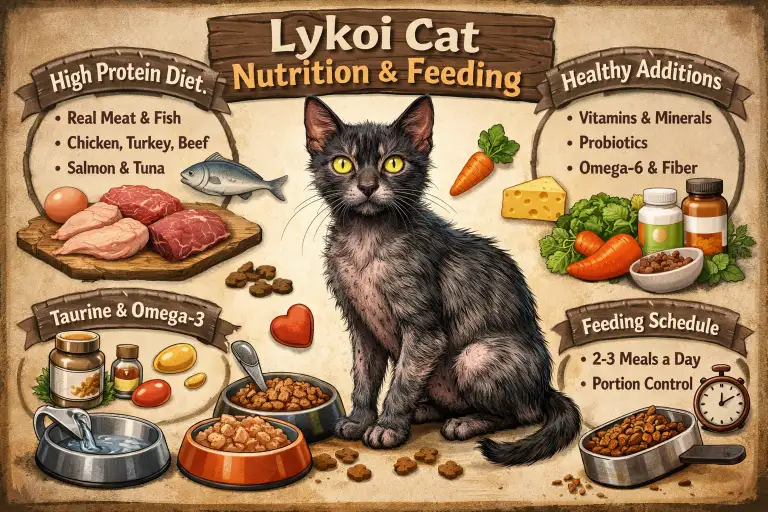
Lykoi cats may look unusual, but their bodies work like any other healthy cat. They are obligate carnivores, which means they are built to eat animal-based foods. Their teeth, stomach, and digestion are all designed for meat, not plants. A good diet helps support their energy, muscles, skin, and overall health.
Many owners think Lykoi cats need a special diet because of their thin coat or “wolf-like” look. That is not true. The Lykoi’s appearance comes from genetics, not from a diet problem. Feeding them a complete and balanced cat food is usually enough to meet their needs.
A balanced cat diet focuses on the right nutrients, not trends. Protein should come mainly from animal sources. Fat gives cats energy and helps them feel full. Carbohydrates can be present in small amounts, but they are not the main fuel for cats.
When choosing food, the goal is consistency and balance. Sudden changes, extreme diets, or guessing nutrients at home can cause problems. For most Lykoi cats, a well-made commercial cat food that meets recognized nutrition standards is the safest choice.
Best Food Choices for Lykoi Cats
The best food for a Lykoi cat is one that is complete, balanced, and made for cats. This can be wet food, dry food, or a mix of both. What matters most is the quality of the ingredients and whether the food meets basic feline nutrition standards.
Protein should be the first focus. Look for foods that list meat, poultry, or fish as main ingredients. Fat is also important because it gives cats energy and supports skin health. Carbohydrates are not harmful in small amounts, but they should not replace animal protein.
Wet and dry foods both have benefits. Wet food adds moisture to the diet, which helps with hydration. Dry food is easy to store and can help with routine feeding. Many owners choose mixed feeding to get the benefits of both.
Reading cat food labels helps avoid poor choices. You do not need to understand every detail. Just look for foods labeled as “complete and balanced” for your cat’s life stage.
Wet vs Dry vs Mixed Feeding
| Feeding Type | Main Benefits | Possible Downsides |
|---|---|---|
| Wet food | High moisture, strong smell, helps hydration | Short shelf life once opened |
| Dry food | Easy to store, convenient | Lower moisture |
| Mixed feeding | Balance of moisture and convenience | Needs portion control |
How Much and How Often to Feed a Lykoi Cat
How much food a Lykoi cat needs depends on age, size, and activity level. Cats do not all need the same amount, even if they look similar. Portion size is about calories, not how full the bowl looks.
Most adult Lykoi cats do well with set meals instead of free feeding. Meal feeding helps control weight and lets owners notice changes in appetite early. Kittens usually need more frequent meals because they are growing fast.
Feeding guides on food packages are a starting point, not a rule. Owners should watch their cat’s body shape and energy level. A healthy cat should feel firm, not bony and not soft with extra fat.
Treats should stay limited. Too many treats can unbalance the diet and add extra calories without needed nutrients.
Feeding Frequency and Portion Guidance (Conceptual)
| Cat Type | Meals Per Day | General Feeding Tip |
|---|---|---|
| Kitten | 3–4 meals | Small meals, high energy needs |
| Adult | 2 meals | Consistent portions |
| Senior | 2–3 meals | Easy-to-eat foods |
Feeding Lykoi Cats at Different Life Stages
Lykoi kittens need more energy and nutrients than adults. Their food should support growth and brain development. Kitten food is made to meet these higher needs and should be used until adulthood.
Adult Lykoi cats need food that maintains muscle and healthy weight. At this stage, overfeeding is a common problem. Regular meals and portion checks help keep adults healthy.
Senior Lykoi cats may eat less or have changes in appetite. Some seniors benefit from softer foods or more moisture. Owners should watch for slow eating, food refusal, or weight changes.
Treats should change with age too. What works for a playful kitten may not suit a quiet senior cat.
Feeding Overview by Life Stage
| Life Stage | Food Focus | Owner Tips |
|---|---|---|
| Kitten | Growth and energy | Feed often, monitor weight |
| Adult | Maintenance | Avoid overfeeding |
| Senior | Muscle and hydration | Watch appetite closely |
Common Feeding Mistakes and When to Get Help
One common mistake is feeding based only on hunger signs. Cats often ask for food out of habit, not need. Another mistake is changing foods too fast, which can upset digestion.
Some owners worry that skin or coat changes mean the diet is wrong. With Lykoi cats, coat appearance is often normal for the breed. Diet changes should not be made without clear reasons.
Too many treats and human foods can cause problems. Many human foods are unsafe for cats and should be avoided.
If a Lykoi cat loses weight, gains weight quickly, stops eating, or shows long-term digestive issues, it is time to speak with a veterinarian. Nutrition guides are for learning, not diagnosing.
For more information on feline nutrition standards, you can visit:
https://www.aafco.org/resources/official-publication/

Ata Ur Rehman is the founder of Pet Age in Human Years Calculator, an educational platform that provides age conversion charts and lifespan guides for dogs, cats, birds, and other companion animals. His work focuses on helping pet owners understand how animal ages translate into human years using commonly accepted age conversion formulas and published lifespan averages.
The website compiles breed and species lifespan data from kennel clubs, breed organizations, and general animal lifespan studies to present simple and easy-to-understand guides for pet owners worldwide.
This website was created to centralize animal age conversion charts into one easy reference platform for pet owners.