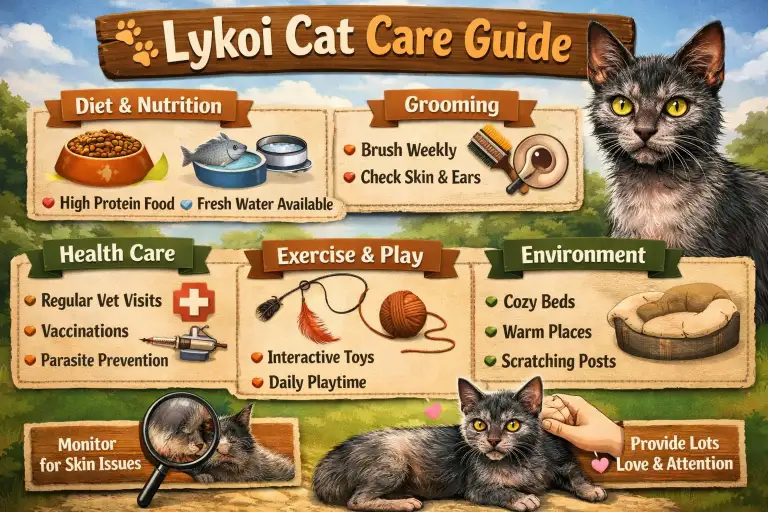
Lykoi cats look very different from most cats, and that is the first thing owners notice. They are often called “werewolf cats” because they have thin fur, bald patches, and a rough-looking coat. This look is natural and not a disease. Still, their unusual coat means their care is not the same as other short-haired cats.
One important thing to understand is that Lykoi cats go through coat cycles. This means they can lose a lot of fur and then grow it back later. Some owners get scared when this happens, but it is normal for the breed. Stress, seasons, and age can affect how much fur they have at any time.
Lykoi cats also have more exposed skin than normal cats. Because of this, their skin can get oily, dirty, or dry more easily. They are also more sensitive to cold and strong sunlight. This is why owners must pay more attention to their living space and daily comfort.
Another thing many owners notice is that Lykoi cats are very people-focused. They are smart, curious, and active. They enjoy attention and mental play. Good care is not only about skin and grooming, but also about keeping them calm, warm, and mentally happy.
Below is a simple comparison to help understand how Lykoi care is different.
| Care Area | Lykoi Cat | Typical Short-Haired Cat |
|---|---|---|
| Coat type | Thin, patchy, cycles | Full, stable coat |
| Skin exposure | High | Low |
| Bathing needs | Occasional, gentle | Rare |
| Cold sensitivity | High | Low to medium |
| Owner monitoring | Very important | Moderate |
Daily and Weekly Lykoi Cat Care Routine
Caring for a Lykoi cat every day does not mean doing a lot of work, but it does mean paying attention. A quick daily check helps you catch problems early. Look at your cat’s skin, ears, and behavior. If your cat seems itchy, oily, or uncomfortable, that is a sign to take action.
Lykoi cats like warmth. Make sure your home is not too cold, especially in winter. Soft beds, blankets, and warm sleeping spots help them feel safe and relaxed. Because their skin is exposed, dirty surfaces can cause irritation, so clean sleeping areas matter more for this breed.
Weekly care is simple but important. Gentle grooming removes dirt and loose hair. You should also check ears and trim nails when needed. Lykoi cats are active, so playtime is part of care too. Playing reduces stress, and stress can affect their coat.
Here is a clear care checklist to make things easy.
| Task | How Often | Why It Matters |
|---|---|---|
| Skin check | Daily | Catch irritation early |
| Warm bedding | Daily | Prevent cold stress |
| Gentle brushing | Weekly | Remove dirt and loose fur |
| Ear check | Weekly | Prevent wax buildup |
| Playtime | Daily | Reduce stress |
Grooming, Skin, and Coat Care for Lykoi Cats
Many people think Lykoi cats need heavy grooming, but that is not true. Their skin is sensitive, so less is often better. Gentle brushing once a week is enough for most cats. Use soft tools only, never harsh brushes.
Bathing is one of the most misunderstood parts of Lykoi care. These cats can build up oil on their skin, but bathing too often can dry them out. Most Lykoi cats only need a bath when they feel greasy or dirty. Always use a mild, cat-safe shampoo and warm water.
Shedding can be extreme during coat cycles. Your cat may look almost hairless at times. This is normal. What matters is skin health, not how much fur they have. Redness, sores, or strong smell are not normal and should not be ignored.
The table below explains grooming tasks clearly.
| Grooming Task | Frequency | Notes |
|---|---|---|
| Brushing | Once a week | Use very soft brush |
| Bathing | Only when needed | Mild shampoo only |
| Wiping skin | As needed | Damp cloth, no chemicals |
| Nail trimming | Every 2–3 weeks | Prevent scratches |
Common Lykoi Care Mistakes, Safety Tips, and Health Red Flags
One of the biggest mistakes owners make is treating Lykoi cats like hairless cats. They are not the same. Lykoi cats still have fur, even if it is thin. Using sunscreen, heavy oils, or human products can harm their skin.
Another common mistake is overbathing. Too many baths remove natural oils and cause dryness and irritation. If your cat does not smell bad and is not greasy, a bath is usually not needed.
Because Lykoi cats look unusual, owners sometimes panic over normal coat loss. However, ignoring real warning signs is also a problem. Swollen skin, open sores, strong odor, or behavior changes are signs that something is wrong.
Use this table to understand what is normal and what is not.
| Sign | Normal | Needs Vet Visit |
|---|---|---|
| Patchy fur | Yes | No |
| Seasonal shedding | Yes | No |
| Red, sore skin | No | Yes |
| Strong smell | No | Yes |
| Lethargy | No | Yes |
FAQs and Final Care Advice for Lykoi Owners
Many people ask if Lykoi cats are high-maintenance. The answer is no, but they do need attentive care. You must observe them more closely than a typical cat, especially their skin and comfort level.
Another common question is whether Lykoi cats get cold easily. Yes, they do. Keeping them indoors, warm, and away from drafts is very important. Outdoor access should only be supervised and limited.
First-time cat owners can own a Lykoi, but they must be willing to learn. These cats reward good care with strong bonds, playful behavior, and loyalty. When cared for properly, they are healthy and happy pets.
The most important advice is simple: watch your cat, learn what is normal for them, and do not ignore changes. Good Lykoi care is about balance, not perfection.
For additional trusted feline care information, you can visit the International Cat Care website:
https://icatcare.org

Ata Ur Rehman is the founder of Pet Age in Human Years Calculator, an educational platform that provides age conversion charts and lifespan guides for dogs, cats, birds, and other companion animals. His work focuses on helping pet owners understand how animal ages translate into human years using commonly accepted age conversion formulas and published lifespan averages.
The website compiles breed and species lifespan data from kennel clubs, breed organizations, and general animal lifespan studies to present simple and easy-to-understand guides for pet owners worldwide.
This website was created to centralize animal age conversion charts into one easy reference platform for pet owners.