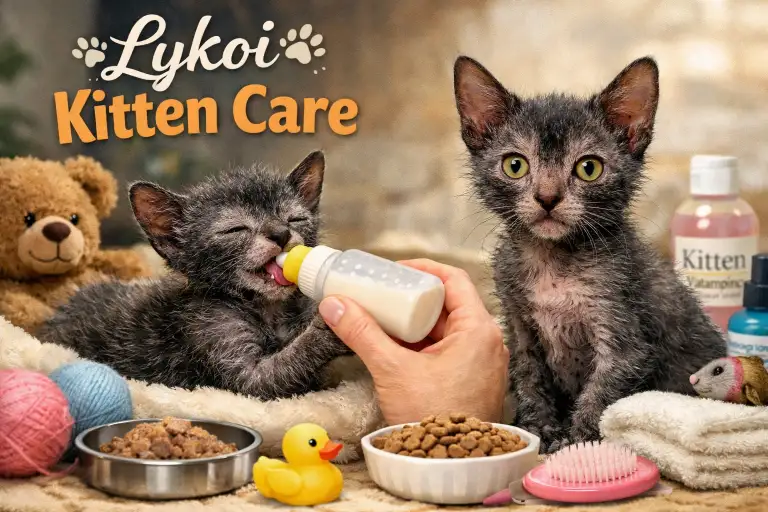
Lykoi kittens look very different from most kittens, and this often surprises new owners. Their patchy fur, thin coat, or partly hairless areas can make people worry that something is wrong. In most cases, this look is completely normal for the breed. Lykoi kittens are not sick or weak just because they look unusual.
What matters most is how a Lykoi kitten acts. A healthy kitten is curious, playful, eats well, and rests often. Lykoi kittens are known to be active, alert, and very interested in people. Many owners say they act more like little explorers than delicate pets.
Another thing that confuses beginners is their coat changes. Lykoi kittens may gain fur, lose fur, and then grow it back again as they grow. This can happen more than once in the first year. This is a normal part of the breed and not a reason to panic.
Lykoi kittens do not need “special” care in a complicated way. They need calm handling, a warm indoor home, regular meals, playtime, and basic grooming. When owners understand what is normal for this breed, caring for a Lykoi kitten becomes much easier and less stressful.
| Lykoi Kitten Trait | What New Owners Often Think | What Is Actually Normal |
|---|---|---|
| Patchy fur | The kitten is sick | Natural coat pattern |
| Fur loss | Skin problem | Normal coat cycle |
| High energy | Too wild | Healthy curiosity |
| Strong bonding | Clingy behavior | Breed personality |
Preparing Your Home and Daily Routine for a Lykoi Kitten
Before bringing a Lykoi kitten home, it is important to prepare a safe and calm space. These kittens do best indoors, where temperature and safety are controlled. Because they may have less fur, they can feel cold more easily than other kittens.
Choose a warm sleeping area away from drafts. Soft bedding and a quiet corner help kittens feel secure. Keep loud noises and busy activity low during the first few days so the kitten can adjust slowly.
A simple daily routine helps kittens feel safe. Feeding, playtime, and rest should happen around the same times each day. Lykoi kittens are very playful, so short play sessions during the day help prevent trouble at night.
Many beginners make the mistake of giving too much freedom too soon. It is better to start with one or two safe rooms and slowly allow more space as the kitten learns the home.
| Time of Day | Typical Lykoi Kitten Activity |
|---|---|
| Morning | Eat, short play, nap |
| Midday | Sleep, light exploring |
| Evening | Active play, bonding time |
| Night | Eat, calm play, sleep |
Feeding, Growth, and Development in Lykoi Kittens
Lykoi kittens eat like other kittens, but their high energy means regular meals are important. Young kittens usually need several small meals a day. As they grow, meals become fewer but slightly larger.
Their bodies grow quickly in the first months. You may notice growth spurts where they eat more and sleep more. This is normal and part of healthy development.
Fresh water should always be available. Active kittens can become thirsty quickly, especially during play. Clean bowls placed away from the litter box work best.
Owners sometimes worry if a Lykoi kitten looks thin. This breed often has a lean look, especially when young. As long as the kitten is eating well and acting normal, this is usually not a problem.
| Kitten Age | Feeding Pattern | What to Expect |
|---|---|---|
| 8–12 weeks | 4 small meals daily | Fast growth, high energy |
| 3–5 months | 3–4 meals daily | Strong play drive |
| 6+ months | 2–3 meals daily | Slower growth |
Grooming, Skin, and Hygiene Basics for Lykoi Kittens
Grooming a Lykoi kitten is usually simple, but different from fluffy breeds. Their coat may be thin or uneven, and their skin can be more exposed. Gentle handling is important.
Bathing is not needed often. Too much bathing can dry out the skin. In most homes, wiping with a soft, damp cloth is enough to keep the kitten clean.
Nail trimming should start early so the kitten gets used to it. Short, calm sessions work best. Ears should be checked gently, but cleaning should be minimal unless advised by a professional.
Many new owners over-groom Lykoi kittens because they worry about their skin. In reality, less is often better.
| Grooming Task | How Often | Notes |
|---|---|---|
| Bathing | Rarely | Only if dirty |
| Nail trimming | Every 2–3 weeks | Start young |
| Ear check | Weekly | Gentle look only |
| Coat care | As needed | Soft cloth is enough |
Health Awareness, Safety, and First-Time Owner Concerns
Lykoi kittens should be active, playful, and alert most of the time. It is normal for kittens to sleep a lot, but when awake they should show interest in food and play.
Regular vet visits are part of responsible ownership, but this guide focuses on daily observation, not medical care. Owners should watch eating habits, energy levels, and behavior changes.
Safety is very important indoors. Lykoi kittens climb, jump, and explore. Secure windows, hide small objects, and block unsafe areas. Because of their curiosity, kitten-proofing prevents many accidents.
New owners often worry they are “doing something wrong.” Most of the time, patience, routine, and gentle care are enough to raise a happy Lykoi kitten.
| Normal Behavior | When to Pay Attention |
|---|---|
| Active play | No interest in play |
| Regular eating | Skipping meals |
| Curiosity | Hiding all day |
| Coat changes | Skin sores or pain |
For more general kitten health and care information, you can visit the American Association of Feline Practitioners:
https://catvets.com

Ata Ur Rehman is the founder of Pet Age in Human Years Calculator, an educational platform that provides age conversion charts and lifespan guides for dogs, cats, birds, and other companion animals. His work focuses on helping pet owners understand how animal ages translate into human years using commonly accepted age conversion formulas and published lifespan averages.
The website compiles breed and species lifespan data from kennel clubs, breed organizations, and general animal lifespan studies to present simple and easy-to-understand guides for pet owners worldwide.
This website was created to centralize animal age conversion charts into one easy reference platform for pet owners.