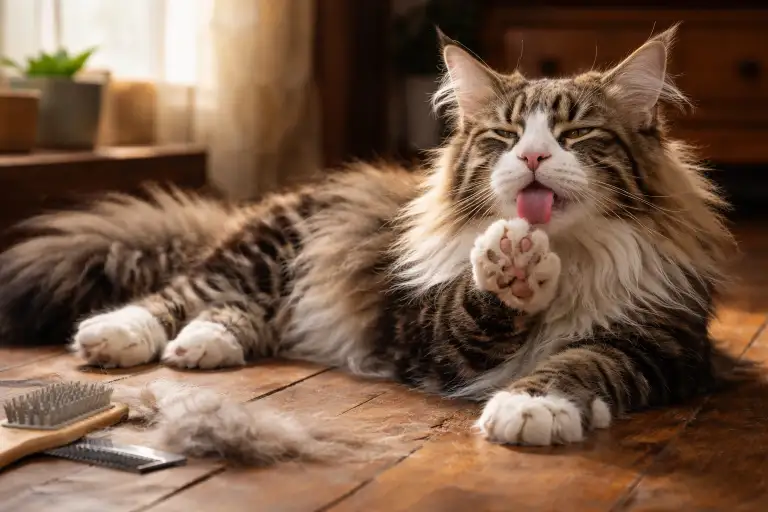
Maine Coons are one of the largest domestic cat breeds. They have long, thick coats that need regular care. Polydactyl Maine Coons have extra toes, which makes their paws unique and sometimes trickier to trim. Understanding their special needs helps keep your cat healthy and happy. Grooming is not just about looks—it prevents mats, skin problems, and nail injuries.
Different life stages require different care. Kittens need gentle handling to get used to brushing and nail trims. Adults usually handle grooming better but still need consistent care. Senior Maine Coons may have joint pain or sensitive skin, so grooming sessions should be shorter and gentler.
Indoor and outdoor cats have different grooming challenges. Outdoor cats may get dirtier and have a higher risk of mats. Indoor cats still need brushing to prevent hairballs and maintain a shiny coat. Polydactyl cats may need extra attention to keep their extra toes clean and nails trimmed safely.
Shedding can vary by season. In spring and fall, Maine Coons lose more hair, so brushing becomes even more important. Paying attention to your cat’s coat and nails regularly will make grooming easier and more effective.
Brushing and Coat Care Essentials for Maine Coons
Regular brushing is the most important part of grooming a Maine Coon. Their thick coat can easily form mats if not brushed often. Use a slicker brush or comb, and always brush in the direction of hair growth. Be gentle, especially around sensitive areas like the belly and underarms.
The type of coat matters. Long-haired Maine Coons need more frequent brushing, sometimes every day during shedding season. Shorter-haired adults can be brushed a few times a week. Start slowly, using short sessions if your cat is nervous, and reward them with treats or praise.
Mats should be removed carefully. Never pull hard on a mat, as this can hurt the skin. Small mats can be worked through gently with a comb, but severe tangles may need a professional groomer. Always check behind the ears, under the legs, and around the tail—these areas mat easily.
The table below shows a simple brushing schedule for Maine Coons:
| Coat Type | Brushing Frequency | Extra Tips |
|---|---|---|
| Long-haired | Daily during shedding, 3-4x/week otherwise | Focus on underarms and tail |
| Medium-haired | 3-4x/week | Gentle combing is usually enough |
| Short-haired | 1-2x/week | Look for small mats behind ears |
Nail Trimming for Polydactyl Paws — Safe Step-by-Step
Polydactyl cats have extra toes, which means more nails to check and trim. Trimming too short can hurt your cat, so always locate the quick (the pink area inside the nail). Only trim the clear tip of each nail. Use sharp cat nail clippers and a calm approach.
Handle your cat gently. You can wrap them in a towel if they are nervous, leaving one paw out at a time. Give small breaks if your cat is stressed. If your cat resists strongly or you are unsure, it’s safest to let a groomer or vet handle nail trims.
Consistency is key. Trimming nails regularly prevents overgrowth and paw injuries. Most Maine Coons need nail trims every 2-3 weeks. Polydactyl cats may require extra attention because of the extra nails.
The table below gives a quick guide for nail trimming:
| Age / Life Stage | Nail Trimming Frequency | Notes |
|---|---|---|
| Kitten (8 weeks+) | Every 2-3 weeks | Gentle introduction, short sessions |
| Adult | Every 2-3 weeks | Check extra toes carefully |
| Senior | Every 3-4 weeks | Short sessions to reduce stress |
Other Grooming Basics: Ears, Eyes, Bathing & Dental Care
Check your Maine Coon’s ears weekly. Use a soft cloth or cotton ball, never a cotton swab, to remove dirt. Watch for redness, strong odor, or swelling, which means a vet visit. Polydactyl cats may get debris trapped between extra toes, so clean those areas too.
Eyes should be checked daily for discharge. Wipe gently with a damp cloth if needed. Bathing is rarely needed for Maine Coons. Most cats can stay clean with regular brushing. Only bathe if your cat is very dirty or has a medical reason. Always use cat-specific shampoo and warm water, and dry thoroughly.
Dental care is important. Brush your cat’s teeth a few times a week with cat toothpaste. Dental treats and toys can also help reduce plaque. Healthy teeth prevent pain and serious health problems.
The table below provides a simple grooming checklist for these tasks:
| Task | Frequency | Tips |
|---|---|---|
| Ear Cleaning | Weekly | Soft cloth, check for redness or odor |
| Eye Cleaning | Daily | Use damp cloth if needed |
| Bathing | Rarely | Only if dirty, use cat shampoo |
| Teeth Brushing | 2-3 times/week | Use cat-safe toothpaste and brush gently |
Safety, Stress Signals & Common Grooming Mistakes
Cats show stress in different ways. Watch ears, tail, body posture, and vocal sounds. Flattened ears, twitching tails, growling, or hissing are signs to pause. Stop and calm your cat if they show these signals.
Always handle your cat gently. Never force brushing or nail trimming. Avoid scruffing unless your cat is comfortable with it. Small, frequent sessions work better than long, stressful ones.
Common mistakes include pulling mats, cutting nails too short, overbathing, or ignoring body language. Regular observation and patience make grooming easier for both you and your cat.
The table below summarizes common grooming mistakes and how to avoid them:
| Mistake | How to Avoid |
|---|---|
| Pulling mats | Use gentle combing, work slowly |
| Cutting nails too short | Trim only the tip, watch the quick |
| Overbathing | Only bathe when necessary |
| Ignoring stress signals | Pause and comfort your cat |
For more detailed cat grooming tips, you can visit ASPCA Cat Care Guide.

Ata Ur Rehman is the founder of Pet Age in Human Years Calculator, an educational platform that provides age conversion charts and lifespan guides for dogs, cats, birds, and other companion animals. His work focuses on helping pet owners understand how animal ages translate into human years using commonly accepted age conversion formulas and published lifespan averages.
The website compiles breed and species lifespan data from kennel clubs, breed organizations, and general animal lifespan studies to present simple and easy-to-understand guides for pet owners worldwide.
This website was created to centralize animal age conversion charts into one easy reference platform for pet owners.