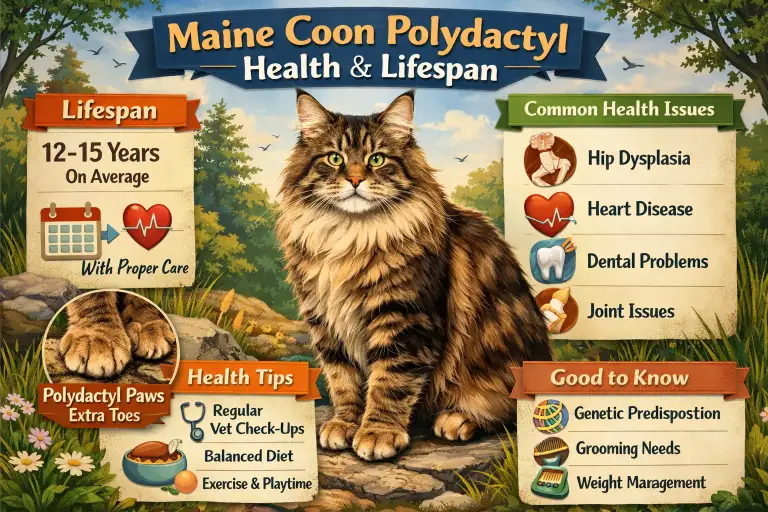
Maine Coon cats are one of the largest domestic cat breeds, known for their friendly nature, long fur, and tufted paws. Polydactyl Maine Coons, which have extra toes on one or more paws, are especially unique. Most of the time, these extra toes do not cause serious health problems, but they do require some special care. Understanding their health needs and lifespan can help owners provide the best care throughout their lives.
On average, Maine Coons live between 12 and 15 years. Indoor cats tend to live longer than outdoor cats because they face fewer risks like accidents, infections, or predators. Polydactyl cats generally share the same lifespan range, although their extra toes may need occasional attention to prevent nail or paw issues.
Genetics play an important role in how long a Maine Coon may live. Some families may be prone to heart or joint problems, while others stay healthy well into their teens. Lifestyle also matters: a cat with proper nutrition, regular exercise, and routine vet visits often enjoys a longer, healthier life.
It’s also helpful to remember that every cat is different. While statistics give a general idea, observing your cat’s behavior, weight, and activity level is one of the best ways to track their health over time. Paying attention to subtle changes early can make a big difference in quality of life.
Common Health Issues in Maine Coon Polydactyl Cats
Polydactyl Maine Coons are usually healthy, but they can face certain health issues due to their breed and extra toes. The extra toes themselves are not harmful in most cats, but nails can grow in unusual directions or get caught, causing discomfort. Regular nail trimming and paw checks help prevent problems.
Maine Coons as a breed can also be prone to heart disease, especially hypertrophic cardiomyopathy, which affects the heart muscle. Hip dysplasia and arthritis can occur due to their larger size, and obesity may make these conditions worse. Dental problems, kidney disease, and urinary issues are common in older cats.
Parasites, infections, and lifestyle risks like outdoor hazards are also factors that can affect a Maine Coon’s health. Preventive care, such as vaccinations and parasite control, is essential to reduce these risks.
Here is a simple table summarizing common health issues:
| Condition | Typical Age | Key Observation Tips |
|---|---|---|
| Polydactyl paw/nail issues | Any age | Check nails weekly, look for ingrown nails |
| Heart disease | 3–10 years | Monitor energy level, breathing, and activity |
| Hip dysplasia / arthritis | 5+ years | Watch for stiffness, difficulty jumping |
| Obesity | Any age | Track weight and body condition score |
| Dental disease | 2+ years | Check teeth, watch for bad breath or drooling |
| Kidney disease | 7+ years | Observe drinking, urination, and appetite |
| Urinary issues | Any age | Look for frequent or painful urination |
Factors Influencing Lifespan & Preventive Care
How long a Maine Coon polydactyl lives depends on several factors. Genetics, diet, exercise, and regular vet checkups are all important. A cat from a healthy family line that receives balanced food and daily activity often enjoys a longer life.
Indoor cats tend to live longer because they are protected from outdoor hazards. Providing toys, climbing structures, and safe play areas keeps cats active and helps maintain healthy weight and joints. Mental stimulation is also important for overall well-being.
Preventive care is a key part of lifespan. Regular vet visits, vaccinations, dental cleanings, and parasite prevention can catch problems early. For polydactyl cats, nail care and paw checks should be added to the routine to prevent infections or injury.
Here is a preventive care checklist for Maine Coon polydactyl cats:
| Care Task | Frequency | Owner Notes |
|---|---|---|
| Vet wellness check | Yearly | More frequent if older or health issues present |
| Vaccinations | As recommended by vet | Keep a vaccination record |
| Nail trimming & paw care | Every 2–4 weeks | Extra toes may need careful attention |
| Dental check/cleaning | Yearly | Monitor for bad breath or tartar |
| Weight check | Monthly | Maintain healthy body condition |
| Parasite prevention | Year-round | Flea, tick, and worm control |
Aging, Senior Health Changes & Quality of Life
As Maine Coons get older, they may show signs of aging. Stiff joints, slower movements, and decreased activity are common. Polydactyl cats may need extra paw care as nails can become thicker or more prone to injury.
Senior cats may also experience cognitive changes, such as confusion or altered sleep patterns. Their senses, like hearing and vision, may decline. Providing ramps, soft bedding, and quiet resting areas can help support comfort.
Nutrition plays a key role in senior health. Older cats may need diets formulated for kidney health, weight management, or joint support. Monitoring water intake and urinary habits is also important for early detection of kidney or urinary issues.
Here’s a quick senior health snapshot table for easy reference:
| Age Range | Common Changes | Supportive Actions |
|---|---|---|
| 7–10 years | Early stiffness, minor weight changes | Light exercise, paw checks, monitor diet |
| 10–13 years | Slower activity, dental or kidney issues | Vet checkups every 6 months, soft bedding |
| 13+ years | Joint pain, cognitive changes, sensory decline | Ramps, gentle play, enriched environment |
Owner Guidance, Warning Signs & FAQs
Maine Coon owners should pay attention to subtle changes in their cat’s behavior. Warning signs include sudden weight loss, loss of appetite, frequent vomiting, difficulty walking, or unusual paw discomfort in polydactyl cats. Catching problems early helps maintain quality of life.
Observation is the best tool for owners. Keep track of eating, drinking, litter box habits, grooming, and activity levels. Polydactyl cats should have their paws inspected regularly for nail overgrowth or injury.
Common questions owners have:
- Does polydactyly affect lifespan? Usually not, if nails are properly cared for.
- How often should I trim extra nails? Every 2–4 weeks, or as needed.
- Are Maine Coons prone to heart disease? Some are, so regular vet checkups help early detection.
- How can I keep my senior cat comfortable? Provide soft bedding, ramps, gentle play, and regular vet monitoring.
- What diet is best? A balanced diet suited to age, weight, and health needs.
By staying observant and proactive, owners can support a long, healthy life for their Maine Coon polydactyl cat.
For more information on feline health and preventive care, visit the American Association of Feline Practitioners: https://catvets.com

Ata Ur Rehman is the founder of Pet Age in Human Years Calculator, an educational platform that provides age conversion charts and lifespan guides for dogs, cats, birds, and other companion animals. His work focuses on helping pet owners understand how animal ages translate into human years using commonly accepted age conversion formulas and published lifespan averages.
The website compiles breed and species lifespan data from kennel clubs, breed organizations, and general animal lifespan studies to present simple and easy-to-understand guides for pet owners worldwide.
This website was created to centralize animal age conversion charts into one easy reference platform for pet owners.