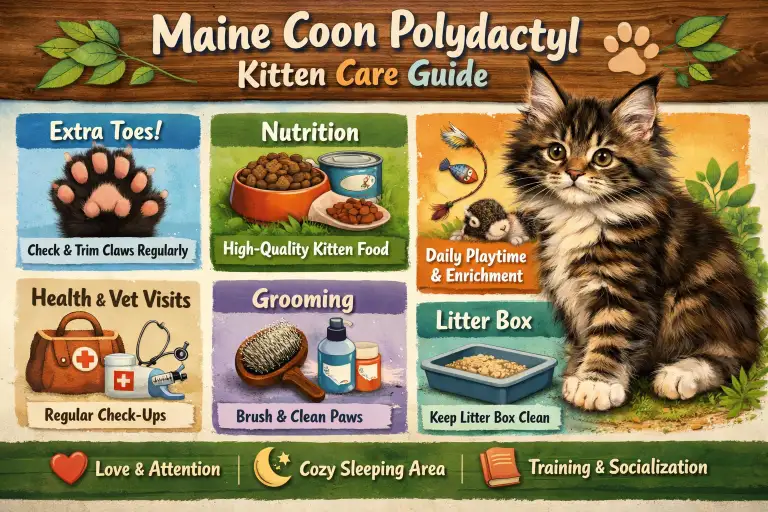
Bringing home a Maine Coon polydactyl kitten is exciting and a little bit different from getting other cats. Maine Coons are one of the largest domestic cat breeds, and “polydactyl” means your kitten has extra toes. This can make them great climbers and very playful. Getting ready before your kitten arrives will help both of you start off calm and happy.
Before your kitten comes home, set up a quiet sleeping spot that feels safe. Put their bed somewhere warm and away from loud noises like TV or heavy foot traffic. Have a litter box, food and water bowls, and some toys ready. Make sure all cords, small objects, and houseplants are out of reach so your curious kitten doesn’t get into trouble.
It’s also good to start thinking about a daily routine. Kittens feel safe when they know what happens each day — feeding times, play times, and rest times. Maine Coon kittens grow fast, so keeping a simple routine helps with eating, bathroom habits, and bonding with you.
Lastly, make sure everyone in your home knows the rules for the kitten. Kids and adults should know how to pick up the kitten gently and how to play safely without hurting its paws, especially since extra toes can make claws more sensitive at first.
Growth and Development Milestones
Understanding how your kitten grows will help you know what to expect at each age. The table below shows common milestones for Maine Coon polydactyl kittens. Every kitten is unique, but this gives you a simple guide.
| Age | What Happens |
|---|---|
| Weeks 1–4 | Eyes open, start walking, still nursing |
| Weeks 5–8 | Trying solid food, learning to use the litter box |
| Months 2–4 | More active play, better balance, social with humans |
| Months 4–6 | Teeth stronger, chewing toys, exploring higher places |
| Months 6–12 | Maine Coons keep growing big, playful still but calmer |
Watch your kitten play and explore. If something seems very different (not walking by 4 weeks or not eating by 8 weeks), talk to a vet. But many times slow changes are normal for kittens learning new skills.
Feeding and Nutrition Guide
Good food helps your Maine Coon kitten grow strong and healthy. Kittens need food made just for kittens because it has more calories and nutrients than adult cat food. This table shows what type of food and how much your kitten might need at different ages.
| Age | Food Type | Meals per Day | Portion Notes |
|---|---|---|---|
| Up to 4 weeks | Kitten formula | Small frequent feeds | Usually bottle-feeding if not with mother |
| 5–8 weeks | Wet kitten food | 3–4 | Mix with formula if needed |
| 2–4 months | Wet + starter dry food | 3 | Watch your kitten’s weight, adjust portions |
| 4–6 months | Wet + dry kitten food | 2–3 | Introduce fresh water always |
| 6–12 months | High‑quality kitten food | 2 | Slowly reduce to adult food after 12 months |
Always have clean water for your kitten. Don’t give cow’s milk — many kittens can’t digest it and it can upset their stomach. If you’re unsure how much to feed, check the package and adjust based on your kitten’s energy and body condition. A healthy kitten should have a small waist and feel firm, not bony.
Litter Training and Daily Care
Most kittens learn litter box use quickly if it’s easy to reach and always clean. Put the box in a quiet area with low foot traffic and show your kitten where it is when you bring them home. After meals or naps, gently place them in the box. Praise them when they use it.
Clean the litter box every day so smells stay low and your kitten stays comfortable. Scoop the waste into a trash bag and change all litter once or twice a week. Polydactyl kittens may scoop more because they have extra toes, so check under the edges of the box too.
Daily care also includes play and rest. Kittens sleep a lot — usually 16–20 hours a day — but when awake, they need short bursts of play to use up energy. Use soft toys and interactive playtime to help them learn bite control and good manners. Always be gentle with their paws and claws.
Brushing your kitten a few times a week helps keep their long hair smooth and reduces hairballs. Maine Coons have thick fur, so a soft brush works best. This is also a nice way to bond with your kitten.
Safety, Kitten Essentials, and Checklist
Keeping your kitten safe at home means looking around from their point of view. They are small, curious, and can squeeze into tiny spaces. This table shows key items to have and why they matter.
| Item | Why You Need It | Notes |
|---|---|---|
| Bed or soft blanket | Warm resting spot | Place in quiet area |
| Litter box + scoop | Clean bathroom area | Low entry box for kittens |
| Food bowls + water | Regular meals and hydration | Use shallow bowls at first |
| Scratching post | Healthy scratching outlet | Place near play area |
| Toys | Mental and physical play | Rotate toys to keep interest |
| Grooming brush | Help keep coat clean | Brush gently around paws |
Trim any dangling cords, keep windows closed or screened, and block off small openings behind furniture. If you have stairs, put gates until your kitten is steady on its feet. Maine Coon kittens love to climb, so give safe vertical spaces like a cat tree.
Remember to schedule a vet visit soon after bringing your kitten home so you can start vaccinations and wellness checks. These are normal parts of keeping your kitten healthy.
For more trusted kitten care tips, visit the American Society for the Prevention of Cruelty to Animals (ASPCA) cat care guide: https://www.aspca.org/pet-care/cat-care.

Ata Ur Rehman is the founder of Pet Age in Human Years Calculator, an educational platform that provides age conversion charts and lifespan guides for dogs, cats, birds, and other companion animals. His work focuses on helping pet owners understand how animal ages translate into human years using commonly accepted age conversion formulas and published lifespan averages.
The website compiles breed and species lifespan data from kennel clubs, breed organizations, and general animal lifespan studies to present simple and easy-to-understand guides for pet owners worldwide.
This website was created to centralize animal age conversion charts into one easy reference platform for pet owners.