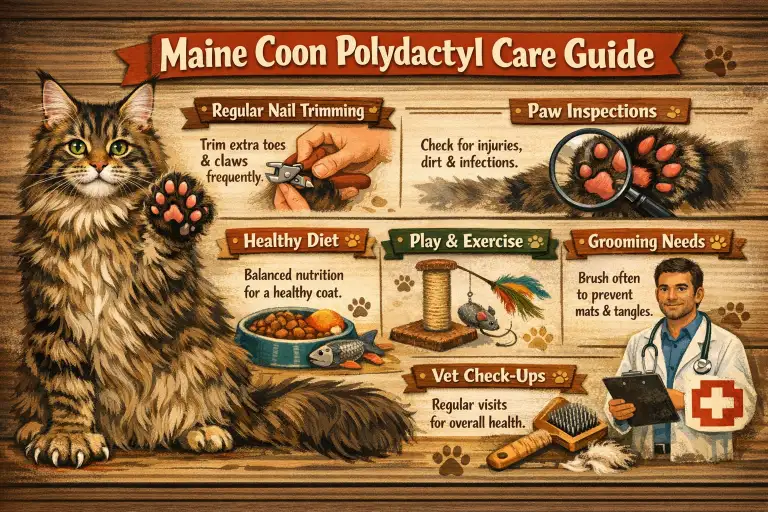
Maine Coon cats are already known for their large size, friendly personalities, and luxurious fur. Some of these cats are polydactyl, meaning they are born with extra toes on their paws. This genetic trait can give them more grip when climbing or playing, but it also means they need a little extra care to keep their paws healthy. Owners need to understand how polydactylism affects claw growth, walking, and even joint health.
Extra toes can change the way a cat walks or how its claws grow. Some claws may curl or grow faster than others, which can lead to painful ingrown nails if not trimmed properly. Polydactyl cats may also have small spaces between their toes that trap dirt or litter, which can cause infections if left unchecked. Understanding these challenges helps owners prevent problems before they start.
Behaviorally, polydactyl Maine Coons are often very skilled climbers. Their extra toes give them better balance and grip on furniture, shelves, and cat trees. While this is fun for the cat, it also increases the chances of scratched furniture or accidental injuries if the claws are not managed carefully. Being aware of these tendencies will help owners set up a safe and engaging environment for their cat.
Even though polydactyl cats are hardy, early attention to paw health can prevent discomfort later. Routine checks, gentle grooming, and understanding the unique structure of their paws ensures the cat stays comfortable and active throughout its life. Knowing what to look for and how to respond can save a lot of stress for both the cat and the owner.
Daily & Weekly Paw & Claw Care Routine
Daily care of a polydactyl Maine Coon’s paws is essential to prevent injuries and infections. Start by gently looking between the toes every day. Check for dirt, litter, or small cuts. Paw pads should feel soft but not swollen. A quick daily check helps catch problems before they become serious.
Nail trimming is another key step. Because polydactyl cats have extra toes, they may have more nails to manage than typical cats. Check nails weekly and trim any that are starting to curl or grow long. Use sharp, ergonomic trimmers and clip carefully to avoid the quick, which is the pink area inside the nail that can bleed if cut. For kittens, nail trimming should start slowly and gently to get them used to the process.
Cleaning the paws weekly can also help. Use a soft paw brush or unscented cat paw wipes to remove trapped litter or debris. Focus on areas between the toes and any hair that may have collected. Regular cleaning keeps the paws healthy and prevents small infections.
Play and exercise are part of paw health too. Scratching posts, climbing toys, and interactive play help keep the claws strong and the joints flexible. Encourage climbing and gentle scratching, but always monitor to ensure the claws don’t get stuck or damaged.
Weekly Paw Care Checklist
| Task | Frequency | Quick Notes |
|---|---|---|
| Paw inspection | Daily | Look between pads and toes |
| Nail trimming | Weekly or bi-weekly | Extra toes get extra nails |
| Litter cleanup | Daily | Preventing litter sticking in paws |
| Paw cleaning | Weekly | Gentle paw wipes |
Home Setup & Tools for Healthy Polydactyl Paws
Having the right tools and a suitable home setup makes caring for polydactyl Maine Coons much easier. Start with the litter box. Choose litter that is soft and does not clump too hard because extra toes can trap litter easily. Scoop daily to prevent debris from sticking between toes.
For nail care, invest in a good quality cat nail trimmer and a small paw brush. A trimmer with a comfortable grip will make clipping extra nails easier, and a brush helps remove hair and dirt. Unscented paw wipes are also useful for quick cleaning between weekly deep cleans. Keeping these tools handy reduces stress for both the cat and the owner.
Scratching posts and pads are not just fun; they are necessary. Polydactyl cats tend to climb and scratch more due to their extra grip. Provide sturdy vertical and horizontal posts. Soft mats or carpeted areas help the cat scratch safely without harming claws or furniture.
Here’s a simple comparison of the tools and supplies you will need:
Tools & Supplies at a Glance
| Tool | Purpose | Best For | Notes |
|---|---|---|---|
| Cat nail trimmers | Claw trimming | All ages | Choose sharp, ergonomic ones |
| Paw brush | Hair & debris | Long-haired cats | Gentle bristles |
| Litter type comparison | Paw comfort | Sensitive feet | Clumping vs non-clumping |
| Paw wipes | Cleaning | Outdoor/active cats | Unscented |
Common Problems & How to Recognize Them Early
Even with good care, polydactyl Maine Coons can develop paw problems. Overgrown nails, ingrown claws, and infections are the most common issues. Redness, swelling, or a foul smell from the paw are warning signs that immediate attention is needed.
Limping or avoiding the litter box can indicate paw discomfort. Sometimes cats hide pain well, so owners must observe subtle behavior changes like reduced climbing, reluctance to play, or excessive licking of a paw. Early detection is key to avoiding more serious health problems.
Regular inspection helps identify issues early. Check the nails for curling or splitting. Look at the spaces between toes for trapped dirt or signs of infection. A small problem treated promptly is far easier than managing a serious infection or injury.
Here’s a table to help owners quickly identify symptoms and what to do:
Paw Problem Symptoms & What to Do
| Symptom | Possible Cause | Immediate Step | See Vet If… |
|---|---|---|---|
| Redness/swelling | Infection/injury | Clean paw, apply paw balm | Doesn’t improve in 24–48 hrs |
| Limping | Overgrown nails | Check/trim nails | Persistent >2 days |
| Black debris | Dirt/litter clump | Rinse & dry | Bleeding or swelling |
| Avoiding box | Paw pain | Inspect paws | Behavioral changes continue |
When to Get Veterinary Help & Special Situations
Polydactyl kittens need gentle early training for nail trimming. Start slowly and reward them for calm behavior. This makes adult paw care easier. Senior cats may develop arthritis or joint pain, and extra toes can sometimes contribute to discomfort if nails aren’t trimmed regularly.
Multi-cat households require extra vigilance. Play fights or rough climbing can lead to scratched paws or broken nails. Monitor interactions and trim nails more frequently if needed. Indoor versus outdoor cats also have different risks; outdoor cats may pick up debris, splinters, or face injuries from climbing and rough surfaces.
Veterinary attention is required when there are signs of infection, persistent limping, or severe nail problems. Don’t wait if the cat shows behavioral changes or refuses to use the litter box. Early intervention prevents chronic pain and more complicated procedures later.
For more detailed guidance on cat paw health and grooming, check out American Association of Feline Practitioners.

Ata Ur Rehman is the founder of Pet Age in Human Years Calculator, an educational platform that provides age conversion charts and lifespan guides for dogs, cats, birds, and other companion animals. His work focuses on helping pet owners understand how animal ages translate into human years using commonly accepted age conversion formulas and published lifespan averages.
The website compiles breed and species lifespan data from kennel clubs, breed organizations, and general animal lifespan studies to present simple and easy-to-understand guides for pet owners worldwide.
This website was created to centralize animal age conversion charts into one easy reference platform for pet owners.