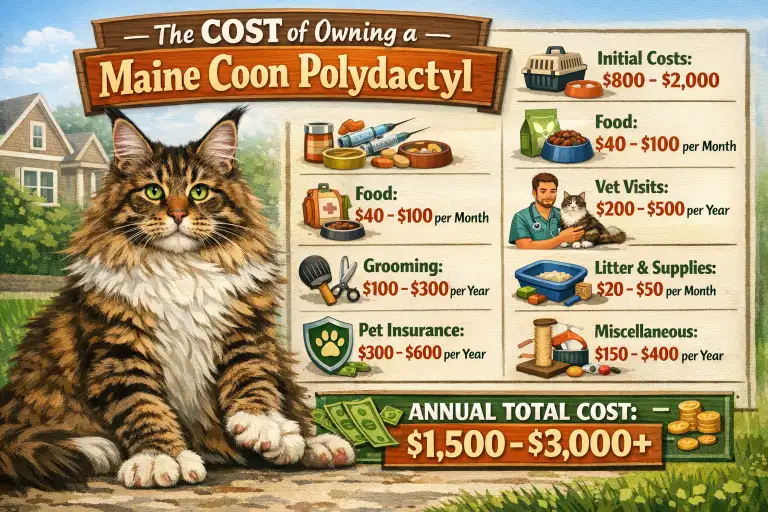
Owning a Maine Coon Polydactyl is a big responsibility. These cats are not only large and long-lived, but their extra toes can also require special care. Before bringing one into your home, it’s important to understand the full cost of ownership. Knowing what to expect financially can help you plan and avoid surprises.
The costs of owning a Maine Coon Polydactyl go beyond just buying the cat. You will need to pay for food, litter, medical care, and grooming throughout their life. They are prone to certain health issues because of their size and genetics, which can increase veterinary expenses. Planning for these costs is key to keeping your cat healthy and happy.
Some people only think about the upfront cost, like adoption fees or buying from a breeder. But long-term expenses often outweigh these initial costs. By understanding both one-time and recurring costs, you can budget properly and avoid financial stress.
Every cat owner will face unexpected expenses at some point. Emergencies, aging-related care, and lifestyle adjustments can all affect your budget. This guide will walk you through the realistic costs, from the day you bring a Maine Coon Polydactyl home to their later years, so you can make an informed decision.
One-Time and Initial Costs
Bringing a Maine Coon Polydactyl home involves several one-time expenses. First is the adoption or breeder fee. Maine Coons are already a premium breed, and polydactyl cats often cost a little more. Prices can vary widely depending on the breeder, location, and lineage.
The first veterinary visit is another key expense. This includes spaying or neutering, initial vaccines, and microchipping. These procedures protect your cat’s health and are required in many areas. It’s also smart to budget for an initial check-up even if the breeder has already vaccinated the kitten.
You will also need core supplies to get started. Beds, litter boxes, scratching posts, food and water bowls, and toys are all essentials. Because Maine Coons are large cats, you may need bigger and more durable products than for an average cat. Grooming tools are important too, especially for maintaining long hair and caring for extra toes.
Other small initial costs can add up quickly. Carriers for trips to the vet, furniture protection for scratching, and basic training materials are helpful. Planning these expenses in advance will prevent last-minute spending and help your Maine Coon feel comfortable in its new home.
Ongoing Monthly & Annual Costs
After the initial setup, owning a Maine Coon Polydactyl comes with ongoing costs. Food is one of the largest monthly expenses. Maine Coons are large cats with hearty appetites, and high-quality food is important to keep them healthy. Treats are an extra cost to consider.
Litter and cleaning supplies are another recurring cost. Large cats go through litter faster, and polydactyl cats may need extra attention to keep paws clean. Monthly spending on litter can add up quickly if you use premium products.
Routine veterinary care is essential. This includes annual check-ups, vaccinations, flea and worm treatments, and preventive dental care. Maine Coons may be prone to joint issues and other breed-related health concerns, so preventive care is highly recommended.
Grooming is ongoing, especially for long-haired Maine Coons. Brushing several times per week, nail trimming, and occasional professional grooming keep them healthy and reduce hairballs. You may also spend on toys, scratching posts, or enrichment items throughout the year.
Here is a table for skimmable monthly and annual costs:
| Expense | Monthly Cost (Low) | Monthly Cost (Average) | Monthly Cost (High) | Annual Cost (Average) |
|---|---|---|---|---|
| Food & Treats | $50 | $80 | $120 | $960 |
| Litter & Supplies | $15 | $25 | $40 | $300 |
| Vet Preventive Care | $20 | $40 | $70 | $480 |
| Grooming & Toys | $10 | $25 | $50 | $300 |
| Total | $95 | $170 | $280 | $2040 |
Unexpected, Emergency, and Lifetime Costs
Even with careful planning, unexpected costs happen. Illnesses or injuries may require emergency vet visits or surgery. These expenses can range from a few hundred to several thousand dollars depending on the situation. Polydactyl cats sometimes need extra nail or paw care if injuries occur.
Age-related health care can also increase costs. Maine Coons live 15–20 years, and older cats may need joint supplements, special diets, or more frequent veterinary visits. Planning for aging-related expenses ensures your cat remains comfortable throughout its life.
Accidents or behavioral issues can create additional costs. Scratched furniture, lost items, or behavioral consultations add up over time. Preparing a budget for emergencies can prevent financial stress and allow your cat to receive proper care quickly.
Here is a table summarizing lifetime cost estimates:
| Cost Type | Low Estimate | Average Estimate | High Estimate |
|---|---|---|---|
| One-Time Initial Costs | $600 | $1,200 | $2,000 |
| Monthly/Annual Costs | $2,000/year | $3,000/year | $5,000/year |
| Emergency / Unexpected | $500/year | $1,000/year | $3,000/year |
| Lifetime (15 years) | $36,000 | $61,500 | $110,000 |
Practical Cost Management & Owner Guidance
Maine Coon Polydactyl costs vary based on lifestyle. Indoor cats generally have fewer accidents and lower vet costs, while outdoor cats may face higher injury risks. Multi-cat households can share some supplies, but food and litter costs increase.
Preventive care helps reduce emergency costs. Regular vet check-ups, proper diet, and grooming prevent small issues from becoming expensive problems. Planning ahead is key.
Budgeting tips include tracking monthly spending, setting aside an emergency fund, and choosing high-quality, durable products. Understanding trade-offs—like DIY enrichment versus professional grooming—can save money without compromising your cat’s health.
Before adopting a Maine Coon Polydactyl, consider your long-term ability to provide care. These cats are loyal and affectionate but need a stable home and consistent financial support. A realistic approach ensures both you and your cat enjoy a happy life together.
For more detailed Maine Coon care advice, visit The International Cat Association.

Ata Ur Rehman is the founder of Pet Age in Human Years Calculator, an educational platform that provides age conversion charts and lifespan guides for dogs, cats, birds, and other companion animals. His work focuses on helping pet owners understand how animal ages translate into human years using commonly accepted age conversion formulas and published lifespan averages.
The website compiles breed and species lifespan data from kennel clubs, breed organizations, and general animal lifespan studies to present simple and easy-to-understand guides for pet owners worldwide.
This website was created to centralize animal age conversion charts into one easy reference platform for pet owners.