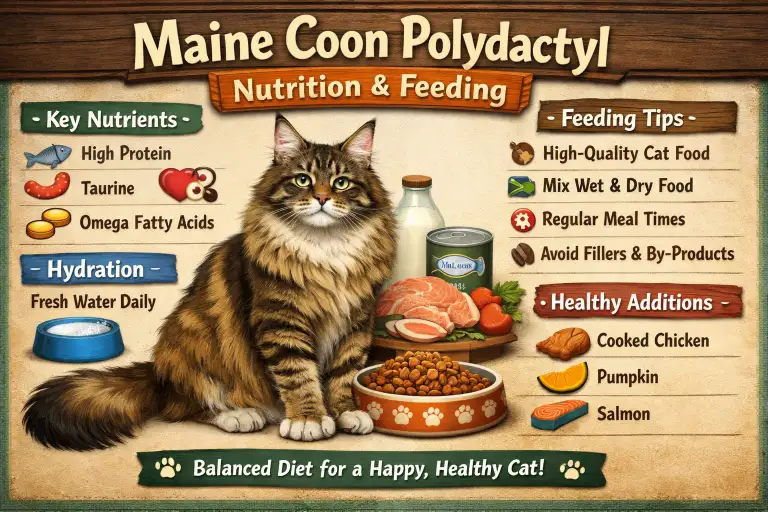
Maine Coon cats are one of the largest domestic cat breeds, and many have extra toes (polydactyl). This means they may be strong and active, and their diet needs to match their energy and body size. Good nutrition helps keep their muscles strong, their coat shiny, and their weight healthy.
Cats are obligate carnivores. This means they must eat mostly animal‑based protein to stay healthy. Protein supports muscle health, immune system function, and overall growth. Maine Coons especially benefit from high‑quality protein because of their larger body mass.
Fat is also important. It gives energy and helps absorb vitamins. Fat also keeps the skin and fur healthy. Cats do not need many carbohydrates; too many can lead to weight gain. Always pick foods where protein and fat are the top ingredients.
Older cats, and those with extra weight, may need fewer calories. Young, growing kittens need more. Always watch your cat’s body shape, weight, and energy. Ask a vet if you see sudden changes in eating habits or weight.
Best Foods to Feed Your Maine Coon Polydactyl
Choosing the right food can be confusing with so many options. Below is a simple comparison to help you understand wet food vs dry food vs mixed feeding.
Wet food has more moisture. This helps keep cats hydrated and supports kidney and urinary health. Dry food is easy to store and can help some cats with dental health, but it has less water
Wet vs Dry Food Comparison
| Feature | Wet Food | Dry Food | Mixed Feeding |
|---|---|---|---|
| Moisture | High | Low | Balanced |
| Protein quality | Often high | Varies | Balanced |
| Convenience | Needs refrigeration | Very convenient | Balanced |
| Calories per cup | Lower | Higher | Depends |
A mix of wet and dry food can work well. Wet food helps with hydration. Dry food can be left out for grazing if your cat does not overeat. Watch portions so your cat does not gain too much weight.
How Much and How Often to Feed
Feeding amounts vary by age, weight, and activity. Below is a simple guideline to help you get started. Always adjust based on your cat’s body condition and activity level.
Feeding by Age and Weight
| Age Group | Typical Daily Amount | Notes |
|---|---|---|
| Kitten (2–6 months) | 3–4 small meals | Rapid growth needs more calories |
| Junior (6–12 months) | 2–3 meals | Growing but slower than kitten stage |
| Adult (1–7 years) | 2 meals | Adjust portions to weight |
| Senior (7+ years) | 2 meals | May need fewer calories |
Offer meals at regular times. Most adult cats do well with two meals per day. Maine Coons with higher activity may need slightly more calories. Avoid free‑feeding (leaving food out 24/7) if your cat gains weight easily.
Treats and Safe Foods from Your Kitchen
Treats should be only a small part of the daily calories. Too many treats can lead to weight gain and poor nutrition balance.
Here is a simple table of treat safety:
Treat Safety Table
| Food | Safe? | Notes |
|---|---|---|
| Cooked chicken | Yes | No seasoning |
| Cooked fish | Occasional | Not daily |
| Cheese | Small amounts | Some cats are lactose intolerant |
| Onions/Garlic | No | Can be toxic |
| Chocolate | No | Dangerous for cats |
When giving treats, aim for no more than 5–10% of daily calories from treats. Human foods should be given rarely and only if they are known to be safe for cats.
Signs of a Healthy Diet and When to Get Help
A well‑fed cat will have clear eyes, a clean coat, and consistent energy and bathroom habits. You should be able to feel the ribs under a thin layer of fat, and your cat should move easily without stiffness.
Watch for signs that something might be wrong:
- Sudden weight loss or gain
- Vomiting or diarrhea that lasts more than a day
- Lack of appetite for more than 24 hours
- Lethargy or unusual behavior
If you see any of these signs, contact a veterinarian. For trusted feeding standards and nutrient profiles, organizations like the Association of American Feed Control Officials (AAFCO) provide guidelines used by pet food makers to ensure balanced nutrition: https://www.aafco.org

Ata Ur Rehman is the founder of Pet Age in Human Years Calculator, an educational platform that provides age conversion charts and lifespan guides for dogs, cats, birds, and other companion animals. His work focuses on helping pet owners understand how animal ages translate into human years using commonly accepted age conversion formulas and published lifespan averages.
The website compiles breed and species lifespan data from kennel clubs, breed organizations, and general animal lifespan studies to present simple and easy-to-understand guides for pet owners worldwide.
This website was created to centralize animal age conversion charts into one easy reference platform for pet owners.