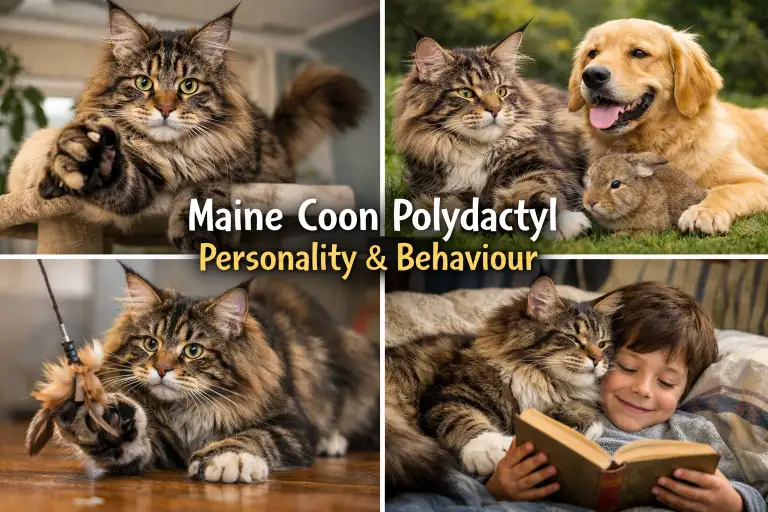
Maine Coon cats are one of the most beloved cat breeds in the world. They are known for being large, soft‑furred, and gentle. Some Maine Coons are polydactyl, which means they have extra toes on their paws. This trait doesn’t change their heart or mind, but it can influence how they move, play, and explore the world around them.
When you meet a Maine Coon polydactyl for the first time, you might notice they seem especially sure‑footed. With more toes, they have extra grip and balance. This helps them climb, walk on narrow edges, and bat at toys in unique ways. Yet, despite this extra equipment, their personality is just as varied and rich as any other cat.
A cat’s personality is shaped by many things – genetics, early social experiences, and daily life with their humans. While being polydactyl gives a physical difference, how friendly, curious, or playful that cat is still depends on its own nature and environment. So, you’ll meet quiet lap‑seekers, chatty companions, and curious explorers all within this group.
For people who want a close bond with their cat, understanding both the Maine Coon breed traits and how extra toes can influence behavior makes it easier to enjoy life together. This guide will help you learn how to interpret the signals your cat sends, why they do what they do, and how to appreciate their unique ways of being.
Core Traits of Polydactyl Maine Coon Behavior
Maine Coon polydactyl cats tend to be friendly and outgoing. Many owners describe them as “dog‑like” because they often follow people around the house and enjoy being part of daily routines. They are usually calm and tolerant, which means they often let children and guests pet them without fuss. This friendliness does not mean they are pushy; most keep a healthy balance between attention and independence.
Intelligence is another strong trait. These cats are curious and like to solve simple problems, such as opening doors or figuring out puzzle toys. Polydactyl cats may use their extra toes like tiny tools, giving them more options when they play or when they reach for things. For example, they may bat at objects with a wider surface or scoop up small items more easily.
Playfulness is part of what makes Maine Coon behavior so enjoyable. They often enjoy interactive play with people, such as chasing wand toys or teasing toys across the floor. Even adult Maine Coons can act kitten‑like, enjoying a game long after other cats might lose interest. Their play style is often deliberate and clever rather than wild and frantic.
One thing to remember is that not every Maine Coon polydactyl looks or acts the same. Some are more reserved, preferring to observe from a high perch. Others are highly social and want to share the sofa or bed. Seeing these differences early and adapting to them builds trust and a stronger bond with your cat.
Communication & Social Interaction Patterns
Maine Coon polydactyl cats are often very expressive. Unlike many cats that only meow, Maine Coons use a mix of sounds: chirps, trills, soft meows, and gentle purrs. These sounds are usually friendly and easy to understand once you spend time with your cat. For example, a soft trill might mean “hello,” while a drawn‑out meow might mean “I’m paying attention to you.”
These cats also use body language to show how they feel. A slow blink often means they feel safe and content. A relaxed tail that curves gently means they are calm, while a straight‑up tail with a little curve at the tip usually shows happiness and confidence. Polydactyl cats might also use their paws more, gently patting your hand or nudging toys in a way that feels playful.
Socially, many Maine Coons enjoy being around people. They might follow you from room to room or sit nearby while you read or watch TV. They generally get along well with other cats and many dogs, especially if they grow up together. Their calm nature makes it easier for them to adjust to multi‑pet households.
Even with all this friendliness, these cats respect space too. If they walk away or sit alone, that does not mean they are unhappy. They often choose HOW and WHEN they want company, and learning their rhythm makes your connection smoother and more natural.
Communication Signals Table
| Life Stage | Typical Behavior | What It Might Look Like |
|---|---|---|
| Kitten | Very playful | High energy, lots of exploring |
| Adult | Balanced play | Short play bursts, calm interactions |
| Senior | Gentler activity | More naps, relaxed play |
Play, Curiosity & Natural Instincts
Maine Coons are natural explorers. They like to watch movement, climb up high places, and investigate new objects. Being polydactyl can make these behaviors even more interesting — their extra toes give them a firm grip and sometimes more creative ways to interact with things. You might see them bat at toys with a sideways swipe, pull objects closer with their front paws, or climb in places other cats would skip.
Their hunting instinct is normal and does not mean they want to hunt wildlife. Instead, it shows in play: stalking toys, pouncing at a feather wand, or chasing a ball. These activities help them use mental and physical energy in a way that feels natural. Indoor games that mimic hunting — like moving toys along the floor or hiding treats for them to find — keep them happy.
Activity patterns can change with age. Kittens are usually high‑energy explorers. As they become adults, they may still play often but in shorter bursts. Older cats might prefer calmer games or gentle play sessions. Understanding these changes helps you offer the right kind of play without pushing them too hard.
Every cat has its own pace, but keeping play consistent, short, and enjoyable makes it easier to strengthen your bond and help your Maine Coon feel confident and curious in its home.
Comfort, Stress Signals & Normal Variations
Maine Coon polydactyl cats show comfort in many gentle ways. Purring while kneading your lap, resting near you, or rubbing against your leg are all signs of contentment. Many like soft blankets and elevated spots where they can watch without feeling crowded. When they show these behaviors, it usually means they feel safe and secure.
Sometimes cats show stress in subtle ways. A slight flick of the tail, ears turned slightly back, or wide eyes can mean “I am uncertain.” These signs do not always mean something is wrong — they can just show that your cat is watching something new or deciding what to do next. Recognizing these small cues helps you respond in a calm way, like giving space or offering a favorite toy.
Remember that every cat is an individual. Some Maine Coons might hide when strangers are around, while others seek attention. None of these responses are “bad.” They are just different styles of comfort and interaction. Instead of judging a behavior, try understanding what your cat is telling you.
If your cat’s behavior suddenly changes — like becoming withdrawn, hiding more often, or showing distress — take note of when it started and what might have changed. These patterns can help you understand your cat’s preferences and needs more deeply.
Life Stage Behavior Changes Table
| Signal | What It Often Means | Example |
|---|---|---|
| Chirp / Trill | Friendly greeting | Approaches you when you come home |
| Soft Meow | Attention or interest | Wants petting or food |
| Slow Blink | Trust and comfort | Relaxed while looking at you |
| Tail Up | Happy and confident | Walking toward you |
For more insight on Maine Coon communication styles and temperament, you can visit the Cornell Feline Health Center at https://www.vet.cornell.edu/departments-centers-and-institutes/cornell-feline-health-center

Ata Ur Rehman is the founder of Pet Age in Human Years Calculator, an educational platform that provides age conversion charts and lifespan guides for dogs, cats, birds, and other companion animals. His work focuses on helping pet owners understand how animal ages translate into human years using commonly accepted age conversion formulas and published lifespan averages.
The website compiles breed and species lifespan data from kennel clubs, breed organizations, and general animal lifespan studies to present simple and easy-to-understand guides for pet owners worldwide.
This website was created to centralize animal age conversion charts into one easy reference platform for pet owners.