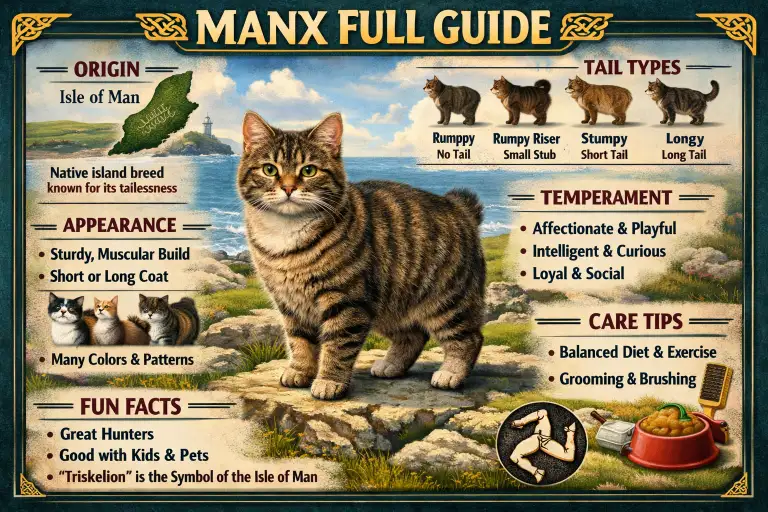
The Manx cat is one of the most unique and recognizable breeds in the world, famous for its distinctive tailless appearance. Originating from the Isle of Man, a small island between England and Ireland, the breed has a rich history steeped in legend. According to folklore, the Manx lost its tail when Noah’s Ark set sail, and the cat was left behind when it jumped too late onto the ark. While this story is charming, the real reason for the breed’s tail variation is a natural genetic mutation that affects spinal development.
Manx cats have been admired for centuries for their playful and intelligent personalities. They were often valued as skilled hunters on farms and ships, helping to control rodents. Their compact, muscular bodies made them agile jumpers and climbers, even without a tail to help with balance. Today, they are loved worldwide as affectionate companions that adapt well to both homes and apartments.
The breed is officially recognized by major cat associations such as The International Cat Association (TICA) and the Cat Fanciers’ Association (CFA). Different tail types exist within the breed, ranging from completely tailless (rumpy) to partially tailed (stumpy or longy), and each variation is considered a standard part of the Manx family. The tail length does not affect their personality, although it can influence certain health considerations, such as spinal issues.
Living with a Manx cat can be a rewarding experience because of their curious, loyal, and social nature. They often form strong bonds with their owners and enjoy interactive play. Understanding their history helps explain why they are so confident and self-reliant, traits that many owners find endearing. Learning about the breed’s origins also gives insight into its health needs and care requirements,
Appearance & Physical Traits
Manx cats have a strong, compact body with muscular legs, rounded paws, and a broad chest. They are medium-sized cats, with males typically weighing between 10 to 14 pounds and females between 8 to 12 pounds. Their rounded features give them a sturdy and balanced appearance, making them excellent jumpers and hunters despite their short or absent tails.
Their coat can be short or long, with a dense and plush texture. Common colors include black, white, blue, cream, red, and tabby patterns. Eye color varies from gold to green, often depending on the coat color. The tail is the most defining feature of the breed, with four recognized types: rumpy (no tail), rumpy-riser (small tail bump), stumpy (short tail), and longy (full or nearly full tail).
To make this information easier to reference, here is a quick table of Manx physical traits:
| Trait | Description |
|---|---|
| Size | Medium, males 10–14 lbs, females 8–12 lbs |
| Body Type | Compact, muscular, rounded chest and paws |
| Coat Type | Short or long, dense and plush |
| Coat Colors | Black, white, blue, cream, red, tabby |
| Eye Colors | Gold, green (varies with coat) |
| Tail Types | Rumpy, rumpy-riser, stumpy, longy |
Manx cats’ unique structure gives them a poised and agile stance. Despite being tailless, their strong hind legs allow them to leap and climb with ease. They also have a round head, full cheeks, and expressive eyes that contribute to their friendly and intelligent appearance. Many owners notice that Manx cats look alert and confident, a reflection of their curious and playful personality.
Their physical traits are not just aesthetic; they influence behavior and care. For instance, rumpy Manx cats may need extra attention to spinal health, while longy types require normal tail grooming. Recognizing these traits helps prospective owners choose the right cat for their home and lifestyle.
Temperament & Personality
Manx cats are known for their affectionate and social nature. They often form strong bonds with family members and enjoy interactive play. Unlike some independent breeds, they are friendly toward children and other pets, making them an excellent choice for multi-cat households or families with dogs. Their intelligence means they are quick learners, often mastering tricks or puzzle feeders with ease.
One of the most striking traits of Manx cats is their balance between independence and affection. They enjoy attention but are not overly clingy. Many owners describe them as “loyal companions” who follow you around the house but are content to entertain themselves if needed. They are also known to be playful well into adulthood, often enjoying games of chase, fetch, or climbing on cat trees.
Manx cats are generally not very vocal, though they will communicate with soft meows or chirps when seeking attention. They are curious and alert, often observing their surroundings carefully before engaging. This behavior makes them excellent hunters and problem-solvers, a trait inherited from their history as working farm cats.
Here is a table showing their personality traits and household suitability:
| Trait | Description |
|---|---|
| Affection Level | Moderate to high, loyal but not clingy |
| Playfulness | High, enjoys interactive games |
| Intelligence | High, quick learners |
| Child-Friendly | Very good with children |
| Multi-Pet Homes | Adapts well to cats and dogs |
| Vocalization | Soft meows, not overly vocal |
Their personality makes them a great addition to both active and calm households. Owners often remark on their gentle demeanor with children and their ability to get along with other pets, which makes them versatile companions.
Care, Health & Lifespan
Manx cats are relatively easy to care for, but they do have some breed-specific considerations. Their coats require regular brushing, especially long-haired varieties, to prevent mats and tangles. Short-haired Manx cats benefit from weekly brushing to remove loose fur. Nail trimming, dental care, and ear cleaning should also be part of routine maintenance.
Exercise is important for Manx cats because they are active and playful. They enjoy climbing, jumping, and interactive toys that challenge their intelligence. Regular play sessions help prevent boredom and keep them mentally stimulated. They are well-suited for indoor living but also enjoy supervised outdoor time if safe.
Health is where breed-specific attention is essential. Some Manx cats are prone to Manx Syndrome, a spinal condition that can affect movement and bowel control. Early veterinary screening and careful monitoring can help manage or prevent complications. Other potential issues include hip dysplasia and obesity, so maintaining a balanced diet and regular vet visits is important.
Here is a quick health and care table:
| Health Aspect | Recommendation |
|---|---|
| Grooming | Weekly brushing, more for long-haired types |
| Exercise | Daily interactive play, climbing opportunities |
| Common Health Issues | Manx Syndrome, hip dysplasia, obesity |
| Veterinary Care | Regular checkups, spinal monitoring |
| Lifespan | 12–15 years on average |
With proper care, a Manx cat can live a long, happy life. Understanding their specific health needs, combined with daily interaction and attention, ensures that this unique breed thrives in a home environment.
Pros, Cons & Suitability
Manx cats offer many benefits as pets but also come with some challenges. They are affectionate, playful, and intelligent, making them ideal companions for a wide range of households. They get along well with children, other cats, and even dogs, and their unique appearance makes them a striking addition to any home.
However, potential owners should be aware of health considerations like Manx Syndrome and the need for regular grooming for long-haired types. Some may require special attention to exercise and diet to prevent obesity. Despite these minor challenges, most Manx owners find their loyalty, intelligence, and playful personality outweigh the drawbacks.
Here is a table summarizing pros and cons:
Pros Cons
| Trait / Characteristic | Notes / Considerations |
|---|---|
| Affectionate and loyal | Risk of Manx Syndrome and spinal issues |
| Playful and intelligent | Some require more grooming (long-haired) |
| Good with children and pets | May need exercise to prevent obesity |
| Unique tailless appearance | Rare breed, can be expensive to buy |
The Manx cat is suitable for families, first-time cat owners, apartment dwellers, and households with multiple pets. Their adaptable personality and moderate activity level make them a good fit for both active and calm environments. Compared with similar breeds like the British Shorthair or Scottish Fold, Manx cats stand out for their distinctive tail variations and playful, loyal nature.
For more detailed breed standards and care advice, you can visit The International Cat Association (TICA)

Ata Ur Rehman is the founder of Pet Age in Human Years Calculator, an educational platform that provides age conversion charts and lifespan guides for dogs, cats, birds, and other companion animals. His work focuses on helping pet owners understand how animal ages translate into human years using commonly accepted age conversion formulas and published lifespan averages.
The website compiles breed and species lifespan data from kennel clubs, breed organizations, and general animal lifespan studies to present simple and easy-to-understand guides for pet owners worldwide.
This website was created to centralize animal age conversion charts into one easy reference platform for pet owners.