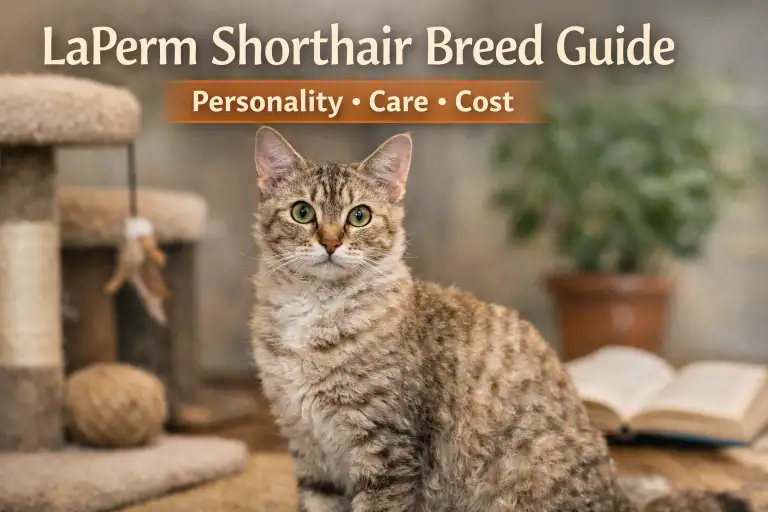
The LaPerm Shorthair is one of those cat breeds that feels almost too distinctive to be planned—and that’s because it wasn’t. This breed didn’t come from generations of controlled breeding programs or aesthetic experiments. Instead, it began as a happy genetic accident, which is a big part of its charm and long-term health.
The story of the LaPerm starts in the early 1980s on a small farm in Oregon, where a brown tabby kitten was born completely bald. Over time, that kitten—later named Curly—developed a soft, springy coat of curls unlike anything seen in the area. What made this discovery remarkable was not just the curls themselves, but the fact that they came from a naturally occurring dominant gene, not from crossing existing Rex breeds.
As more curly-coated kittens appeared in subsequent litters, breeders and feline geneticists began to take notice. Careful, ethical breeding followed, focusing on preserving the coat while maintaining the strong, hardy constitution of the original farm cats. This approach is why the LaPerm Shorthair is generally considered a robust, healthy breed today.
The breed eventually gained recognition from major cat associations, including TICA and CFA, and today the LaPerm exists in both shorthair and longhair varieties. The LaPerm Shorthair is especially appreciated for its lighter grooming needs and slightly more defined curl pattern, which often feels airy and resilient rather than dense.
What truly sets the LaPerm Shorthair apart isn’t just the curly coat—it’s the combination of natural origins, expressive appearance, and people-oriented personality. No two LaPerm coats are exactly the same, and that sense of individuality extends to their behavior as well. Owners often describe them as cats that seem genuinely interested in being part of daily life, not just observing it from a distance.
Before diving deeper into appearance, temperament, and care, this quick snapshot helps anchor what kind of breed the LaPerm Shorthair really is.
| Trait | Details |
|---|---|
| Breed Type | Natural mutation |
| Coat | Short, curly, springy |
| Origin | Oregon, United States |
| Recognition | TICA, CFA, FIFe |
| Rarity | Uncommon but established |
This blend of accidental beginnings and thoughtful development is what gives the LaPerm Shorthair its unique place among curly-coated cat breeds—and why it continues to attract owners looking for something a little different, without sacrificing temperament or health.
LaPerm Shorthair Appearance: Size, Coat, Colors, and Physical Traits
The LaPerm Shorthair is easy to recognize once you know what to look for. This breed has a curly coat, but its body shape is balanced and natural, not extreme or fragile. Many people are surprised by how soft and light a LaPerm feels when picked up.
Most LaPerm Shorthairs are medium in size. They are not heavy or bulky, but they are strong and well-muscled.
| Feature | Typical Range |
|---|---|
| Weight (Male) | 8–11 pounds |
| Weight (Female) | 6–9 pounds |
| Body Type | Semi-foreign, athletic |
| Bone Structure | Medium |
| Overall Build | Lean but sturdy |
The body is long and flexible, with slim legs and oval-shaped paws. The tail is medium to long and often looks fluffy, even in short-haired cats, because the curls add volume.
The coat is the most special feature of the LaPerm Shorthair. It is short, curly, and springy to the touch. Some cats have tight curls, while others have loose waves. Many even have curly whiskers and soft curls around the ears. No two LaPerm coats look the same.
LaPerm Shorthairs can come in almost any color or pattern. Solid, tabby, tortoiseshell, pointed, and bicolor coats are all accepted. Eye color can also vary and does not have to match the coat.
Kittens often change a lot as they grow. Some are born bald, some lose their coat, and others develop curls slowly over time. Even adult LaPerms may have coat changes with seasons, stress, or after being spayed or neutered. This is normal for the breed.
Overall, the LaPerm Shorthair has a natural, slightly messy look that many owners find charming. It looks elegant without being delicate and unique without being strange.
LaPerm Shorthair Personality and Temperament: Is This Breed Right for You?
The LaPerm Shorthair is known for having a friendly and people-loving personality. This is a cat that enjoys being close to its family, not hiding all day. Many owners say their LaPerm follows them from room to room just to see what is going on.
These cats are affectionate, but they are not usually clingy. A LaPerm may sit on your lap, curl up next to you, or rest nearby while you work. They like attention, but they also know how to relax on their own. This balance makes them easy to live with.
| Personality Trait | What It’s Like |
|---|---|
| Affection Level | High |
| Energy Level | Medium |
| Intelligence | High |
| Independence | Medium |
| Vocalization | Low to moderate |
LaPerm Shorthairs are playful and curious. They enjoy toys, climbing, and puzzle games, but they are not wild or nonstop. Short play sessions during the day are usually enough to keep them happy. They are smart cats and often learn routines quickly.
These cats are usually gentle with children, especially when kids are taught how to handle them kindly. They also tend to get along well with other cats and friendly dogs. Because they are confident but calm, they often adjust well to new pets and new homes.
LaPerm Shorthairs are not very loud. They may make soft sounds to greet you or ask for food, but constant meowing is not common. Many owners describe their voice as quiet and sweet.
This breed usually does well as an indoor-only cat. They enjoy watching the world from windows and high spots inside the home. Apartments and houses both work well, as long as they have toys, scratching posts, and human interaction.
If you want a cat that is loving, smart, and easy to handle without being too demanding, the LaPerm Shorthair is often a great match.
LaPerm Shorthair Care: Grooming, Activity, Training, and Health
Caring for a LaPerm Shorthair is usually simple, which is one reason this breed is popular with first-time cat owners. Their curly coat may look high-maintenance, but it is easier to manage than many people expect.
Grooming needs are low to medium. The short curly coat does not mat easily. Light brushing once or twice a week is often enough to remove loose hair. Many owners use their fingers or a soft brush. Bathing is not needed often, but an occasional bath can help curls bounce back. Shedding is low compared to many other breeds.
Some people think curly cats are hypoallergenic. This is a myth. LaPerm Shorthairs may shed less, but they still produce allergens. People with allergies should spend time with the breed before bringing one home.
LaPerm Shorthairs have a medium activity level. They enjoy playtime but do not need constant exercise. Short daily play sessions with toys, balls, or feather wands keep them happy. They also enjoy climbing cat trees and watching from high places.
These cats are smart and learn quickly. Many can learn simple tricks, routines, and even leash walking with patience. They respond best to gentle training and positive rewards. Because they are curious, they may explore cabinets or shelves if bored.
In general, the LaPerm Shorthair is a healthy breed. This comes from its natural beginnings as a farm cat. Most live long, healthy lives with proper care.
| Care Area | What to Expect |
|---|---|
| Grooming | Low to moderate |
| Shedding | Low |
| Exercise Needs | Moderate |
| Trainability | High |
| Average Lifespan | 12–15+ years |
| Known Health Issues | No major breed-specific problems |
Regular vet visits, vaccinations, dental care, and a healthy diet are usually enough to keep this breed in good shape. Buying from a responsible breeder helps reduce health risks.
LaPerm Shorthair Cost, Pros & Cons, and Similar Breeds
Before choosing a LaPerm Shorthair, it is important to understand the cost and decide if this breed truly fits your life. While they are not the cheapest cats, many owners feel the price is fair for a healthy and unique breed.
A LaPerm Shorthair kitten from a responsible breeder usually costs between $800 and $1,500. The price can change based on coat quality, breeder reputation, and location. Adoption is sometimes possible, but this breed is rare in shelters.
Ongoing costs are mostly average. Grooming costs are low because the coat is easy to care for. Regular vet visits, food, litter, and toys are the main yearly expenses. Pet insurance is optional but can help with surprise medical bills.
| Expense Type | Estimated Cost |
|---|---|
| Kitten Price | $800–$1,500 |
| Yearly Vet Care | $200–$400 |
| Grooming | Low |
| Food & Supplies | Average |
| Insurance | Optional |
Every breed has good and bad sides. The LaPerm Shorthair is no different.
Pros
- Friendly and affectionate personality
- Low shedding and easy grooming
- Good with children and other pets
- Smart and easy to train
- Usually healthy and long-lived
Cons
- Rare and sometimes hard to find
- Can get bored without play or attention
- Not truly hypoallergenic
Some people also compare the LaPerm Shorthair to other curly-coated cats. The Devon Rex and Cornish Rex are more active and need more attention. The Selkirk Rex has thicker curls and higher grooming needs. The LaPerm Shorthair often sits in the middle, with balanced energy and simpler care.
This breed is a great choice for people who want a loving, unique-looking cat without extreme care needs. It may not be ideal for someone who wants a very quiet or very independent cat.
For official breed standards and detailed registration information, you can also explore the LaPerm Shorthair profile provided by The International Cat Association (TICA).

Ata Ur Rehman is the founder of Pet Age in Human Years Calculator, an educational platform that provides age conversion charts and lifespan guides for dogs, cats, birds, and other companion animals. His work focuses on helping pet owners understand how animal ages translate into human years using commonly accepted age conversion formulas and published lifespan averages.
The website compiles breed and species lifespan data from kennel clubs, breed organizations, and general animal lifespan studies to present simple and easy-to-understand guides for pet owners worldwide.
This website was created to centralize animal age conversion charts into one easy reference platform for pet owners.