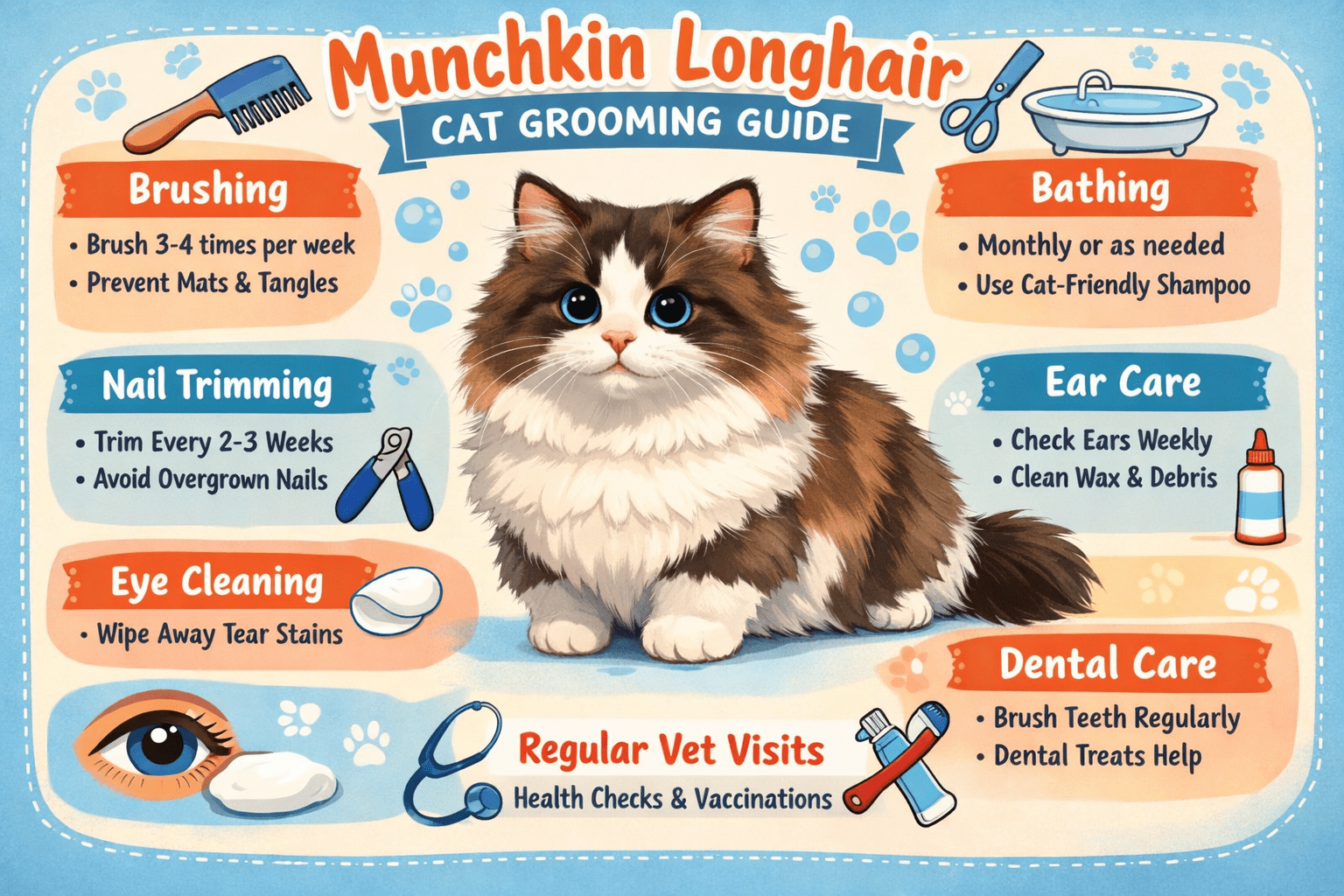
Grooming your Munchkin longhair is more than just keeping them looking cute. It helps prevent mats, tangles, and hairballs, which can be painful or unhealthy for your cat. Long-haired cats, like Munchkins, have dense, soft coats that need regular attention. Without proper grooming, their fur can get tangled, leading to skin problems and discomfort.
Munchkins are special because of their short legs and long, flowing hair. Their legs can make it harder for them to reach certain areas while grooming themselves. This means they rely more on you to keep their coat healthy. Regular brushing and gentle care can prevent painful mats and make your cat feel more comfortable.
Grooming is also a great way to check your cat’s health. While brushing or cleaning, you can spot lumps, bumps, skin redness, or signs of parasites early. This makes it easier to catch problems before they become serious. Grooming is also an opportunity for bonding, helping your cat feel calm and safe around you.
Finally, grooming reduces hair around your home. Long-haired cats shed more, and regular brushing removes loose hair before it ends up on your furniture or in your food. It also lowers the risk of hairballs, which happen when cats swallow too much loose fur while self-grooming. Overall, grooming keeps your Munchkin longhair happy, healthy, and comfortable.
Brushing & Coat Care Essentials
Brushing is the most important part of grooming for Munchkin longhairs. It keeps the coat smooth, prevents mats, and removes loose hair. Use a slicker brush or a wide-toothed comb. Start with gentle strokes and always brush in the direction of the hair. Pay special attention to the belly, armpits, and behind the ears, as these areas can mat easily.
Long-haired Munchkins need brushing more often than short-haired cats. Kittens may need brushing two to three times a week, while adults benefit from daily brushing. Seniors may need slower, shorter sessions depending on their flexibility and comfort. Regular brushing prevents mats from forming, which can pull on the skin and cause pain.
Mats are easiest to prevent rather than remove. If you spot a small tangle, use a comb to gently work it out. Never pull hard or cut mats with scissors, as this can hurt your cat. Reward your cat with treats and gentle petting during brushing to make it a positive experience. Short sessions are better than long, stressful ones.
Here is a simple brushing frequency table for quick reference:
| Age / Coat Condition | Brushing Frequency | Notes |
|---|---|---|
| Kitten (long hair) | 2-3 times/week | Short sessions, gentle brushing |
| Adult (long hair) | Daily | Focus on mat-prone areas |
| Senior (long hair) | 3-5 times/week | Adjust for mobility and stress |
| All cats | After shedding seasons | Extra brushing during heavy shedding |
Nail, Ear, Eye, and Dental Care
Nail trimming is very important for Munchkin cats because of their short legs. Trim only the tip of each nail, avoiding the quick. This helps prevent bleeding and pain. If your cat resists, try short sessions or use scratching posts to naturally wear down nails between trims. Check nails weekly and trim as needed.
Ears should be checked once a month for dirt, wax, or signs of infection. Use a soft, damp cloth or a cotton ball with a vet-approved cleaner. Never stick anything deep inside the ear. For the eyes, gently wipe any discharge with a soft cloth. Keep your cat’s face clean to prevent irritation.
Dental care is often overlooked but very important. Brush your cat’s teeth with a cat-safe toothpaste a few times a week. Healthy teeth prevent bad breath, gum disease, and even organ problems. If your cat refuses brushing, offer dental treats or toys designed to reduce plaque.
Here is a care frequency table to help you keep track:
| Task | Frequency | Notes |
|---|---|---|
| Nail trimming | Weekly | Avoid the quick |
| Ear cleaning | Monthly | Only outer ear with soft cloth |
| Eye cleaning | As needed | Gently wipe discharge |
| Dental care | 2-3 times/week | Use cat-safe toothpaste or dental treats |
Bathing & Special Situations
Most Munchkin longhairs do not need frequent baths. Cats are very good at grooming themselves, and bathing too often can dry their skin. Only bathe when the fur is dirty, greasy, or matted. Use a mild, cat-safe shampoo and warm water. Always support your cat gently, and avoid the head if possible. Towel dry thoroughly and keep them warm until fully dry.
Kittens and senior cats may need special attention during baths. Kittens should be introduced gradually to water, making it a calm, positive experience. Senior cats may have joint problems, so handle them gently and avoid long bathing sessions. For nervous cats, short sessions or professional grooming may be the safest choice.
Grooming also helps reduce hairballs. Regular brushing removes loose hair before it is swallowed. Offering a balanced diet and plenty of water further helps reduce hairballs. For long-haired Munchkins, seasonal shedding requires extra brushing and occasional baths if the coat gets greasy or tangled.
Grooming Mistakes, Safety, and Summary Tips
There are some common mistakes to avoid when grooming Munchkin longhairs. Never pull out mats or tangles forcefully. Avoid over-bathing or using human shampoos. Don’t cut nails too short, and always watch for stress signals like flattened ears, growling, or struggling. Short, calm sessions are much safer than long, stressful ones.
Reading stress signals is very important. A swishing tail, flattened ears, or crouching posture can mean your cat is uncomfortable. Stop if your cat shows these signs and try again later. Using treats, gentle petting, and calm words helps your cat feel safe.
Here is a quick-reference grooming checklist table:
| Grooming Task | Frequency | Safety Tips |
|---|---|---|
| Brushing | Daily for adults, 2-3x/week for kittens | Short, gentle strokes |
| Nail trimming | Weekly | Avoid the quick |
| Ear cleaning | Monthly | Only outer ear |
| Eye cleaning | As needed | Soft cloth, gentle |
| Dental care | 2-3x/week | Use cat-safe toothpaste |
| Bathing | Only when dirty or matted | Mild shampoo, warm water |
| Stress check | Every session | Watch ears, tail, posture |
By following these tips, you can keep your Munchkin longhair healthy, comfortable, and happy. Grooming is not just about looks—it is about your cat’s health and your bond with them.
For more detailed guidance on caring for your long-haired cats, you can visit The Cat Fanciers’ Association for professional advice.

Ata Ur Rehman is the founder of Pet Age in Human Years Calculator, an educational platform that provides age conversion charts and lifespan guides for dogs, cats, birds, and other companion animals. His work focuses on helping pet owners understand how animal ages translate into human years using commonly accepted age conversion formulas and published lifespan averages.
The website compiles breed and species lifespan data from kennel clubs, breed organizations, and general animal lifespan studies to present simple and easy-to-understand guides for pet owners worldwide.
This website was created to centralize animal age conversion charts into one easy reference platform for pet owners.