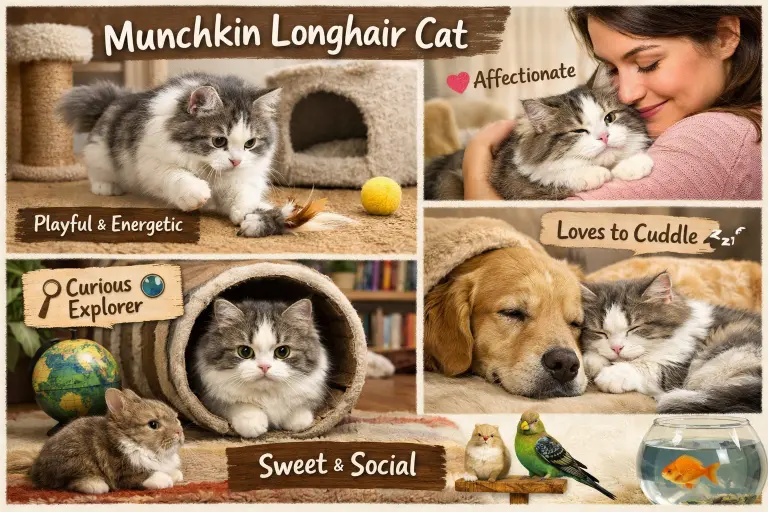
Munchkin Longhair cats are famous for their short legs and fluffy coats. They are playful, curious, and often very friendly. Many owners love them for their unique look and lively personality. Like all cats, their overall health and how long they live depend on a mix of genetics, environment, and care.
On average, Munchkin Longhairs live around 12 to 15 years when kept indoors and well cared for. Outdoor cats may face more risks like accidents, infections, and predators, which can shorten their lifespan. It’s important to remember that each cat is different, and some may live longer or shorter lives based on their unique health and lifestyle.
These cats are generally healthy, but their short legs and long bodies can make them prone to certain conditions. Understanding the breed’s typical health profile helps owners take preventive steps. Early care, regular checkups, and observing subtle changes in behavior can improve their quality of life and longevity.
Besides health, lifestyle also plays a big role. Munchkin Longhairs need safe play areas, regular mental stimulation, and a balanced diet. These factors help prevent obesity and keep joints and muscles strong. Owners who pay attention to daily care and small health signs often help their cats live happy, long lives.
Common Health Issues in Munchkin Longhair Cats
Munchkin Longhairs are mostly healthy, but their unique body shape comes with some health considerations. One of the most common concerns is joint and spine problems. Short legs and a long spine can sometimes lead to mobility issues or mild back pain as the cat ages. Gentle play and careful handling can reduce the risk of injuries.
Another common issue is obesity. Because of their short legs, Munchkin cats are less active than some other breeds. Overweight cats are more likely to develop diabetes, joint stress, and heart problems. Maintaining a healthy diet and encouraging play is essential for their well-being.
Some Munchkin cats may have congenital conditions like lordosis or pectus excavatum. These affect the spine or chest structure but are usually mild. Most cats with these conditions live normal lives, but regular veterinary monitoring is important to catch any problems early.
Dental disease is another health area to watch. Plaque and tartar buildup can lead to pain and infection. Brushing the cat’s teeth and offering dental-friendly food or treats can help maintain oral health.
Common Health Issues & Typical Signs
| Health Issue | What to Watch For | Notes |
|---|---|---|
| Joint/Spine Problems | Stiff walking, reluctance to jump | More common with age |
| Obesity | Weight gain, less activity | Can increase risk of diabetes and joint stress |
| Lordosis / Pectus Excavatum | Curved back, chest shape changes | Often mild, monitor with vet |
| Dental Disease | Bad breath, difficulty eating | Preventable with regular care |
Preventive Care & Early Detection for Lifespan Support
Preventive care is one of the most important ways to keep Munchkin Longhairs healthy. Regular veterinary checkups help catch issues before they become serious. Most vets recommend at least one annual exam, but older cats may need more frequent visits.
Vaccinations and parasite prevention are also essential. Indoor cats can still get fleas or worms, so keeping up with preventive treatments helps avoid illness. Brushing teeth, trimming nails, and grooming the long coat regularly are small steps that make a big difference.
Monitoring behavior and activity is a simple but effective preventive measure. Changes in appetite, grooming habits, or mobility can indicate a health problem. Early detection often means simpler treatment and better outcomes.
Maintaining a balanced diet and encouraging play supports joint health and prevents obesity. Short-leg cats like Munchkins need games that stimulate movement without putting too much strain on their spine. Daily care routines create a healthier, happier life for your cat.
Aging, Mobility & Quality of Life as They Grow Older
As Munchkin Longhairs get older, their health needs may change. Joint stiffness, slower movements, and less active play are normal aging signs. Owners can help by providing soft bedding, ramps, or low-level furniture to reduce jumping strain.
Nutrition also becomes important for senior cats. Adjusting diet to maintain healthy weight and support kidney or heart function is recommended. Regular vet visits help track age-related changes and guide care decisions.
Mental stimulation is just as important as physical health. Puzzles, toys, and gentle interaction keep older cats engaged. Social connection helps prevent stress and encourages activity, even in less mobile cats.
Grooming needs can increase with age. Longhair cats may struggle to clean themselves fully, so brushing can prevent matting and skin issues. Routine grooming also gives owners a chance to notice lumps, bumps, or changes in their cat’s coat.
Lifespan Ranges & Influencing Factors
| Factor | Indoor Cats | Outdoor Cats | Notes |
|---|---|---|---|
| Average Lifespan | 12–15 years | 10–13 years | Indoor care generally extends lifespan |
| Diet & Weight | Balanced diet, active play | Balanced diet, limited hunting | Prevents obesity-related problems |
| Preventive Vet Care | Annual or semiannual exams | Same + injury monitoring | Early detection improves outcomes |
| Environment | Safe, enriched | Exposed to accidents & stress | Indoor safety reduces health risks |
FAQs about Munchkin Longhair Health & Longevity
Do Munchkin Longhairs live shorter lives than other cats?
- Generally, no. With proper care, they live as long as most domestic cats, around 12–15 years.
What are the most common health problems?
- Joint and spine issues, obesity, and dental disease are the most common. Most issues are manageable with preventive care.
How often should I groom a longhair Munchkin?
- Brushing 2–3 times per week prevents matting and helps detect early skin problems.
Can Munchkins have serious spine problems?
- Most have mild structural differences. Severe issues are rare but require vet monitoring.
How can I help a senior Munchkin maintain quality of life?
- Provide soft bedding, gentle play, mental stimulation, and regular vet checkups.
Are Munchkins prone to obesity?
- Yes, due to short legs and less natural activity. Balanced diet and daily play help prevent it.
For more detailed information about Munchkin cats, their care, and health recommendations, visit the American Cat Fanciers Association.

Ata Ur Rehman is the founder of Pet Age in Human Years Calculator, an educational platform that provides age conversion charts and lifespan guides for dogs, cats, birds, and other companion animals. His work focuses on helping pet owners understand how animal ages translate into human years using commonly accepted age conversion formulas and published lifespan averages.
The website compiles breed and species lifespan data from kennel clubs, breed organizations, and general animal lifespan studies to present simple and easy-to-understand guides for pet owners worldwide.
This website was created to centralize animal age conversion charts into one easy reference platform for pet owners.