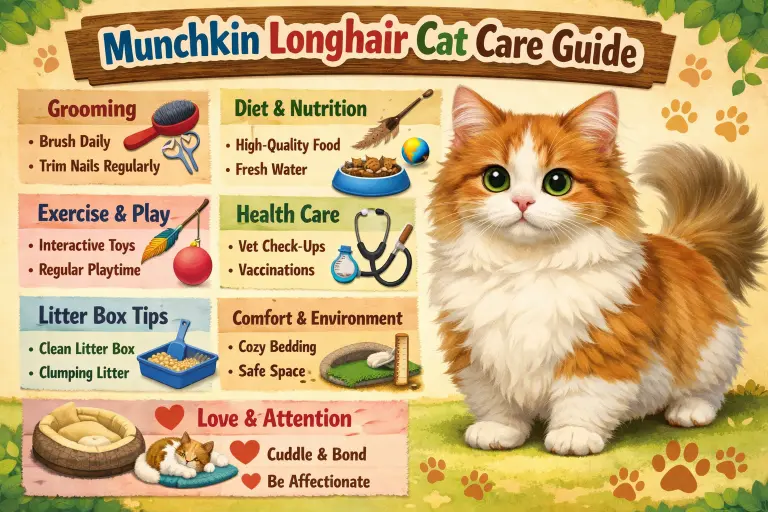
Munchkin Longhairs are unique cats with short legs and long, flowing coats. Their body type makes them extra cute, but it also comes with special care needs. Because of their long fur, they are prone to tangles and mats, which can be uncomfortable or even painful if not managed. Regular care helps keep your cat healthy, happy, and stress-free.
These cats are playful, curious, and often full of energy. Their short legs mean they might not jump as high as other cats, so their play and exercise routines need to be adapted. Grooming and general care are not just about looks—they help prevent health problems like skin infections, hairballs, and joint strain.
Understanding the right care routines also helps you bond with your Munchkin Longhair. Many cats enjoy gentle brushing and interactive play, which builds trust and keeps them mentally stimulated. A well-groomed cat is usually a calmer, more confident cat.
Munchkin Longhairs also require a bit more attention than some other breeds because their long hair collects dirt and sheds more noticeably. Without proper care, daily living can become uncomfortable for them. Starting early with a grooming routine makes it easier to maintain their coat throughout their life.
Daily & Weekly Care Routines
Taking care of a Munchkin Longhair can be simple if you follow a routine. Daily care focuses on brushing, feeding, and keeping your cat’s environment clean. Weekly tasks involve more detailed grooming and checking for small health issues.
Daily brushing helps prevent mats and keeps the fur shiny. Use a gentle brush and start with short sessions, especially for kittens. Cleaning the litter box every day keeps your cat healthy and prevents odors. Feeding should be consistent, with measured portions to avoid weight problems. Short-legged cats are prone to obesity, so portion control is important.
Play and enrichment are also part of daily care. Even short play sessions using toys or interactive games help your Munchkin stay active and prevent boredom. Mental stimulation is just as important as physical exercise.
Weekly tasks can include bathing if necessary, trimming nails, cleaning ears, and checking the teeth. Bathing should be rare unless your cat gets particularly dirty. Always handle grooming gently, giving your cat breaks if they seem stressed.
Care Routine Table
| Task | Frequency | Purpose |
|---|---|---|
| Brushing | Daily | Prevent mats, remove loose hair |
| Litter cleaning | Daily | Hygiene and odor control |
| Play & exercise | Daily | Physical and mental health |
| Nail trimming | Weekly | Prevent overgrown nails |
| Ear cleaning | Weekly | Prevent infections |
| Bathing | Occasionally | Clean fur if dirty |
| Dental check | Weekly | Healthy teeth and gums |
Essential Tools & Supplies for Munchkin Longhair
Having the right tools makes grooming easier for both you and your cat. A soft-bristle brush, comb, and grooming gloves are essential for long hair. These tools help remove tangles gently without hurting the cat.
A nail trimmer designed for small cats is necessary to prevent nail damage and scratching injuries. Some owners use a small grooming table to make brushing easier, but it is optional. What matters most is a safe, calm space where your cat feels comfortable.
For play and enrichment, keep a few interactive toys, scratching posts, and low-height climbing structures suitable for short legs. This helps your cat exercise without straining joints or climbing too high.
Other helpful supplies include a good-quality litter box and litter that reduces tracking, and hairball management treats if your cat is prone to swallowing fur during grooming. Having everything ready makes your routine smoother and less stressful.
Common Problems, Mistakes, & Safety Red Flags
Even experienced cat owners can make mistakes that affect a Munchkin Longhair’s health. Common problems include mats, overgrooming, stress during brushing, and obesity. Knowing what to watch for can prevent bigger issues.
Overbrushing or brushing too roughly can cause skin irritation. Not brushing enough can lead to mats and hairballs. Cats can also become stressed if grooming sessions are too long or aggressive. Observing your cat’s behavior helps you know when to pause.
Short-legged cats sometimes struggle with mobility, especially as they age. Keeping an eye on their jumping ability and watching for signs of pain is important. Joint issues may need vet attention or a special diet.
Warning Signs Table
| Warning Sign | What It Means | What To Do |
|---|---|---|
| Mats or tangles | Fur neglected or forming knots | Brush daily, use detangling tools |
| Overgrooming | Stress or skin irritation | Reduce stress, consult vet if persistent |
| Weight gain | Risk of obesity | Adjust diet, increase play |
| Limping or reluctance to jump | Joint pain | Check vet for arthritis or injury |
| Hiding or irritability | Stress or illness | Observe behavior, consult vet if needed |
Special Care Situations
Kittens need gentle grooming training from a young age. Short sessions with soft brushes help them get used to being handled. Litter box training should start immediately, and playtime should be interactive but low-impact.
Adult Munchkin Longhairs benefit from a consistent grooming routine. Daily brushing and weekly checks for nails, teeth, and ears are enough for most healthy adults. Indoor cats may need more enrichment and scratching options, while multi-cat homes require careful monitoring of coat condition and social stress.
Senior cats need extra care for joint health. Gentle brushing, low climbing areas, and soft bedding are important. Their diet may need to adjust to support weight and mobility. Regular vet visits are essential for seniors to catch health issues early.
When in doubt, always consult your veterinarian if you notice any unusual behavior, persistent mats, or signs of stress. This ensures your Munchkin Longhair stays happy and healthy throughout their life.For more expert tips on cat grooming and care, you can visit the American Association of Feline Practitioners for guidelines.

Ata Ur Rehman is the founder of Pet Age in Human Years Calculator, an educational platform that provides age conversion charts and lifespan guides for dogs, cats, birds, and other companion animals. His work focuses on helping pet owners understand how animal ages translate into human years using commonly accepted age conversion formulas and published lifespan averages.
The website compiles breed and species lifespan data from kennel clubs, breed organizations, and general animal lifespan studies to present simple and easy-to-understand guides for pet owners worldwide.
This website was created to centralize animal age conversion charts into one easy reference platform for pet owners.