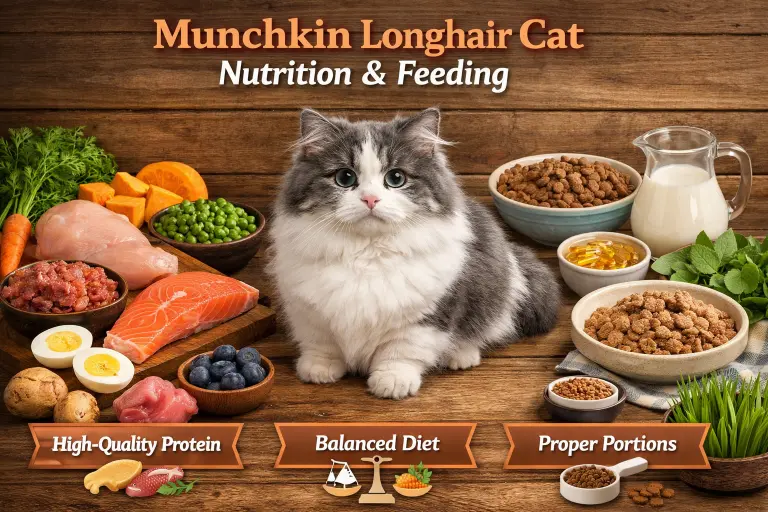
Munchkin Longhairs are small, short-legged cats with a beautiful long coat. Their unique body shape and thick fur make their diet especially important. A balanced diet keeps them energetic, supports a healthy coat, and helps prevent health issues like obesity and hairballs.
These cats are obligate carnivores, which means they must eat meat to get essential nutrients like protein and taurine. Feeding the right type of food helps maintain their muscles, heart, and eyes. Longhair cats also need extra care for their fur, and nutrition plays a big role in keeping it shiny and tangle-free.
Many owners are unsure how much to feed or what kind of food is best. Overfeeding can lead to weight gain, while underfeeding can cause nutritional deficiencies. A clear feeding plan based on life stage, activity, and metabolism ensures your Munchkin Longhair stays healthy for years.
This guide is designed to give practical tips for feeding Munchkin Longhairs. It covers nutrients, portion sizes, hydration, treats, and mistakes to avoid. Remember, this is educational guidance and does not replace a veterinarian’s advice.
Core Nutritional Needs of Munchkin Longhairs
Munchkin Longhairs need a diet high in protein because their bodies are built for lean muscles. Protein helps maintain strength and supports growth in kittens. Meat-based proteins like chicken, turkey, or fish are best because they contain essential amino acids like taurine, which cats cannot make on their own.
Fat is also important as an energy source and to keep the skin and coat healthy. Essential fatty acids like omega-3 and omega-6 can reduce dryness and prevent shedding. Carbohydrates are not essential for cats, but small amounts from grains or vegetables can provide energy and fiber for digestion.
Moisture in the diet is another key factor. Cats naturally have a low thirst drive, so wet food or added water helps prevent dehydration and urinary issues. A mix of wet and dry food is often the easiest way to provide balanced nutrition.
Reading cat food labels can help owners choose the right diet. Look for foods with real meat as the first ingredient, high protein content, moderate fat, and essential vitamins and minerals. Avoid foods with excessive fillers, artificial colors, or by-products.
Macronutrients & What They Do
| Nutrient | Role in Cat Health | Sources |
|---|---|---|
| Protein | Muscle maintenance, growth, taurine | Chicken, fish, turkey |
| Fat | Energy, coat & skin health | Fish oil, chicken fat |
| Carbohydrates | Small energy source, fiber | Rice, pumpkin, vegetables |
| Taurine | Heart, eye, and reproductive health | Meat, fish |
| Moisture | Hydration, urinary health | Wet food, water, broth |
Best Feeding Practices
Munchkin Longhairs do well with portioned meals rather than free-feeding. Kittens need more calories per pound than adults, while seniors may need smaller, easy-to-digest meals. A consistent feeding schedule helps control weight and supports digestion.
Wet food provides hydration and protein, while dry food is convenient and can help with dental health. Many owners mix both types to get the benefits of each. When choosing food, always consider your cat’s age, activity level, and whether they are spayed or neutered, as metabolism changes after surgery.
Indoor cats usually burn fewer calories than outdoor cats. Adjust portion sizes accordingly to prevent weight gain. Monitoring body condition regularly helps ensure your cat is neither overweight nor underweight.
Feeding Frequency & Portion Guide (By Life Stage)
| Life Stage | Meals per Day | Portion Tips |
|---|---|---|
| Kitten | 3–4 | High protein, high calorie |
| Adult | 2 | Balanced diet, adjust calories for activity |
| Senior | 2 | Easy-to-digest, maintain lean weight |
| Spayed/Neutered | 2 | Slightly reduced calories |
Hydration, Treats & Avoiding Common Mistakes
Hydration is critical for long-term health. Cats often drink less than needed, so wet food, water fountains, or adding broth to meals can help. Proper hydration supports the kidneys, urinary tract, and digestion.
Treats should be given sparingly and should not replace meals. Avoid feeding human food that is toxic or unhealthy, like chocolate, onions, or dairy products. Safe treats include small pieces of cooked meat or commercial cat treats.
Common feeding mistakes include overfeeding, feeding low-quality food, and ignoring life-stage needs. Observing your cat’s weight, appetite, and coat condition can help detect problems early. Hairballs can be reduced with fiber-rich food and regular hydration.
Safe vs Unsafe Treats
| Safe Treats | Avoid / Risky Foods |
|---|---|
| Cooked chicken, turkey, fish | Chocolate, onions, garlic |
| Small commercial cat treats | Dairy products, fatty scraps |
| Catnip | Grapes, raisins, artificial sweeteners |
Final Tips & When to Seek Help
To keep your Munchkin Longhair healthy, focus on a high-protein, moisture-rich diet. Observe their weight, energy levels, and coat condition. Feed according to life stage and adjust portions for indoor or spayed/neutered cats.
Monitor for any signs of illness or nutritional deficiency, such as vomiting, diarrhea, lethargy, or excessive shedding. If you notice these signs, consult a veterinarian for guidance.
Consistency is key — regular meal times, balanced nutrition, and proper hydration help your cat thrive. Remember, small adjustments over time can prevent major health problems.
For more tips on choosing the right cat food and nutrition guidelines, visit the WSAVA Global Nutrition Guidelines.

Ata Ur Rehman is the founder of Pet Age in Human Years Calculator, an educational platform that provides age conversion charts and lifespan guides for dogs, cats, birds, and other companion animals. His work focuses on helping pet owners understand how animal ages translate into human years using commonly accepted age conversion formulas and published lifespan averages.
The website compiles breed and species lifespan data from kennel clubs, breed organizations, and general animal lifespan studies to present simple and easy-to-understand guides for pet owners worldwide.
This website was created to centralize animal age conversion charts into one easy reference platform for pet owners.