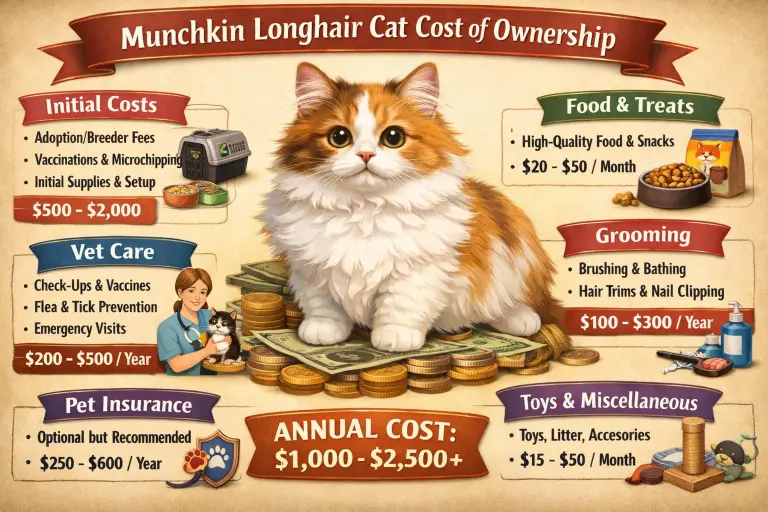
Owning a Munchkin Longhair cat can be a joyful and rewarding experience, but it comes with real costs that need careful planning. These cats have unique needs due to their long coat and shorter legs, which can affect grooming, mobility, and health. Understanding these costs before adoption helps you provide the best care without financial stress.
Many first-time cat owners underestimate the amount of money and time required. While the initial adoption or purchase fee may seem high, ongoing expenses like food, litter, and vet care add up over the cat’s lifetime. Planning ahead ensures you can afford both routine care and unexpected emergencies.
A Munchkin Longhair’s costs are influenced by whether the cat is indoor or outdoor, lives alone or with other pets, and its health history. Longhair grooming, for example, requires regular brushing to prevent mats and hairballs. Indoor cats may need fewer vet visits but more toys and enrichment to stay active.
This guide breaks down all the key costs into simple sections, with clear tables for skimmable budgeting. By the end, you will have a realistic view of what it takes to care for a Munchkin Longhair for its whole life.
One-Time and Initial Costs
When you first bring a Munchkin Longhair home, there are several one-time costs to plan for. These include adoption or purchase fees, first vet visits, and essential supplies. Planning these upfront prevents surprises and ensures your new cat starts life in a safe and comfortable home.
Adoption fees can vary widely. Rescue organizations usually charge lower fees than breeders, but breeders may include vaccinations and early vet care in the price. First veterinary expenses often include spaying or neutering, vaccinations, microchipping, and a health checkup.
Essential supplies include food and water bowls, litter boxes, litter, scratching posts, grooming tools, and a comfortable bed. For a longhair cat, a good brush and comb are essential to prevent matting and reduce shedding around the house. Optional items include carriers, toys, and training aids.
Here is a simple table summarizing the typical one-time costs:
| Item | Low Cost | Average Cost | High Cost |
|---|---|---|---|
| Adoption/Purchase Fee | $50 | $300 | $1,000 |
| Initial Vet Visit (Vaccines + Spay/Neuter) | $100 | $250 | $500 |
| Basic Supplies (Bowls, Litter Box, Bed, Scratching Post) | $100 | $200 | $400 |
| Optional Items (Toys, Carrier, Extra Bedding) | $50 | $100 | $200 |
Recurring Monthly and Annual Expenses
Once your Munchkin Longhair is settled at home, ongoing costs begin. These are the regular expenses needed to keep your cat healthy, happy, and well-groomed. Planning these monthly and yearly helps avoid financial stress.
Food is one of the largest ongoing costs. Longhair cats need a balanced diet, sometimes with premium wet or dry food, depending on their health and preferences. Treats are an optional but popular addition. Litter is another regular expense, as a clean litter box is essential for a happy cat.
Preventive health costs include flea and tick medications, deworming, and annual vet checkups. Dental care is often overlooked but important for long-term health. Grooming for a longhair cat is a recurring task, with weekly brushing and occasional baths to prevent mats and hairballs.
Boarding or pet sitting may be needed if you travel. It’s also wise to plan for occasional replacement of worn-out items like beds, litter boxes, or toys. Indoor cats may need more toys and climbing structures, while outdoor cats may face higher vet costs.
| Expense Category | Monthly Estimate | Annual Estimate |
|---|---|---|
| Food | $30 | $360 |
| Litter | $15 | $180 |
| Preventive Medications | $10 | $120 |
| Grooming | $10 | $120 |
| Routine Vet Visits | N/A | $100–$300 |
| Boarding/Pet Sitting | N/A | $100–$400 |
| Supplies Replacement | N/A | $50–$150 |
Unexpected and Emergency Costs
Even with careful planning, cats can face sudden health issues. Munchkin Longhairs may be prone to spinal or joint problems due to their short legs, making emergency funds essential. Accidents, illnesses, and age-related conditions can add unexpected costs.
Common emergencies include sudden illnesses, infections, injuries from falls or accidents, and chronic conditions that develop over time. Vet visits for these issues can vary greatly depending on treatment, tests, and medication.
It’s also important to remember that these costs are unpredictable. Some cats may rarely need emergency care, while others might face multiple visits per year. Having a financial cushion allows you to make timely medical decisions without stress.
| Emergency Scenario | Typical Cost Range | Notes |
|---|---|---|
| Sudden Illness | $200–$600 | Minor treatment and medications |
| Injury / Accident | $300–$1,000 | Vet visit, imaging, surgery if needed |
| Chronic Condition | $100–$500 per year | Arthritis, joint issues, or long-term meds |
| Emergency Surgery | $1,000–$3,000+ | Major surgery or hospitalization |
Lifetime Cost Summary and Practical Budgeting Guidance
Over the lifetime of a Munchkin Longhair, costs add up. Using low, average, and high estimates can help you plan for 12–15 years of ownership. Indoor cats usually cost less in vet bills but may require more enrichment, while outdoor cats face higher health risks.
Here’s a simplified lifetime cost overview, assuming a 12-year lifespan:
| Cost Type | Low Estimate | Average Estimate | High Estimate |
|---|---|---|---|
| One-Time Costs | $300 | $850 | $2,100 |
| Monthly Costs | $65/month | $85/month | $120/month |
| Annual Costs | $500 | $900 | $1,500 |
| Emergency Costs | $500 | $1,200 | $4,000 |
| Lifetime Total | $6,280 | $13,060 | $22,700 |
Practical tips for managing costs include buying supplies in bulk, maintaining preventive care, brushing and grooming at home, and setting aside an emergency fund. Being proactive can reduce stress and help your cat live a longer, healthier life.
Before getting a Munchkin Longhair, consider your budget, time, and commitment. This cat breed is affectionate and playful but requires care for its long coat and potential health concerns. A realistic plan ensures both you and your cat enjoy many happy years together.
For more detailed pet cost planning, you can visit The American Society for the Prevention of Cruelty to Animals (ASPCA) for guidance.

Ata Ur Rehman is the founder of Pet Age in Human Years Calculator, an educational platform that provides age conversion charts and lifespan guides for dogs, cats, birds, and other companion animals. His work focuses on helping pet owners understand how animal ages translate into human years using commonly accepted age conversion formulas and published lifespan averages.
The website compiles breed and species lifespan data from kennel clubs, breed organizations, and general animal lifespan studies to present simple and easy-to-understand guides for pet owners worldwide.
This website was created to centralize animal age conversion charts into one easy reference platform for pet owners.