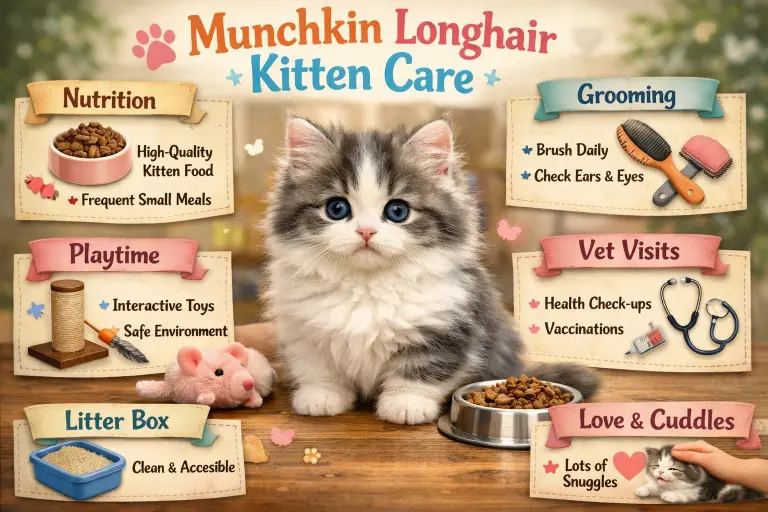
Bringing home a Munchkin Longhair kitten is an exciting and joyful experience. These kittens are known for their short legs, playful personalities, and fluffy coats. They are smaller than many other breeds, but full of energy and curiosity. Knowing what to expect before you bring one home helps you prepare and gives your kitten the best start in life.
Munchkin Longhairs grow quickly in their first few months. During this time, they learn important skills like using the litter box, playing gently, and interacting with people and other pets. Their short legs mean they may not jump as high as other kittens, so creating a safe environment with ramps and low surfaces is a good idea.
Longhair kittens need extra attention to their coats. Without regular brushing, their fur can become tangled and form mats. It is also important to start grooming early so they get used to the process and enjoy it. This helps prevent hairballs and keeps their coat soft and healthy.
Finally, Munchkin Longhairs are social and love human attention. They thrive on gentle handling, playtime, and positive reinforcement. Understanding their needs before bringing one home ensures your kitten grows up happy, confident, and healthy.
Feeding & Nutrition Basics (Including Tables)
Feeding your Munchkin Longhair kitten the right foods at the right time is very important. Kittens need high-quality nutrition to grow strong bones, healthy fur, and a playful, active body. Young kittens start with milk, then gradually move to solid food over several weeks.
Wet food is easier for kittens to eat, while dry food helps clean their teeth. Offering both can provide balanced nutrition. Always make sure your kitten has fresh water available at all times. Kittens also need small, frequent meals because their stomachs are small.
Below is a simple feeding schedule for Munchkin Longhair kittens:
| Age | Food Type | Number of Meals per Day | Portion Size |
|---|---|---|---|
| 0–4 weeks | Kitten milk formula | Every 2–3 hours | As directed on formula |
| 4–8 weeks | Wet kitten food + formula | 4–5 meals | 2–3 tbsp per meal |
| 8–12 weeks | Wet and dry kitten food | 4 meals | 3–4 tbsp per meal |
| 3–6 months | Wet and dry kitten food | 3 meals | 4–5 tbsp per meal |
Kittens grow quickly, so monitor their weight and appetite. If they seem hungry after meals or lose interest, adjust portions gradually. Always introduce new foods slowly to avoid upsetting their stomach.
Hairball prevention is another key point for longhair kittens. Regular brushing, as well as feeding wet food, can reduce hair ingestion and make grooming easier. Remember, patience and consistency are important in establishing healthy eating habits.
Litter Training, Bathroom Habits & Daily Routine
Litter training is one of the first skills your Munchkin Longhair kitten will learn. Most kittens naturally use the litter box, but showing them where it is and keeping it clean helps them succeed. Place the box in a quiet, low-traffic area and use unscented, clumping litter.
Kittens usually need to use the litter box after eating, playing, or waking from a nap. Praise them gently when they use it correctly. Accidents are normal at first, so clean them calmly without scolding. Avoid moving the litter box too often, as this can confuse your kitten.
Here is a simple checklist for litter training and daily routines:
| Task | Frequency | Notes |
|---|---|---|
| Litter box cleaning | Daily | Scoop waste at least once a day |
| Feeding | 3–4 times/day | Adjust portions by age |
| Playtime | 2–3 times/day | 10–15 minutes per session |
| Grooming | 2–3 times/week | Brush longhair kittens to prevent mats |
| Nap periods | Multiple short naps | Allow kitten to rest undisturbed |
A daily routine gives your kitten stability. Feeding, playing, grooming, and resting at predictable times reduces stress and helps them develop good habits. Kittens also need quiet, safe spaces to nap during the day, especially in the first few weeks at home.
Grooming, Play & Behavior Essentials
Munchkin Longhair kittens need gentle grooming to keep their coats clean and soft. Brushing at least 2–3 times a week prevents tangles and mats. Using a soft brush or comb designed for longhaired kittens makes the process easier. Grooming also helps your kitten get used to touch and strengthens your bond.
Playtime is essential for Munchkin kittens. Their short legs may limit jumping, but they are very active and curious. Interactive toys like feather wands, small balls, and tunnels keep them engaged. Play also teaches bite inhibition and improves coordination.
Here is a grooming and play guide table:
| Task | Recommended Frequency | Notes |
|---|---|---|
| Brushing | 2–3 times/week | Focus on tail, underarms, and belly |
| Nail trimming | Every 2–3 weeks | Use kitten-sized clippers |
| Ear cleaning | Weekly check | Wipe with soft, damp cloth if dirty |
| Play sessions | 2–3 times/day | Short, supervised sessions |
| Bonding time | Daily | Gentle petting and lap time |
Behavior guidance includes redirecting biting or scratching onto toys rather than hands. Positive reinforcement, like praise or small treats, encourages good habits. Kittens also need socialization with people and other pets in a calm, controlled way.
Health Basics, Safety & When to Contact a Vet
Keeping your Munchkin Longhair kitten healthy is about observation and prevention. Watch for changes in appetite, energy, or litter box habits. Normal kittens are playful, curious, and eat regularly. Minor sneezes or occasional hairballs are usually normal, but persistent symptoms should prompt a vet visit.
Kitten-proofing your home ensures safety. Short-legged kittens may not jump as high, but they can still fall or explore unsafe areas. Block cords, small objects, toxic plants, and high ledges. Provide safe climbing options and low resting spots.
First vet visits are essential. Your vet will check weight, overall health, and discuss vaccination schedules. Regular checkups help catch problems early and give you guidance on feeding, growth, and behavior.
Safety, routine, and preventive care help your kitten grow into a happy, healthy adult. Always have a plan for emergencies and know your local veterinary clinic.
Final Reassurance & Owner Advice
Raising a Munchkin Longhair kitten is a rewarding experience. They are playful, loving, and unique, and with consistent care, they grow into healthy, confident cats. Remember to keep a regular routine for feeding, play, grooming, and litter box habits. Patience and gentle handling are key.
Mistakes are normal — kittens are learning, and so are owners. Observe your kitten’s behavior, provide safe spaces, and respond calmly to accidents. Bonding through grooming, play, and quiet time strengthens your relationship.
Always seek guidance from a veterinarian if you notice unusual behaviors or health concerns. Reputable resources like The American Society for the Prevention of Cruelty to Animals (ASPCA) provide helpful advice on kitten care and safety.

Ata Ur Rehman is the founder of Pet Age in Human Years Calculator, an educational platform that provides age conversion charts and lifespan guides for dogs, cats, birds, and other companion animals. His work focuses on helping pet owners understand how animal ages translate into human years using commonly accepted age conversion formulas and published lifespan averages.
The website compiles breed and species lifespan data from kennel clubs, breed organizations, and general animal lifespan studies to present simple and easy-to-understand guides for pet owners worldwide.
This website was created to centralize animal age conversion charts into one easy reference platform for pet owners.