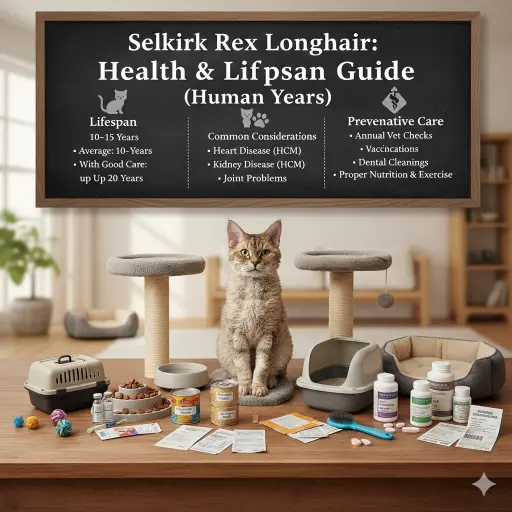
The Selkirk Rex Longhair is often noticed first for its curly, soft coat. But behind the unusual fur is a cat with a calm, steady, and emotionally warm personality. This breed is not extreme in behavior. It does not demand attention all the time, and it does not hide away either. Many owners describe this cat as quietly loving and easy to live with.
Personality in cats is not fixed or simple. Even within the same breed, no two cats act exactly the same. Selkirk Rex Longhairs are known for balance. They usually enjoy people, like gentle routines, and feel safest in peaceful homes. They often form strong bonds, but they show love in soft and subtle ways.
This breed is often misunderstood because of its relaxed nature. A Selkirk Rex Longhair may look lazy, but in reality, it is often just content. These cats tend to enjoy being near their people rather than being the center of attention. They may sit beside you instead of on your lap, watching quietly.
Understanding this breed means learning how cats communicate comfort, trust, and stress in small ways. This guide focuses on behavior, not training or fixing problems. It is meant to help owners read their cat better and feel confident about what is normal.
What Shapes a Selkirk Rex Longhair’s Personality
A Selkirk Rex Longhair’s personality is shaped by both genetics and life experience. Genetics give the base temperament, but daily life shapes how that temperament shows up. This is why two Selkirk Rex cats can feel similar but still act very different.
Early kitten life matters a lot. Kittens who are handled gently, exposed to normal household sounds, and allowed to explore safely often grow into confident adults. If a Selkirk Rex kitten grows up in a calm home, it usually keeps that calm nature into adulthood.
The home environment also plays a big role. These cats tend to do best in stable homes with predictable routines. Loud noise, sudden changes, or too much handling can make them withdraw. This does not mean they are fragile. It means they are sensitive to emotional tone.
Human behavior matters too. Selkirk Rex Longhairs often mirror the energy of their owners. Quiet homes often produce calm cats. Busy homes may produce more watchful and reserved behavior. This breed often prefers respectful interaction over forced affection.
Factors that shape behavior:
| Influence | How it affects personality |
|---|---|
| Genetics | Sets base calm and social traits |
| Kitten handling | Builds confidence or caution |
| Home routine | Supports emotional safety |
| Human interaction | Shapes trust and bonding |
| Environment | Affects stress and comfort |
Core Selkirk Rex Longhair Personality Traits Explained
Selkirk Rex Longhairs are often described as gentle companions. They are usually friendly without being demanding. Many enjoy being near people but do not constantly ask for attention. This makes them a good fit for owners who like quiet company.
Affection style is important to understand. Some cats are lap cats, while others prefer nearby closeness. Many Selkirk Rex Longhairs are proximity cats. They may sit next to you, sleep at your feet, or follow you from room to room. This is still affection, just expressed softly.
Independence is another key trait. These cats can entertain themselves for short periods but still value connection. They are often comfortable being alone for a few hours, especially if their environment feels safe and familiar.
Energy level is usually moderate. They enjoy play, especially gentle and thoughtful play, but they are not hyperactive. Many enjoy short play sessions followed by long rest periods.
Common personality traits:
| Trait | How it usually shows |
|---|---|
| Affection | Quiet closeness |
| Sociability | Friendly but calm |
| Independence | Balanced, not distant |
| Energy | Moderate and steady |
| Adaptability | Prefers stable routines |
How Selkirk Rex Longhairs Communicate
Cats communicate mostly through body language. Selkirk Rex Longhairs are often subtle communicators. They do not always make loud sounds or big movements. Learning their signals helps owners avoid misunderstandings.
Tail position is one clue. A gently raised tail usually means comfort. A still tail with a soft curve often shows relaxation. Fast tail flicking may mean overstimulation, not anger. Ears also tell a story. Forward ears show interest, while sideways or flat ears suggest discomfort.
Eye behavior matters too. Slow blinking is a sign of trust. A relaxed Selkirk Rex may half-close its eyes around people it feels safe with. Wide eyes with tense posture may mean the cat is unsure or alert.
Vocal behavior is often quiet. Many Selkirk Rex Longhairs are not very talkative. This does not mean they are unhappy. Some only vocalize when they truly need something, like food or attention.
Communication signals at a glance:
| Signal | Likely meaning |
|---|---|
| Slow blink | Trust and comfort |
| Tail gently up | Friendly mood |
| Ears sideways | Overstimulated |
| Quiet behavior | Content, not distant |
| Sudden silence change | Environmental stress |
Social Behavior With Humans
Selkirk Rex Longhairs often form strong emotional bonds with their people. They may choose one favorite person or spread their affection across the household. Their social style is usually calm and steady rather than intense.
These cats often enjoy being involved in daily life. They may watch you cook, sit nearby while you work, or nap in the same room. They like shared space more than constant touching.
Handling tolerance is usually good when respect is shown. Many enjoy gentle petting but may move away when they have had enough. This is healthy boundary setting, not rejection. Forcing contact can reduce trust over time.
They often respond well to soft voices and calm movements. Loud or sudden actions may cause them to retreat. This breed often values emotional safety over excitement.
Human interaction patterns:
| Behavior | What it means |
|---|---|
| Following you | Social interest |
| Sitting nearby | Comfort and trust |
| Leaving during petting | Normal boundary |
| Greeting at door | Bonded behavior |
| Quiet presence | Contentment |
Social Behavior With Other Cats and Pets
Selkirk Rex Longhairs are usually tolerant of other animals when introduced properly. They are not typically dominant or aggressive. Many prefer peaceful coexistence over constant interaction.
With other cats, they may enjoy parallel living. This means sharing space without always playing together. Some will engage in gentle play, while others simply observe. Both are normal.
With dogs, behavior depends on the dog’s energy. Calm and respectful dogs are often accepted. Loud or chasing behavior may cause the cat to hide. Selkirk Rex Longhairs usually choose avoidance rather than confrontation.
These cats often show stress quietly. They may hide, reduce movement, or stop engaging. Watching for these subtle signs helps owners understand comfort levels.
Pet social signals:
| Sign | Meaning |
|---|---|
| Observing from distance | Assessing safety |
| Gentle play | Comfort |
| Hiding more | Stress response |
| Shared sleeping areas | Acceptance |
| Avoidance | Preference for space |
Play, Hunting, and Natural Instincts
Even calm cats have natural hunting instincts. Selkirk Rex Longhairs are no different. Their play style is often gentle and thoughtful rather than fast and wild.
They often prefer toys that move slowly or respond to interaction. Wand toys, rolling balls, and puzzle-style toys are common favorites. Many enjoy watching before acting.
Climbing and perching behaviors are also normal. These cats like safe, soft places where they can observe quietly. Window watching is a common activity and helps mental stimulation.
Play may look intense at times, with focused staring and quick pounces. This is normal and healthy. It is how cats express natural instincts in a safe way.
Play and instinct overview:
| Behavior | Purpose |
|---|---|
| Stalking toys | Practice hunting |
| Watching windows | Mental stimulation |
| Short play bursts | Energy release |
| Rest after play | Natural rhythm |
| Gentle pouncing | Normal instinct |
Stress, Fear, and Comfort Behaviors
Selkirk Rex Longhairs often express stress quietly. Instead of acting out, they may withdraw. This can worry owners who expect loud signals. Learning quiet stress signs is important.
Comfort behaviors include kneading, slow blinking, relaxed sleeping positions, and choosing to rest near people. These show emotional safety. Stress behaviors may include hiding more, reduced play, or avoiding interaction.
Changes in environment often trigger stress. New pets, visitors, or routine changes can affect behavior. These cats usually need time to adjust rather than intervention.
Understanding that stress is not bad behavior helps owners respond with patience rather than worry.
Stress vs comfort signals:
| Comfort | Stress |
|---|---|
| Relaxed posture | Tense body |
| Normal appetite | Reduced interest |
| Social resting | Increased hiding |
| Gentle play | Avoidance |
| Calm grooming | Over-grooming |
Commonly Misunderstood Selkirk Rex Longhair Behaviors
One common misunderstanding is thinking these cats are lazy. In reality, many are simply relaxed. Calm behavior often means the cat feels safe.
Another myth is that quiet cats are not bonded. Selkirk Rex Longhairs often show love through presence rather than noise. Silence can mean contentment.
Their curly coat also leads to overhandling. Many people treat them like stuffed toys. This can cause stress if the cat’s signals are ignored.
Understanding these behaviors builds trust and prevents unnecessary concern.
Behavior Changes Across Life Stages
Kittens are often more playful and curious. As Selkirk Rex Longhairs mature, they usually become more settled. Adult cats often prefer routine and predictability.
Senior cats may sleep more and play less. They may also seek more quiet comfort. These changes are normal and gradual.
Sudden behavior changes are different from age-related changes. Context always matters when observing behavior.
When Behavior Signals a Deeper Issue
Behavior should always be viewed as communication. Gradual changes are often normal. Sudden or extreme changes deserve attention.
Signs that may need further observation include sudden withdrawal, major routine disruption, or loss of interest in normal activities. This does not mean something is wrong, but it does mean context matters.
Owners should focus on patterns, not single moments.
Frequently Asked Questions
| Question | Short answer |
|---|---|
| Are Selkirk Rex Longhairs lap cats? | Some are, many prefer nearby closeness |
| Do they get lonely easily? | They enjoy company but handle alone time |
| Are they good for quiet homes? | Yes, very suitable |
| Are they vocal cats? | Usually quiet |
| Do they like children? | Often, if handled gently |
| Are they active at night? | Moderate, not extreme |
Final Thoughts and Owner Guidance
Living with a Selkirk Rex Longhair means learning to appreciate calm companionship. These cats offer steady presence, gentle affection, and emotional warmth without demand.They thrive when respected, observed, and understood. Personality always matters more than breed labels. Each Selkirk Rex Longhair is an individual first.
For more general feline behavior education, you can explore trusted behavior resources such as the International Cat Care behavior guides:
https://icatcare.org

Ata Ur Rehman is the founder of Pet Age in Human Years Calculator, an educational platform that provides age conversion charts and lifespan guides for dogs, cats, birds, and other companion animals. His work focuses on helping pet owners understand how animal ages translate into human years using commonly accepted age conversion formulas and published lifespan averages.
The website compiles breed and species lifespan data from kennel clubs, breed organizations, and general animal lifespan studies to present simple and easy-to-understand guides for pet owners worldwide.
This website was created to centralize animal age conversion charts into one easy reference platform for pet owners.