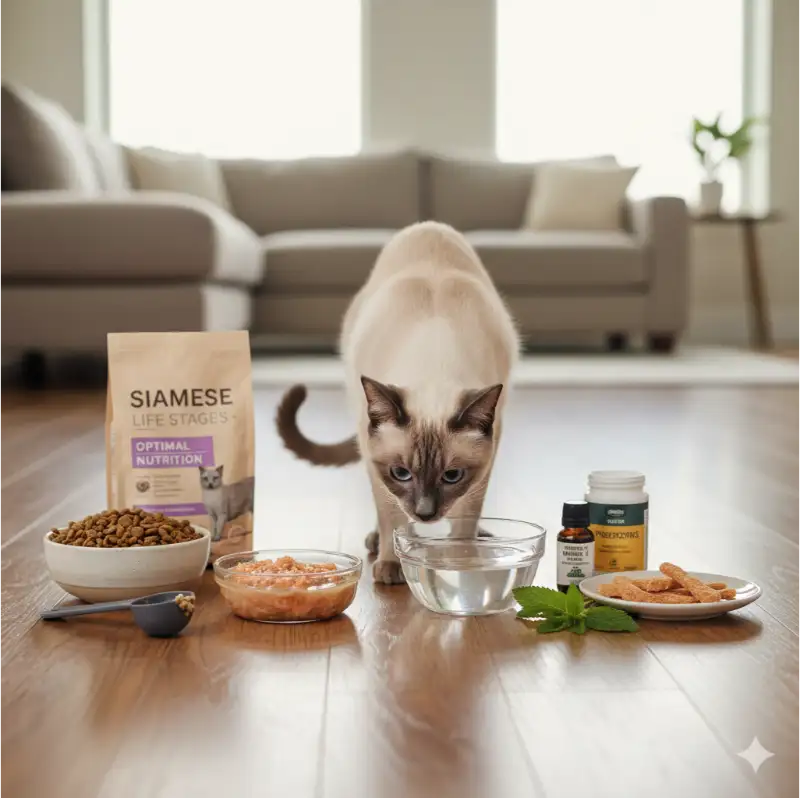
Siamese cats are lean, active, and very vocal. They burn energy faster than many other house cats because they move a lot and love to interact with people. This means their diet must support strong muscles and steady energy. Feeding a Siamese is not about giving more food. It is about giving the right balance of nutrients.
All cats are obligate carnivores. This means they must eat animal-based protein to stay healthy. Their bodies are built to use meat as the main fuel source. A Siamese cat needs high-quality animal protein to keep its slim body strong. Protein helps build muscles, repair tissues, and support the immune system. It also keeps their body shape firm instead of soft or overweight.
Fat is also important. Healthy fats give energy and support brain function, skin health, and a shiny coat. However, too much fat can add extra calories quickly. Because Siamese cats are naturally slim, some owners worry when they look thin. But lean does not mean unhealthy. The goal is to maintain a healthy body condition, not to make them look bigger.
Carbohydrates are often misunderstood. Cats do not need a high amount of carbs, but small amounts are normal in commercial cat food. What matters most is that protein is the main ingredient and that the food is complete and balanced. Always look for a statement that says the food meets AAFCO nutritional standards. This shows it provides the basic nutrients a cat needs for a certain life stage.
Water is also a key part of nutrition. Many cats do not drink enough water on their own. Since Siamese cats are active and playful, hydration supports kidney health and digestion. A good diet supports protein needs, balanced fats, essential vitamins, minerals, and proper moisture.
Best Food Types for Siamese Cats (Wet, Dry & Mixed Feeding)
Owners often ask, “What is the best food for a Siamese cat?” The truth is that both wet and dry food can work if they are complete and balanced. The choice depends on your cat’s needs, your budget, and your daily routine.
Wet food contains high moisture. This helps with hydration and supports urinary health. Many Siamese cats enjoy wet food because it has a strong smell and soft texture. Wet food is usually lower in calories per gram because of its water content. This can help with portion control.
Dry food is more convenient and often more affordable. It is easy to store and measure. However, dry food has less moisture and is more calorie-dense. This means small portions contain more calories. If feeding dry food, always make sure fresh water is available.
Mixed feeding means giving both wet and dry food. Many owners choose this method. It combines the moisture of wet food with the convenience of dry food. When mixing, it is very important to measure portions carefully to avoid overfeeding.
Here is a simple comparison:
| Feature | Wet Food | Dry Food | Mixed Feeding |
|---|---|---|---|
| Moisture Level | High (70–80%) | Low (6–10%) | Moderate |
| Calorie Density | Lower per gram | Higher per gram | Depends on portions |
| Hydration Support | Strong | Low | Moderate |
| Cost | Usually higher | Usually lower | Medium |
| Storage | Refrigerate after opening | Easy to store | Both needed |
When choosing food, read the label. The first ingredient should be a named animal protein like chicken, turkey, or fish. Check the calorie content on the label. This helps you control portions better.
Feeding Schedule & Portion Guide for All Life Stages
Feeding the right amount at the right time is just as important as choosing good food. Siamese cats often do well with scheduled meals instead of free feeding. Because they are smart and vocal, they may ask for food often. That does not always mean they are hungry.
Kittens need more frequent meals. Their bodies are growing fast. They need more calories and protein per pound than adults. Most Siamese kittens should eat three to four small meals per day.
Adult Siamese cats usually do well with two meals per day. This helps control calories and keeps their routine stable. Seniors may eat smaller meals but may need food that is easier to digest.
Below is a general feeding guide. These are average estimates and not medical advice.
| Life Stage | Meals Per Day | Focus | Portion Notes |
|---|---|---|---|
| Kitten (2–6 months) | 3–4 meals | Growth, high protein | Follow kitten food label closely |
| Kitten (6–12 months) | 3 meals | Steady growth | Adjust as activity changes |
| Adult (1–7 years) | 2 meals | Maintain lean muscle | Monitor body condition |
| Senior (7+ years) | 2 smaller meals | Easy digestion, muscle support | Watch weight changes |
To estimate portion size, check your cat’s weight and the calorie content of the food. Many adult Siamese cats need between 200–300 calories per day, depending on size and activity level. Always divide total daily calories between meals.
Watch for signs of overfeeding:
- Soft belly with no waist shape
- Low activity
- Weight gain over weeks
Watch for signs of underfeeding:
- Visible ribs and spine
- Low energy
- Constant food-seeking behavior
Use body condition scoring instead of only looking at the scale. You should feel the ribs lightly but not see them clearly.
Hydration, Treats & Common Feeding Mistakes
Hydration plays a big role in a Siamese cat’s health. Cats naturally have a low thirst drive. This means they may not drink enough water on their own. Wet food can help increase total water intake. You can also try a cat water fountain, as many Siamese enjoy moving water.
Always provide fresh water daily. Clean bowls often. Place water away from the litter box. These small steps can improve drinking habits.
Treats are part of many homes, especially with talkative Siamese cats who beg for attention. Treats should not be more than 10% of daily calories. Too many treats can cause weight gain and unbalanced nutrition.
Here is a quick safety guide:
| Safe in Small Amounts | Avoid Completely |
|---|---|
| Cooked plain chicken | Chocolate |
| Cooked turkey (no salt) | Onions |
| Small bits of cooked fish | Garlic |
| Commercial cat treats | Grapes & raisins |
| Freeze-dried meat treats | Alcohol |
Common feeding mistakes include:
- Free feeding dry food all day
- Changing food too quickly
- Ignoring calorie content
- Believing grain-free always means healthier
- Feeding table scraps often
When changing food, do it slowly over 7–10 days. Mix small amounts of the new food with the old food. This helps prevent stomach upset.
FAQs — What Owners Commonly Ask
How much should I feed my Siamese cat?
Most adult Siamese cats need about 200–300 calories daily, but this depends on weight and activity. Always check the food label and adjust based on body condition.
Does my Siamese need wet food?
Wet food is helpful for hydration, but it is not required if your cat drinks enough water and eats a balanced dry food.
Can Siamese cats eat only dry food?
Yes, if the food is complete and balanced. However, adding wet food may help support better hydration.
How often should I feed my Siamese?
Two meals per day work well for most adults. Kittens need more frequent meals.
Are Siamese cats prone to obesity?
They are naturally slim, but they can gain weight if overfed. Structured meals help prevent this.
What are signs my cat is dehydrated?
Dry gums, low energy, and reduced appetite can be warning signs. Contact a veterinarian if you notice these changes.
Should I choose grain-free food?
Grain-free does not always mean better. Focus on high-quality animal protein and balanced nutrition.
A healthy Siamese diet focuses on high-quality protein, balanced fats, proper portions, and good hydration. Keep meals structured. Monitor body condition often. Avoid trends and extreme diets. Consistency and balance matter most.
For more information about pet food standards, you can visit the Association of American Feed Control Officials (AAFCO):
https://www.aafco.org/consumers/what-is-in-pet-food/

Ata Ur Rehman is the founder of Pet Age in Human Years Calculator, an educational platform that provides age conversion charts and lifespan guides for dogs, cats, birds, and other companion animals. His work focuses on helping pet owners understand how animal ages translate into human years using commonly accepted age conversion formulas and published lifespan averages.
The website compiles breed and species lifespan data from kennel clubs, breed organizations, and general animal lifespan studies to present simple and easy-to-understand guides for pet owners worldwide.
This website was created to centralize animal age conversion charts into one easy reference platform for pet owners.